
Safety Warning
DIY auto repair can cause serious injury, fire, or vehicle damage. These guides are for informational purposes only. Always follow OEM torque specs, wear PPE, and consult a certified mechanic if you are unsure. You are solely responsible for your safety.
2012 Kia Optima L4-2.4L HybridFACTORY OEM SERVICE PROCEDURE
System Specifications
Specifications
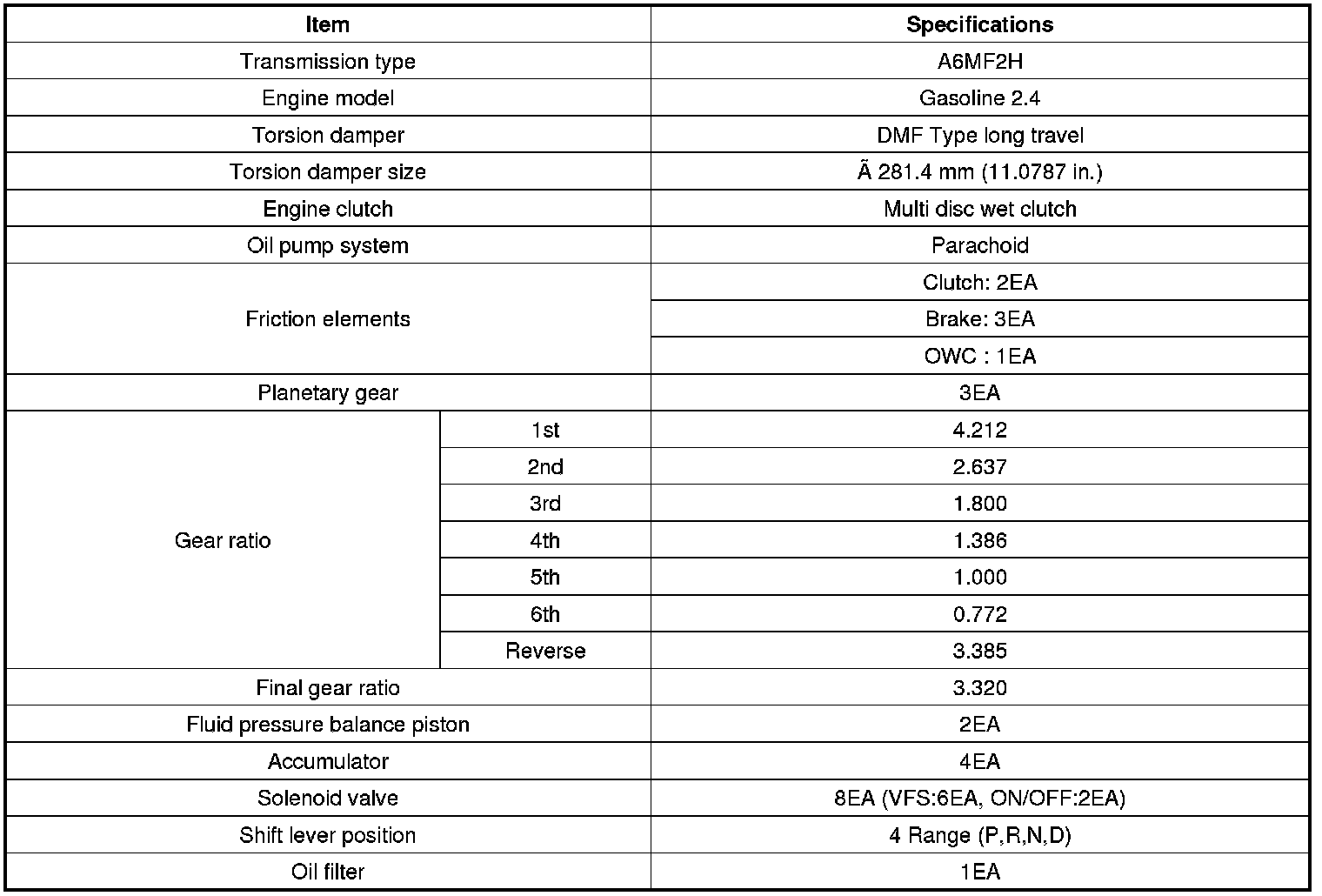
VFS: Variable Force Solenoid
Sensors
Input Speed Sensor
Type: Hall effect sensor
Specifications

Output Speed Sensor
Type: Hall effect sensor
Specifications

Oil Temperature Sensor
Type: Negative thermal coefficient type
Specifications

Inhibitor Switch
Type: Combination of output signals from 4 terminals
Specifications

Electric Oil Pump (EOP)
Specifications

Oil Pump Unit (OPU)
Specifications

Solenoid Valves
Direct control VFS [26/B, E/C]
Control type : Normal low type

Direct control VFS [UD/B, OD/C, 35R/C]
Control Type : Normal high type

Line Pressure Control VFS
Control type : Normal high type

ON/OFF Solenoid Valve (SS-A, SS-B)
Control type : Normal low type

Solenoid Valve Operation Table
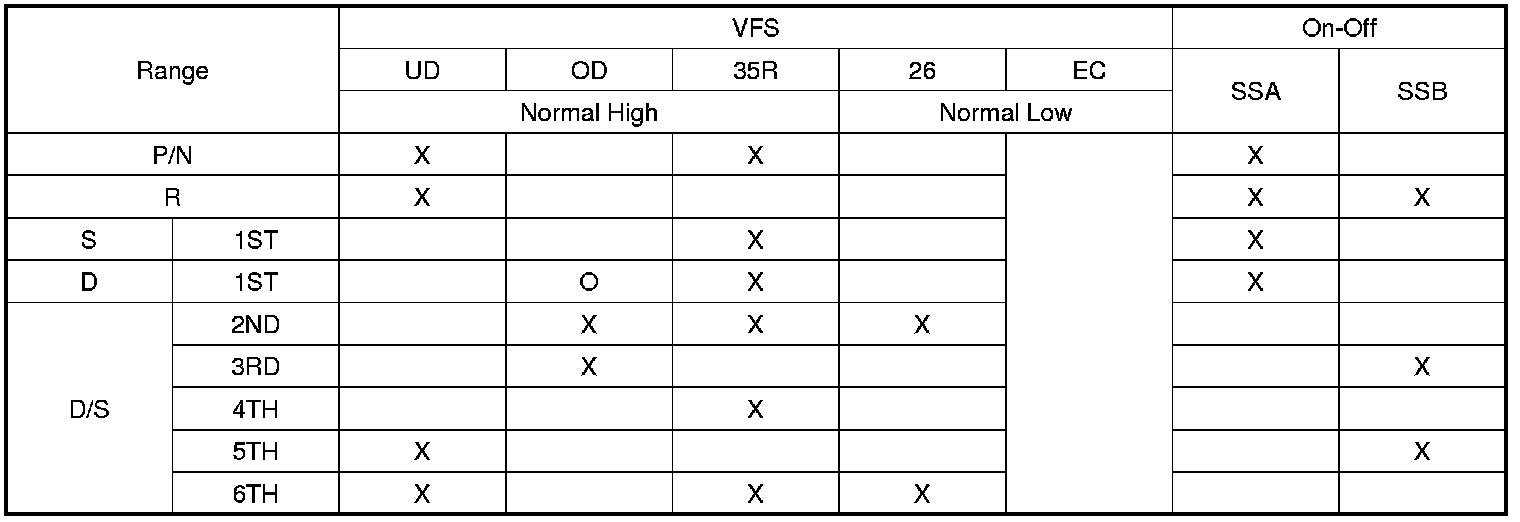
Failsafe of solenoid valve failure: 4th gear hold.
NOTE:
X : Solenoid is energized.
O : ON (8 kph [up]), OFF (6 kph [down])
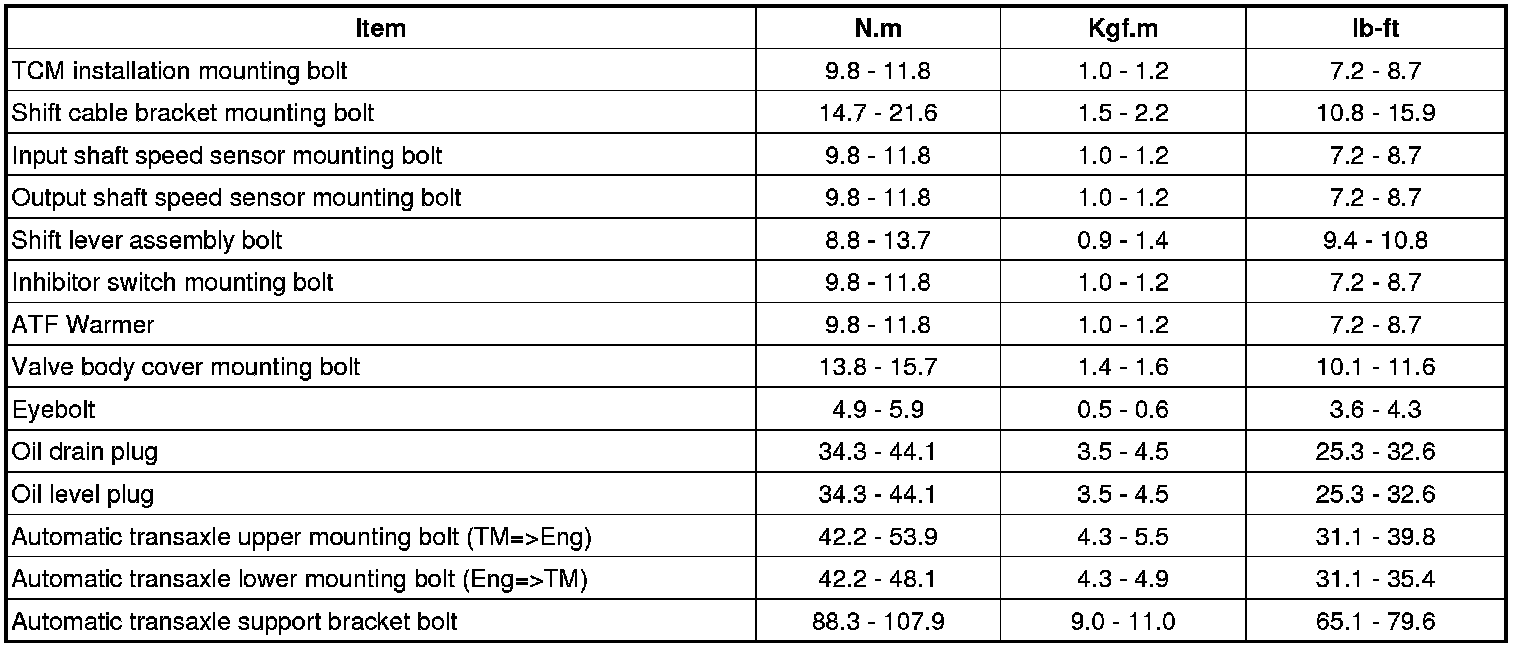
Tightening Torques
Lubricants

Sealant

Factory Service Tools
Use the Manual With the Right Hardware
Pair factory procedures with proven DIY tools so the instructions are easier to execute.
Disclosure: Verified tool recommendations may earn an affiliate commission at no cost to you.
When to See a Mechanic
Stop DIY work and contact a certified mechanic immediately if any of the following apply:
- • You smell fuel, burning insulation, or see smoke.
- • Brakes feel soft, pull hard to one side, or make grinding noises.
- • The engine overheats, stalls repeatedly, or misfires under load.
- • You are missing required tools, torque specs, or safe lifting equipment.
- • You are not confident in the next step or safety outcome.