
Safety Warning
DIY auto repair can cause serious injury, fire, or vehicle damage. These guides are for informational purposes only. Always follow OEM torque specs, wear PPE, and consult a certified mechanic if you are unsure. You are solely responsible for your safety.
2007 Kia Rondo L4-2.4LFACTORY OEM SERVICE PROCEDURE
Control Assembly: Testing and Inspection
SELF-DIAGNOSIS
The F.A.T.C. module self test feature will detect electrical malfunction and provide error codes for system components with suspected failures.

1. Self-diagnosis process
NOTE: DTC data can be retrieved from the control panel directly.
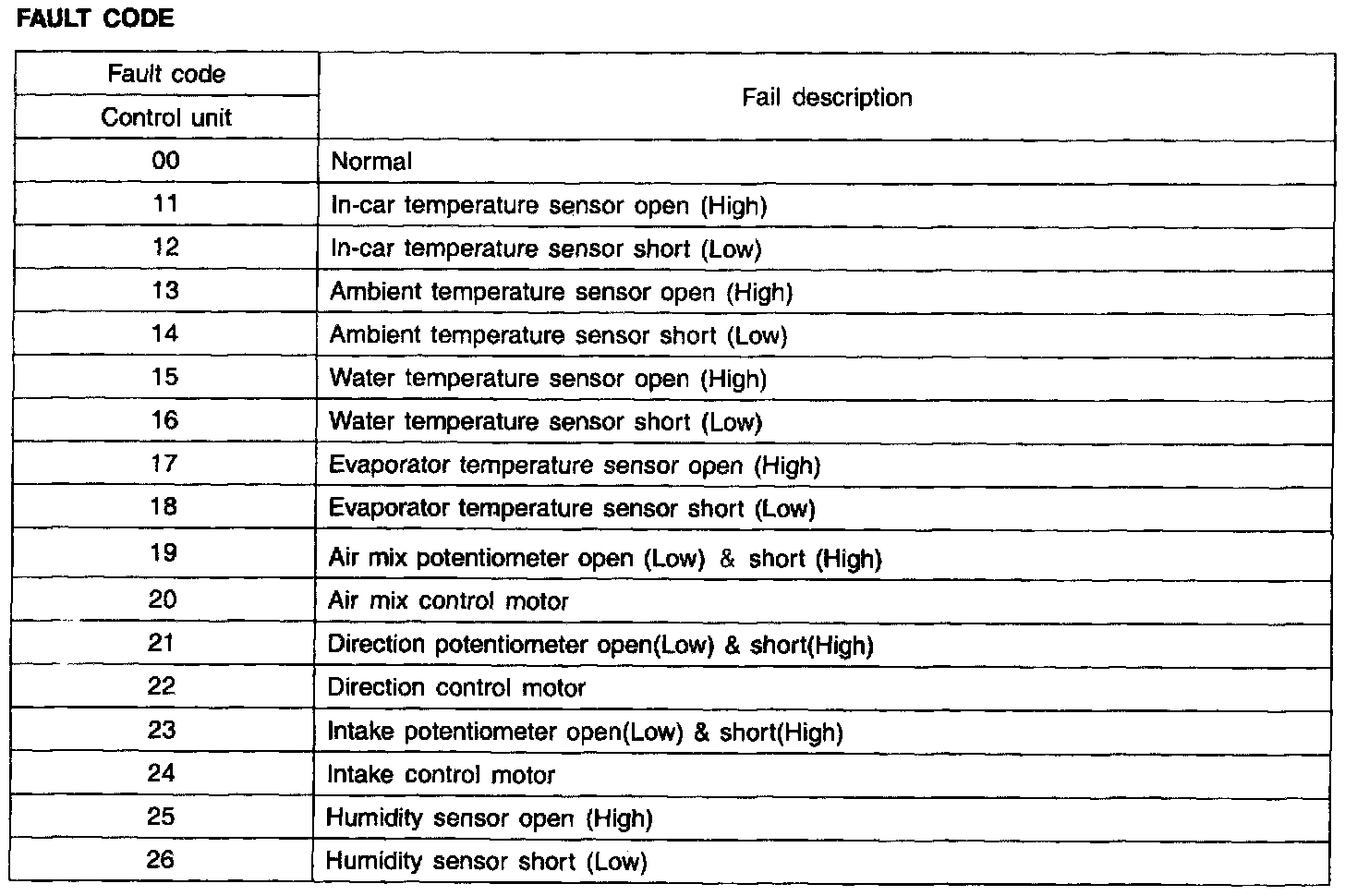
2. How to read self-diagnostic code
After the display panel flickers three times every 0.5 seconds, the corresponding fault code flickers on the setup temperature display panel every 0.5 seconds and will show two figures. Codes are displayed in numerical format.
3. Fault code display.

1. Continuance operation
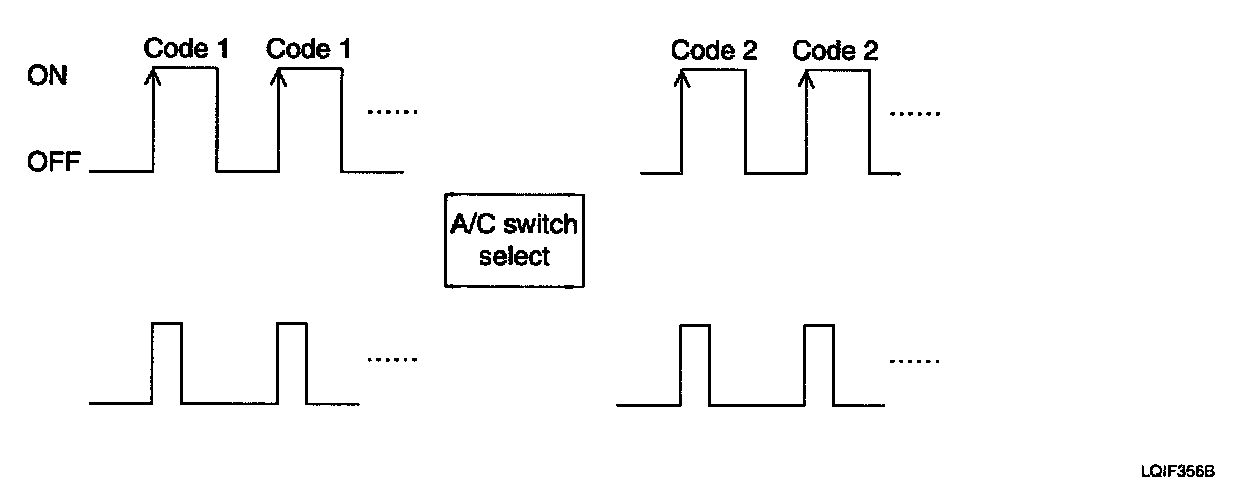
2. Step operation
4. If fault codes are displayed during the check, Inspect malfunction causes by referring to fault codes.
5. Fail safe
1. In-car temperature sensor: Control with the value of 23° C (73.4° F)
2. Ambient temperature sensor: Control with the value of 20° C (67° F)
3. Evaporator temperature sensor: Control with the value of -2° C (28.4° F)
4. Humidity sensor: Doesn't control.
5. Photo sensor: None correction
6. Temperature control actuator (Air mix potentiometer):
- If temperature set 17° C - 24.5° C, fix at maximum cooling position.
- If temperature set 25° C - 32° C, fix at maximum heating position.
7. Mode control actuator (Direction potentiometer):
- Fix vent position, while selecting vent mode.
- Fix defrost position, while selecting all except vent mode.
The F.A.T.C. module self test feature will detect electrical malfunction and provide error codes for system components with suspected failures.
1. Self-diagnosis process
NOTE: DTC data can be retrieved from the control panel directly.
Fault Code:
2. How to read self-diagnostic code
After the display panel flickers three times every 0.5 seconds, the corresponding fault code flickers on the setup temperature display panel every 0.5 seconds and will show two figures. Codes are displayed in numerical format.
3. Fault code display.
1. Continuance operation
2. Step operation
4. If fault codes are displayed during the check, Inspect malfunction causes by referring to fault codes.
5. Fail safe
1. In-car temperature sensor: Control with the value of 23° C (73.4° F)
2. Ambient temperature sensor: Control with the value of 20° C (67° F)
3. Evaporator temperature sensor: Control with the value of -2° C (28.4° F)
4. Humidity sensor: Doesn't control.
5. Photo sensor: None correction
6. Temperature control actuator (Air mix potentiometer):
- If temperature set 17° C - 24.5° C, fix at maximum cooling position.
- If temperature set 25° C - 32° C, fix at maximum heating position.
7. Mode control actuator (Direction potentiometer):
- Fix vent position, while selecting vent mode.
- Fix defrost position, while selecting all except vent mode.
Factory Service Tools
Use the Manual With the Right Hardware
Pair factory procedures with proven DIY tools so the instructions are easier to execute.
Disclosure: Verified tool recommendations may earn an affiliate commission at no cost to you.
When to See a Mechanic
Stop DIY work and contact a certified mechanic immediately if any of the following apply:
- • You smell fuel, burning insulation, or see smoke.
- • Brakes feel soft, pull hard to one side, or make grinding noises.
- • The engine overheats, stalls repeatedly, or misfires under load.
- • You are missing required tools, torque specs, or safe lifting equipment.
- • You are not confident in the next step or safety outcome.