
Safety Warning
DIY auto repair can cause serious injury, fire, or vehicle damage. These guides are for informational purposes only. Always follow OEM torque specs, wear PPE, and consult a certified mechanic if you are unsure. You are solely responsible for your safety.
2005 Jeep TJ (CANADA) L4-2.4LFACTORY OEM SERVICE PROCEDURE
Camshaft Position Sensor: Service and Repair
The Camshaft Position Sensor (CMP) on the 2.4L 4-cylinder engine is bolted to the right-front side of the cylinder head. Sensor position (depth) is adjustable.
REMOVAL
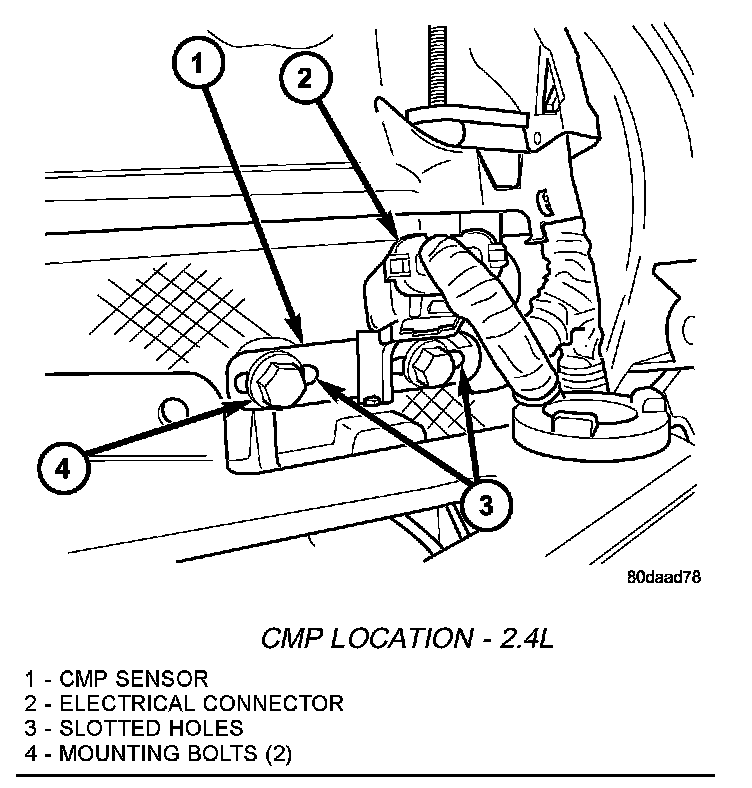
1. Disconnect electrical connector at CMP sensor.
2. Remove 2 sensor mounting bolts.
3. Remove sensor from cylinder head by sliding towards rear of engine.
INSTALLATION
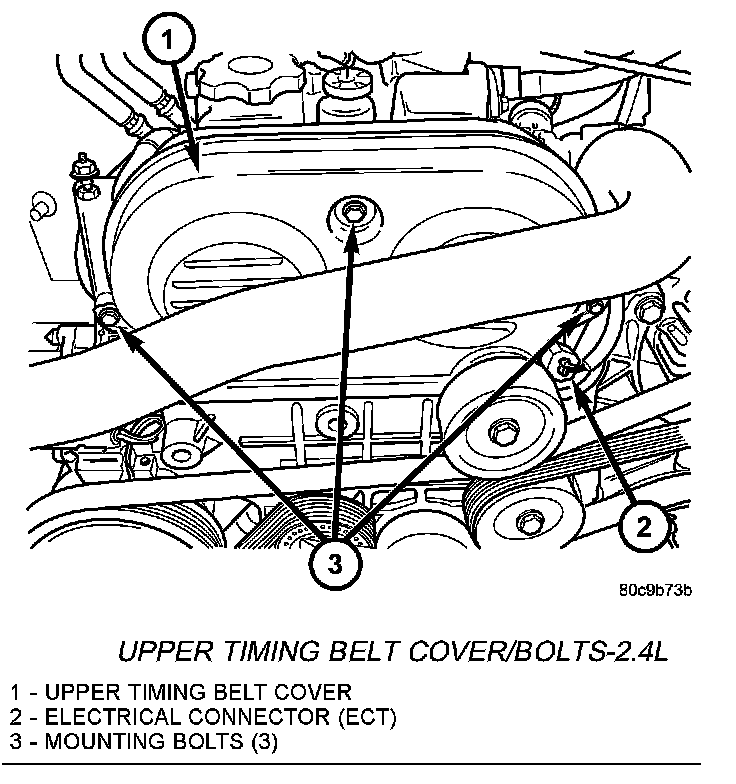
1. Remove plastic, upper timing belt cover (timing gear cover) by removing 3 bolts. Before attempting to remove cover, remove electrical connector from Engine Coolant Temperature (ECT) sensor. This will prevent damage to sensor.
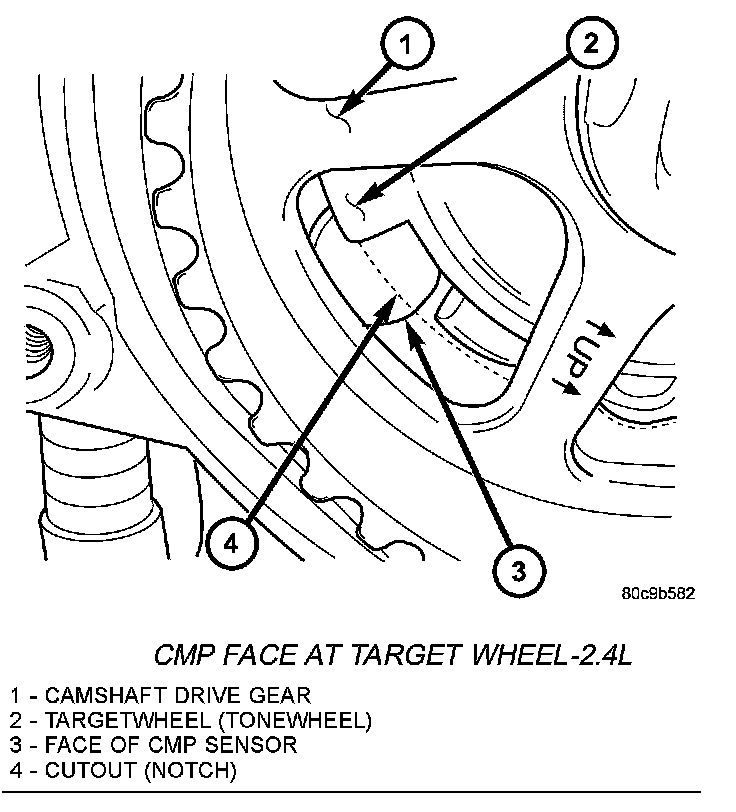
2. Rotate (bump over) engine until camshaft timing gear and target wheel (tonewheel) are positioned and aligned to face of sensor. If not positioned, damage to both sensor and target wheel will occur when attempting to start engine. Face of sensor MUST be behind target wheel while adjusting.
3. Position sensor to cylinder head and install 2 sensor mounting bolts finger tight.
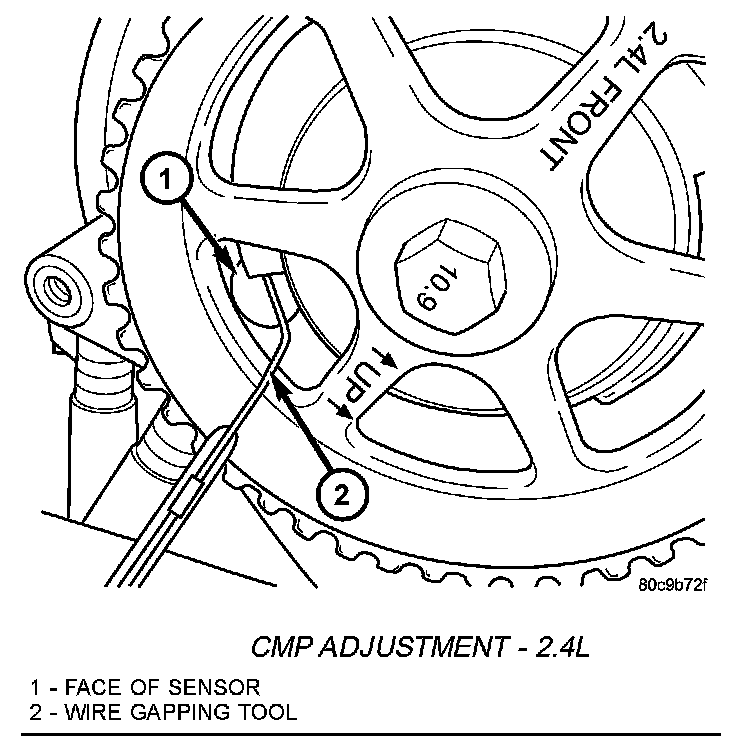
4. SENSOR AIR GAP: .030" Set air gap between rear of target wheel and face of sensor to .030". This can best be accomplished using an L-shaped, wire-type spark plug gapping gauge. A piece of .030" brass shim stock may also be used.
5. Gently push sensor forward until it contacts gapping gauge. Do not push hard on sensor. Tighten 2 sensor mounting bolts. Refer to torque specifications.
CAUTION: After tightening sensor mounting bolts, recheck air gap and adjust as necessary. Retorque bolts.
6. Install upper timing belt cover and 3 bolts.
7. Connect electrical connector to ECT sensor.
8. Connect electrical connector to CMP sensor.
REMOVAL
CMP Location - 2.4L:
1. Disconnect electrical connector at CMP sensor.
2. Remove 2 sensor mounting bolts.
3. Remove sensor from cylinder head by sliding towards rear of engine.
INSTALLATION
Upper Timing Belt Cover/Bolts - 2.4L:
1. Remove plastic, upper timing belt cover (timing gear cover) by removing 3 bolts. Before attempting to remove cover, remove electrical connector from Engine Coolant Temperature (ECT) sensor. This will prevent damage to sensor.
CMP Face At Target Wheel - 2.4L:
2. Rotate (bump over) engine until camshaft timing gear and target wheel (tonewheel) are positioned and aligned to face of sensor. If not positioned, damage to both sensor and target wheel will occur when attempting to start engine. Face of sensor MUST be behind target wheel while adjusting.
3. Position sensor to cylinder head and install 2 sensor mounting bolts finger tight.
CMP Adjustments - 2.4L:
4. SENSOR AIR GAP: .030" Set air gap between rear of target wheel and face of sensor to .030". This can best be accomplished using an L-shaped, wire-type spark plug gapping gauge. A piece of .030" brass shim stock may also be used.
5. Gently push sensor forward until it contacts gapping gauge. Do not push hard on sensor. Tighten 2 sensor mounting bolts. Refer to torque specifications.
CAUTION: After tightening sensor mounting bolts, recheck air gap and adjust as necessary. Retorque bolts.
6. Install upper timing belt cover and 3 bolts.
7. Connect electrical connector to ECT sensor.
8. Connect electrical connector to CMP sensor.
Factory Service Tools
Use the Manual With the Right Hardware
Pair factory procedures with proven DIY tools so the instructions are easier to execute.
Disclosure: Verified tool recommendations may earn an affiliate commission at no cost to you.
When to See a Mechanic
Stop DIY work and contact a certified mechanic immediately if any of the following apply:
- • You smell fuel, burning insulation, or see smoke.
- • Brakes feel soft, pull hard to one side, or make grinding noises.
- • The engine overheats, stalls repeatedly, or misfires under load.
- • You are missing required tools, torque specs, or safe lifting equipment.
- • You are not confident in the next step or safety outcome.