
Safety Warning
DIY auto repair can cause serious injury, fire, or vehicle damage. These guides are for informational purposes only. Always follow OEM torque specs, wear PPE, and consult a certified mechanic if you are unsure. You are solely responsible for your safety.
2003 Isuzu Rodeo 2WD V6-3.2LFACTORY OEM SERVICE PROCEDURE
Starter Control System Check
Wiring Diagram:
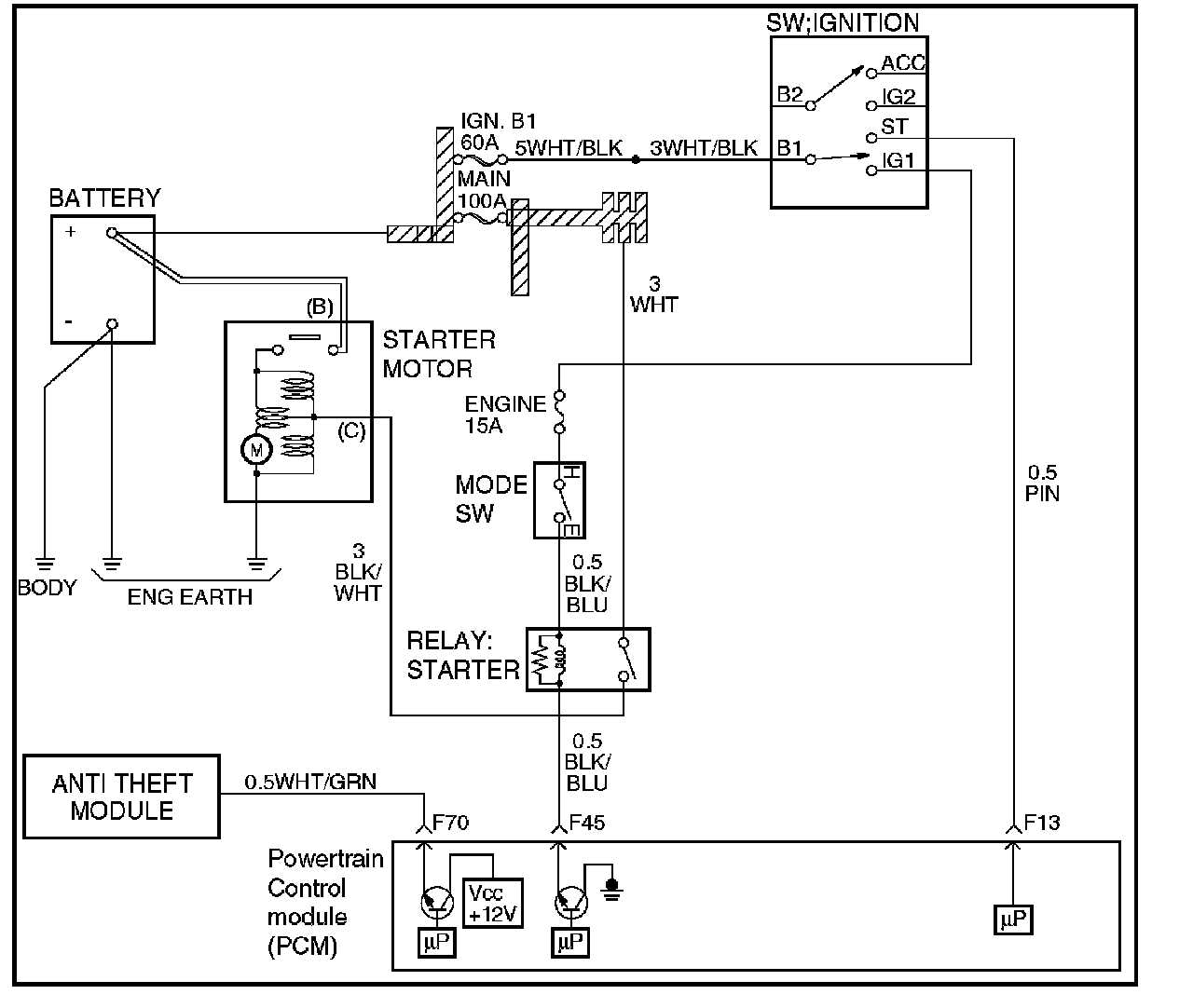
Circuit Description
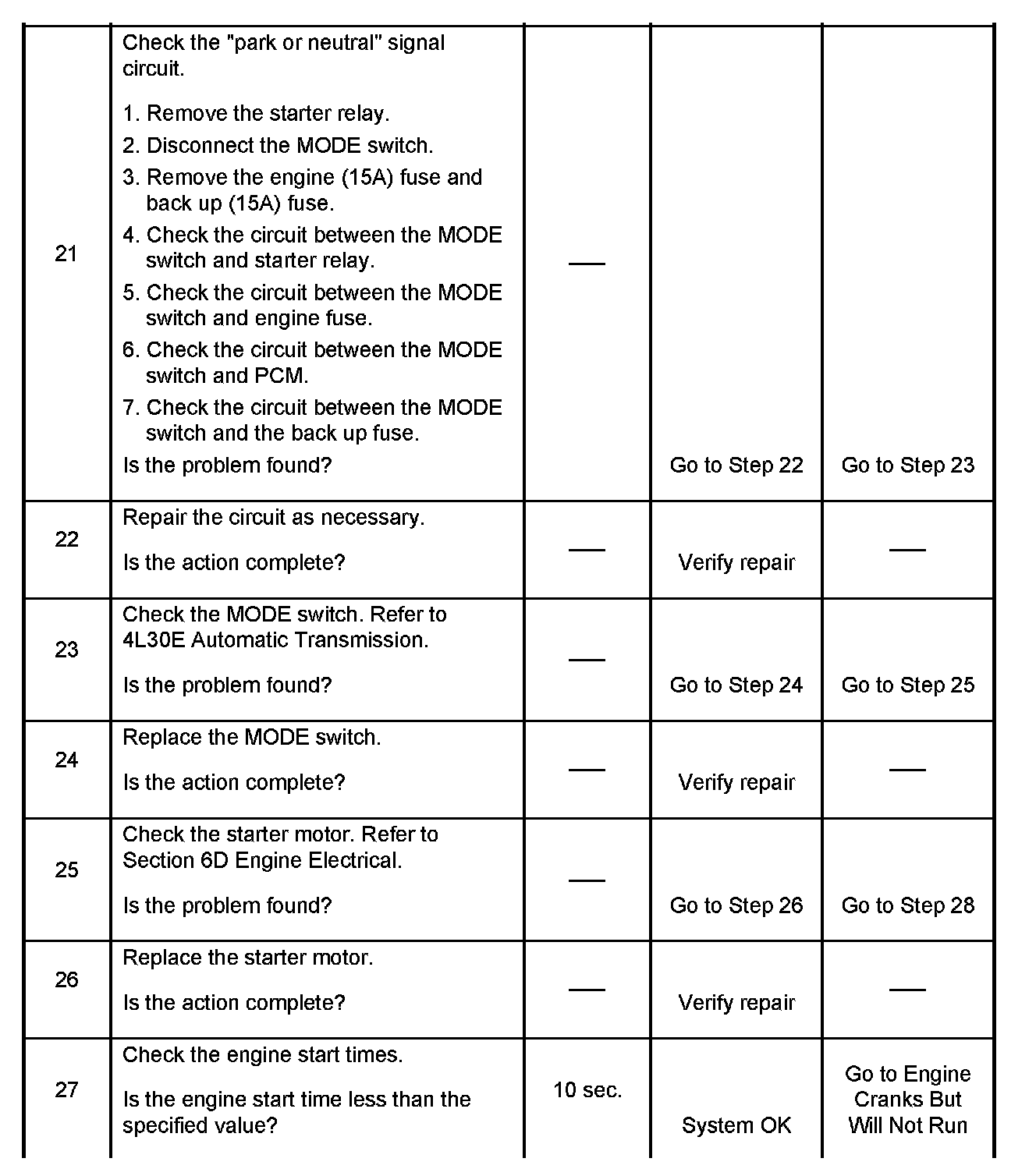
The starter control system is controlled by the Power Train Control Module (PCM). The PCM monitors the starter switch signal ("START" position) and MODE switch (park or neutral) signal. The PCM is operated by the ignition switch. Ignition feed voltage is supplied to the MODE switch and starter relay through the engine fuse. The PCM turns the starter relay through the engine fuse. The PCM turns the starter relay "ON" by grounding the starter relay driver circuit.
The starter motor is operated for 30 seconds based on starter relay signal.
Diagnostic Aids
An intermittent may be caused by the following:
- Poor connections.
- Misrouted harness.
- Rubbed through wire insulation.
- Broken wire inside the insulation.
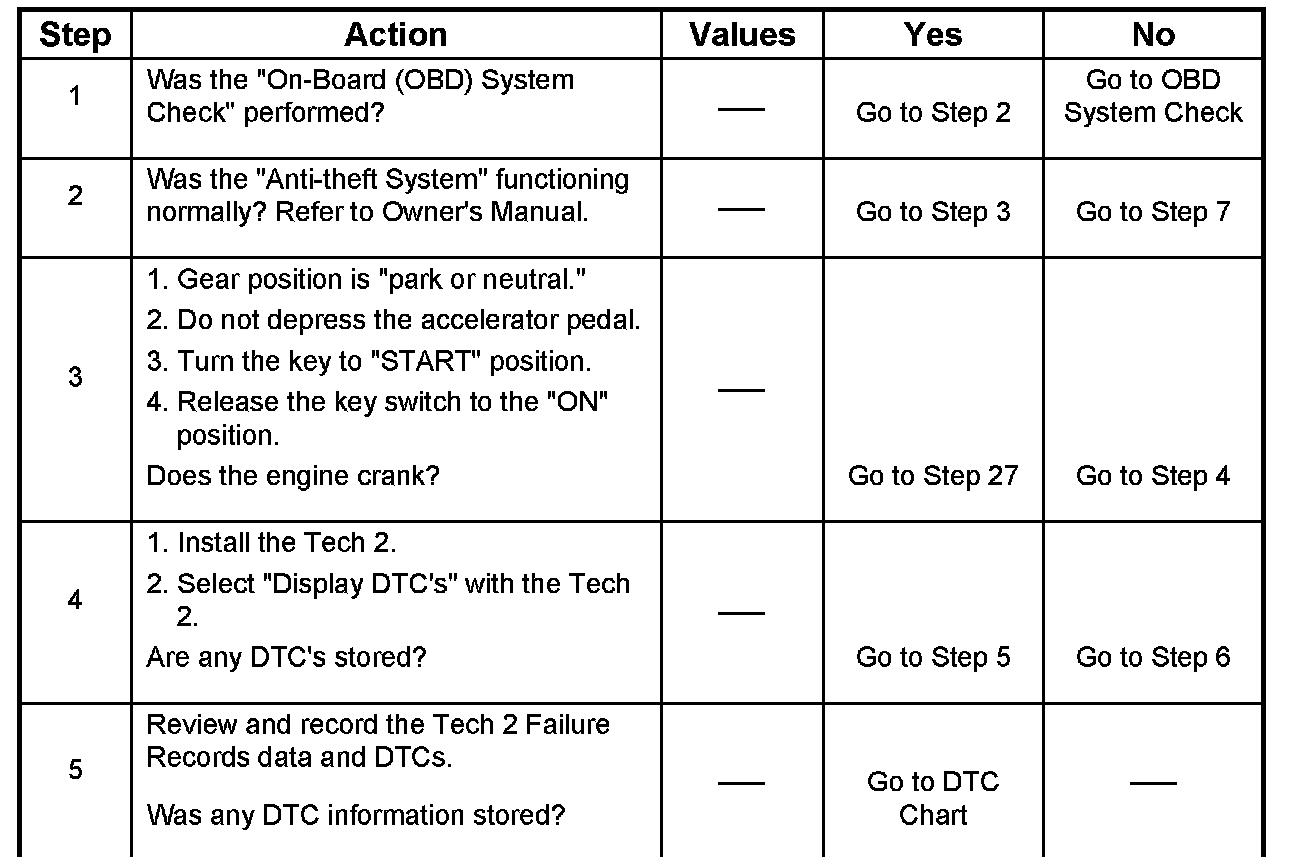
Step 1 - 5:
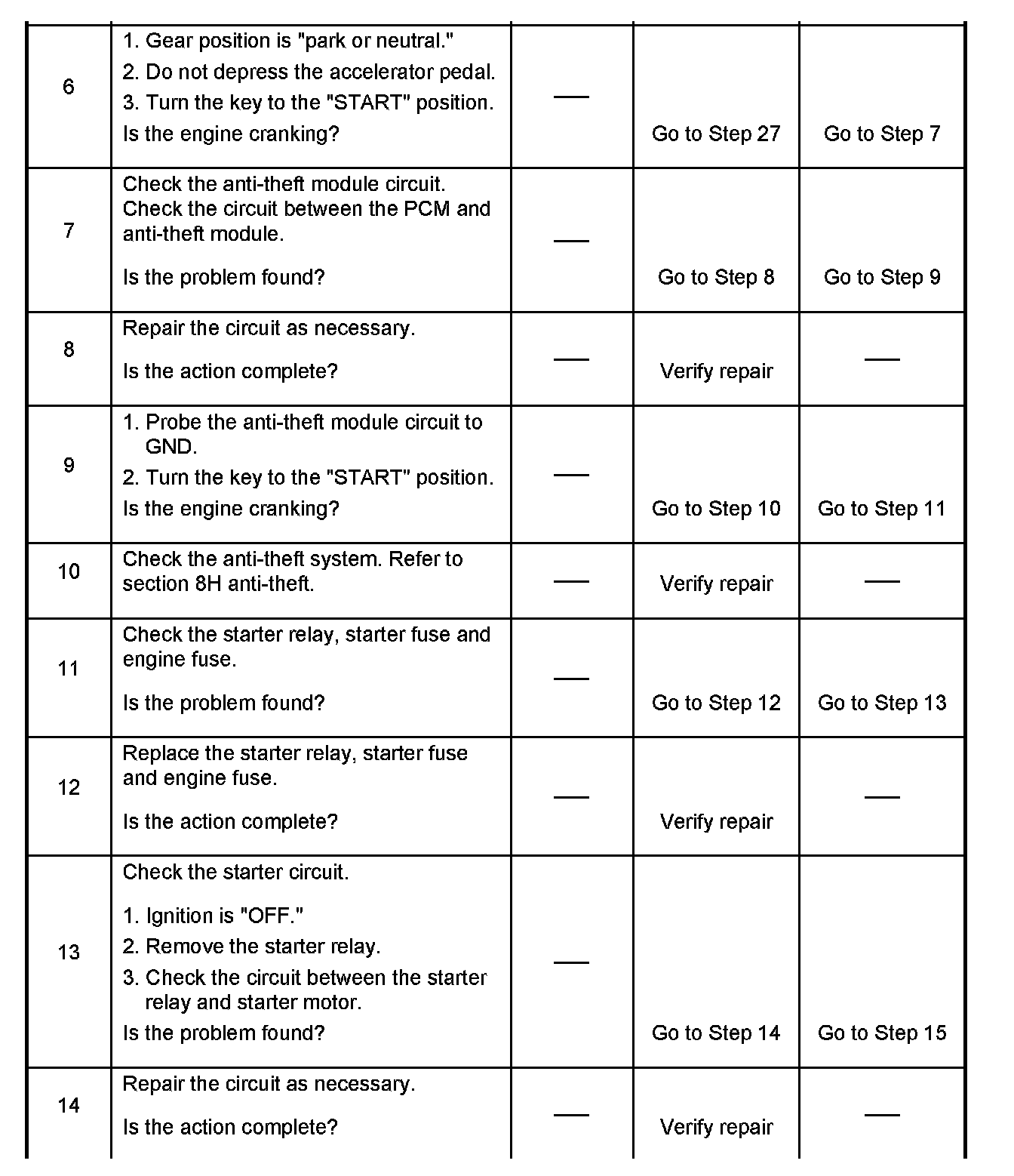
Step 6 - 14:
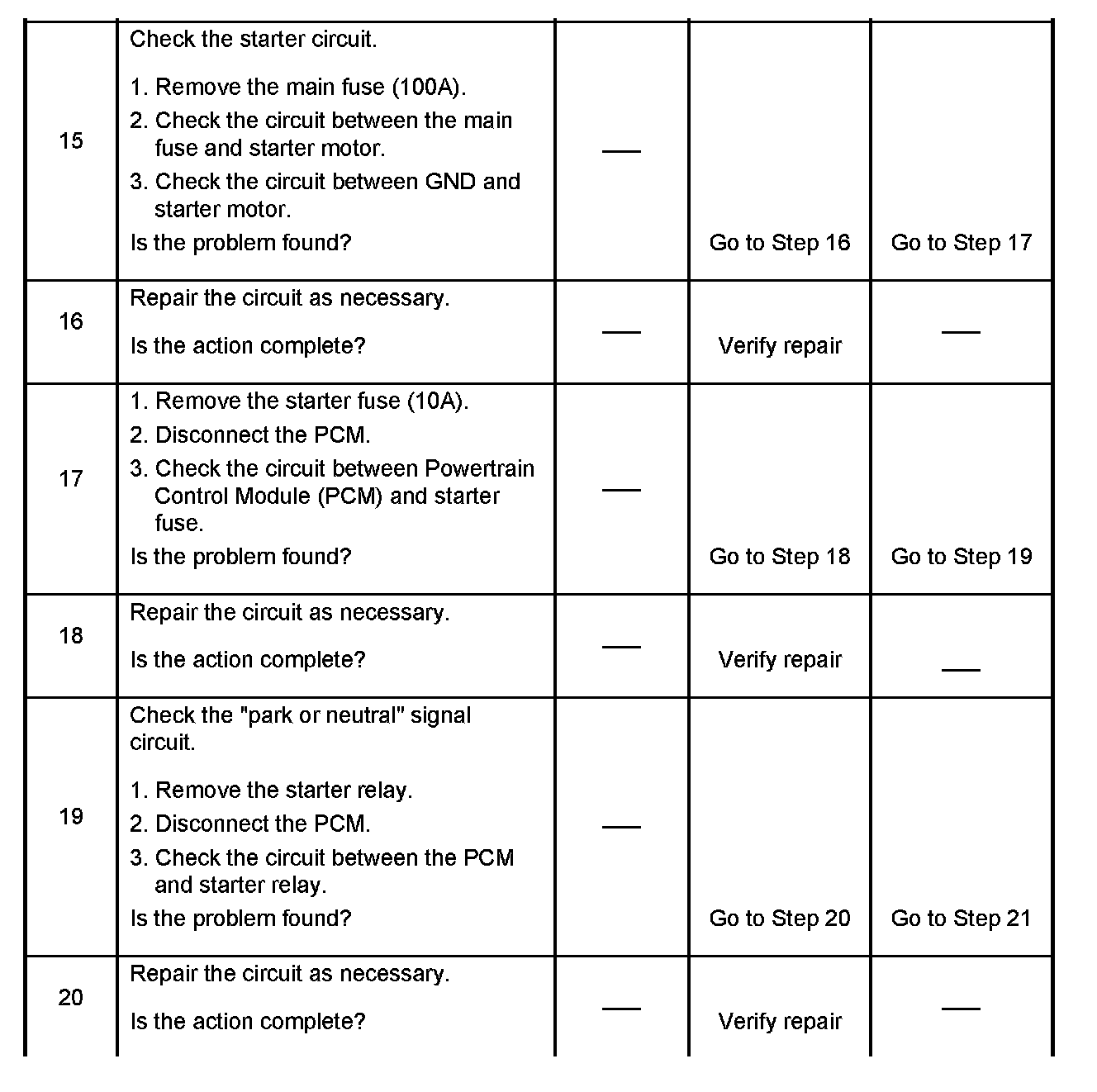
Step 15 - 20:
Step 21 - 27:
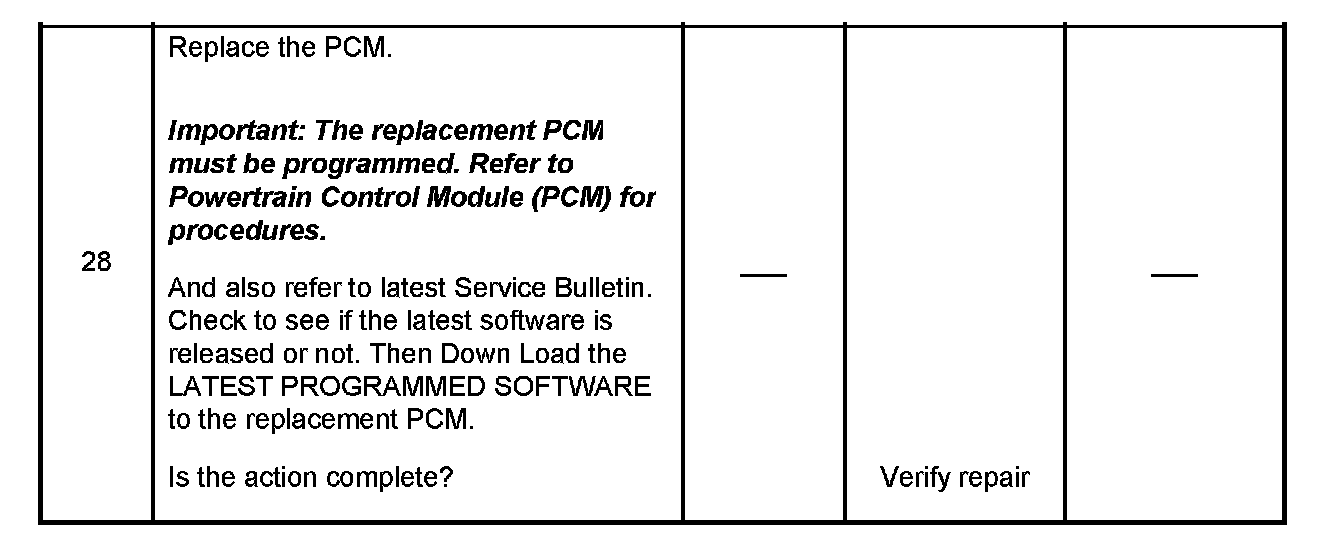
Step 28:
Test Description
2. If the Anti-theft system is "ON," the PCM does not operate the starter control system.
19. Refer to the 6D section.
21. Refer to the 6D section.
24. This vehicle is equipped with a PCM which utilized an electrically erasable programable read only memory (EEPROM). When the PCM is replaced, the new PCM must be programmed.
Refer to PCM Replacement and Programming Procedures in Powertrain Control Module (PCM) and Sensors of this section.
Factory Service Tools
Use the Manual With the Right Hardware
Pair factory procedures with proven DIY tools so the instructions are easier to execute.
Disclosure: Verified tool recommendations may earn an affiliate commission at no cost to you.
When to See a Mechanic
Stop DIY work and contact a certified mechanic immediately if any of the following apply:
- • You smell fuel, burning insulation, or see smoke.
- • Brakes feel soft, pull hard to one side, or make grinding noises.
- • The engine overheats, stalls repeatedly, or misfires under load.
- • You are missing required tools, torque specs, or safe lifting equipment.
- • You are not confident in the next step or safety outcome.