
Safety Warning
DIY auto repair can cause serious injury, fire, or vehicle damage. These guides are for informational purposes only. Always follow OEM torque specs, wear PPE, and consult a certified mechanic if you are unsure. You are solely responsible for your safety.
2003 Isuzu Rodeo 2WD L4-2.2LFACTORY OEM SERVICE PROCEDURE
Computers and Control Systems: Tools and Equipment
Special Tools (Part 1 Of 5):
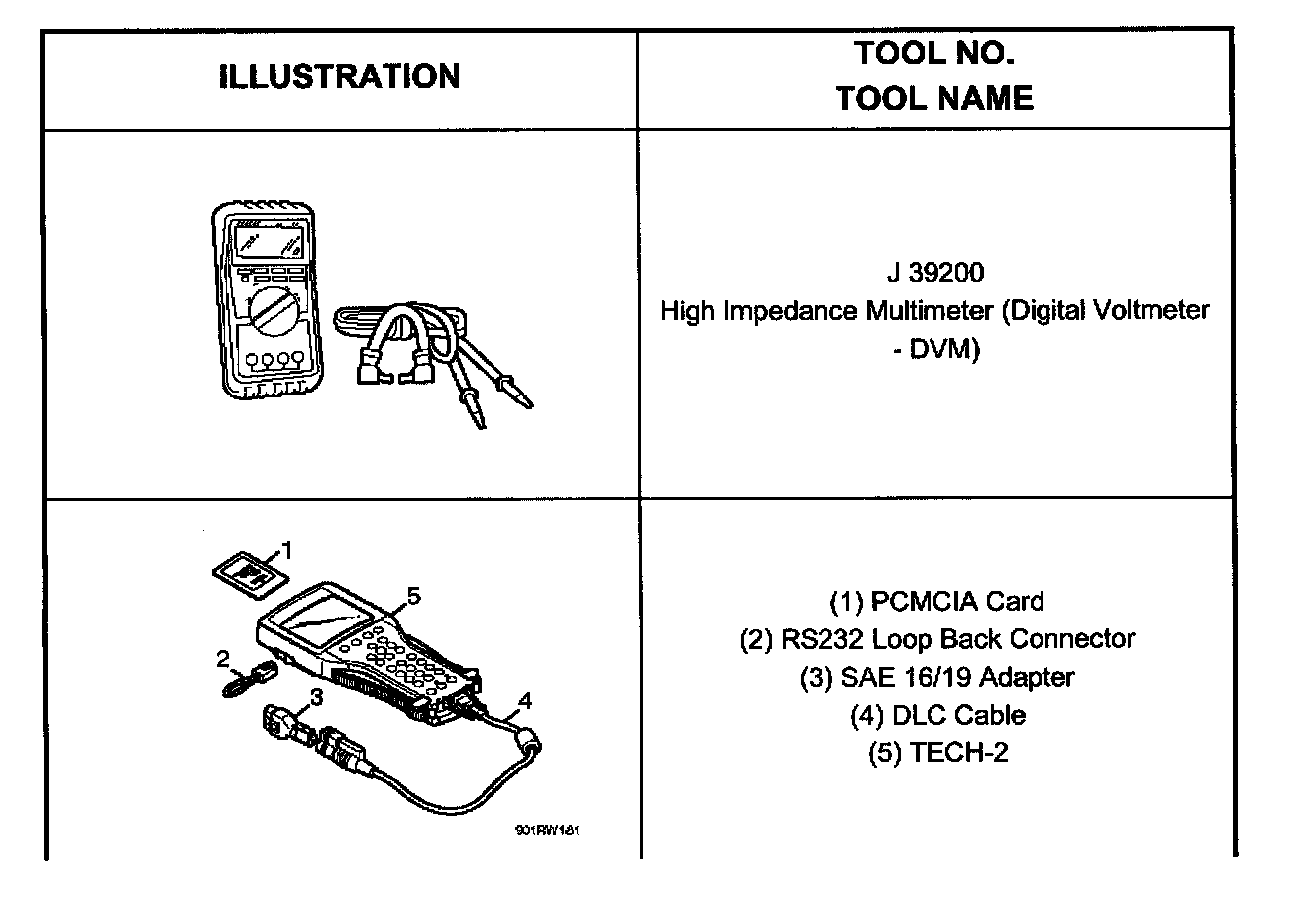
Special Tool Part 2:
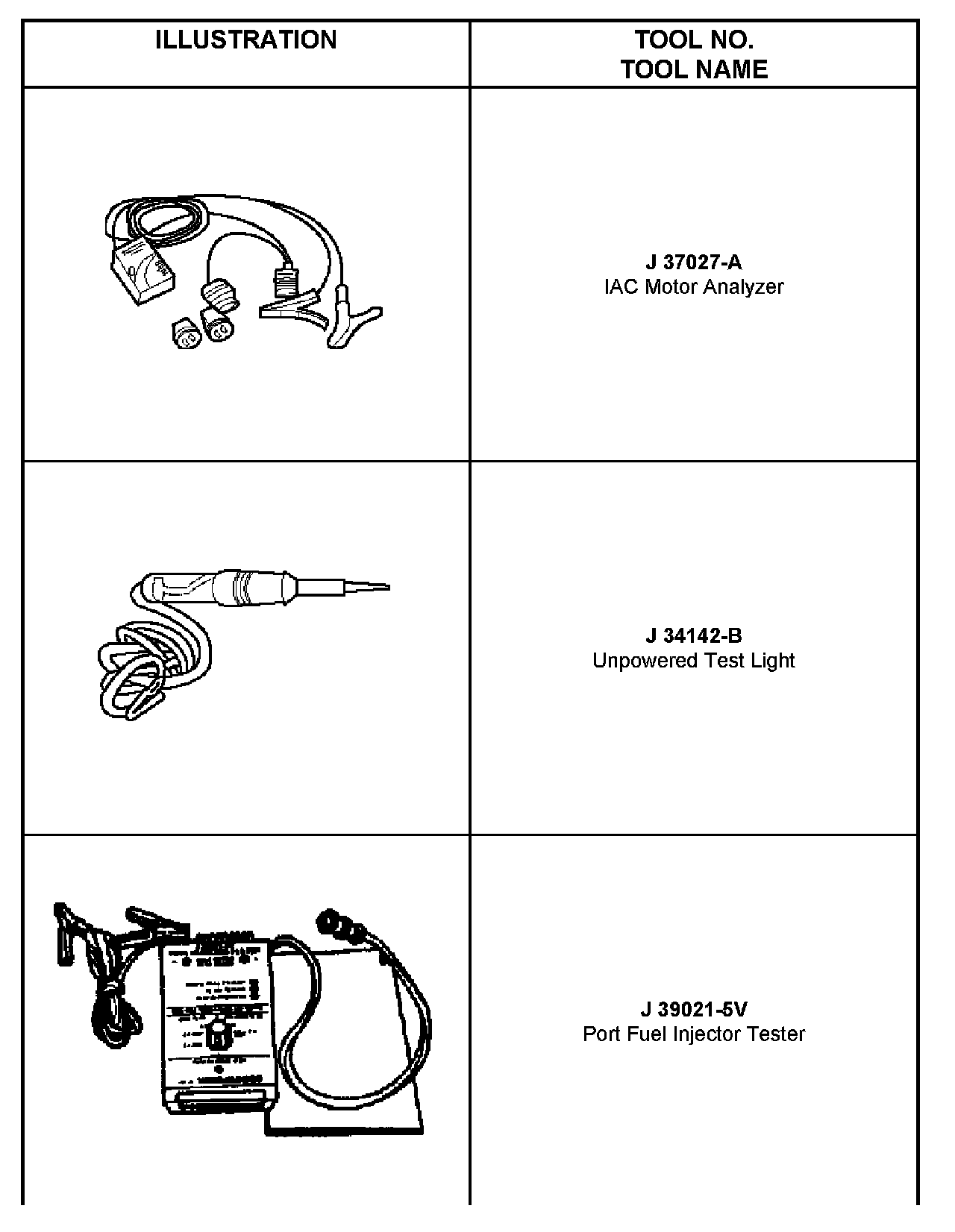
Special Tools (Part 3 Of 6):
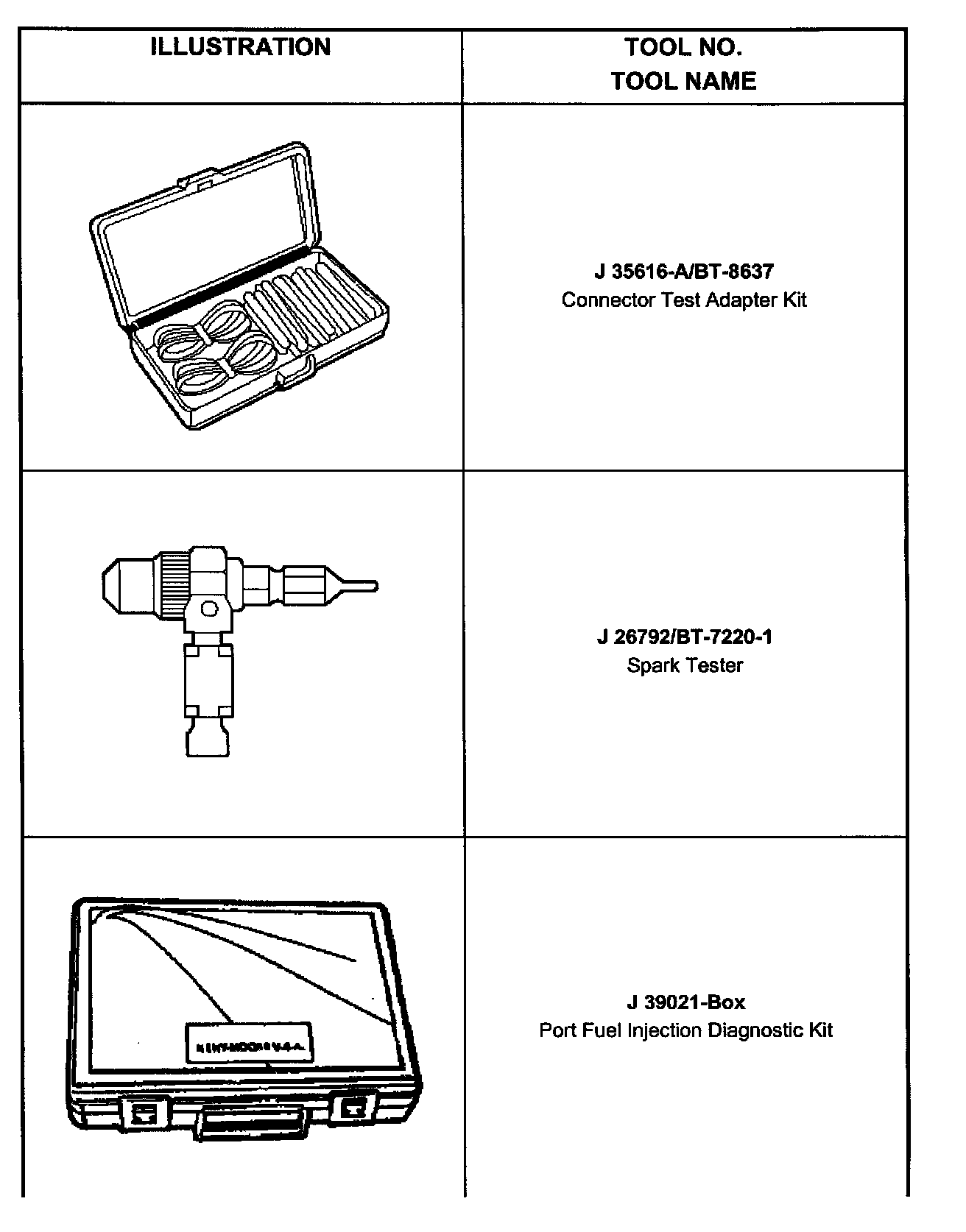
Special Tools (Part 4 Of 6):
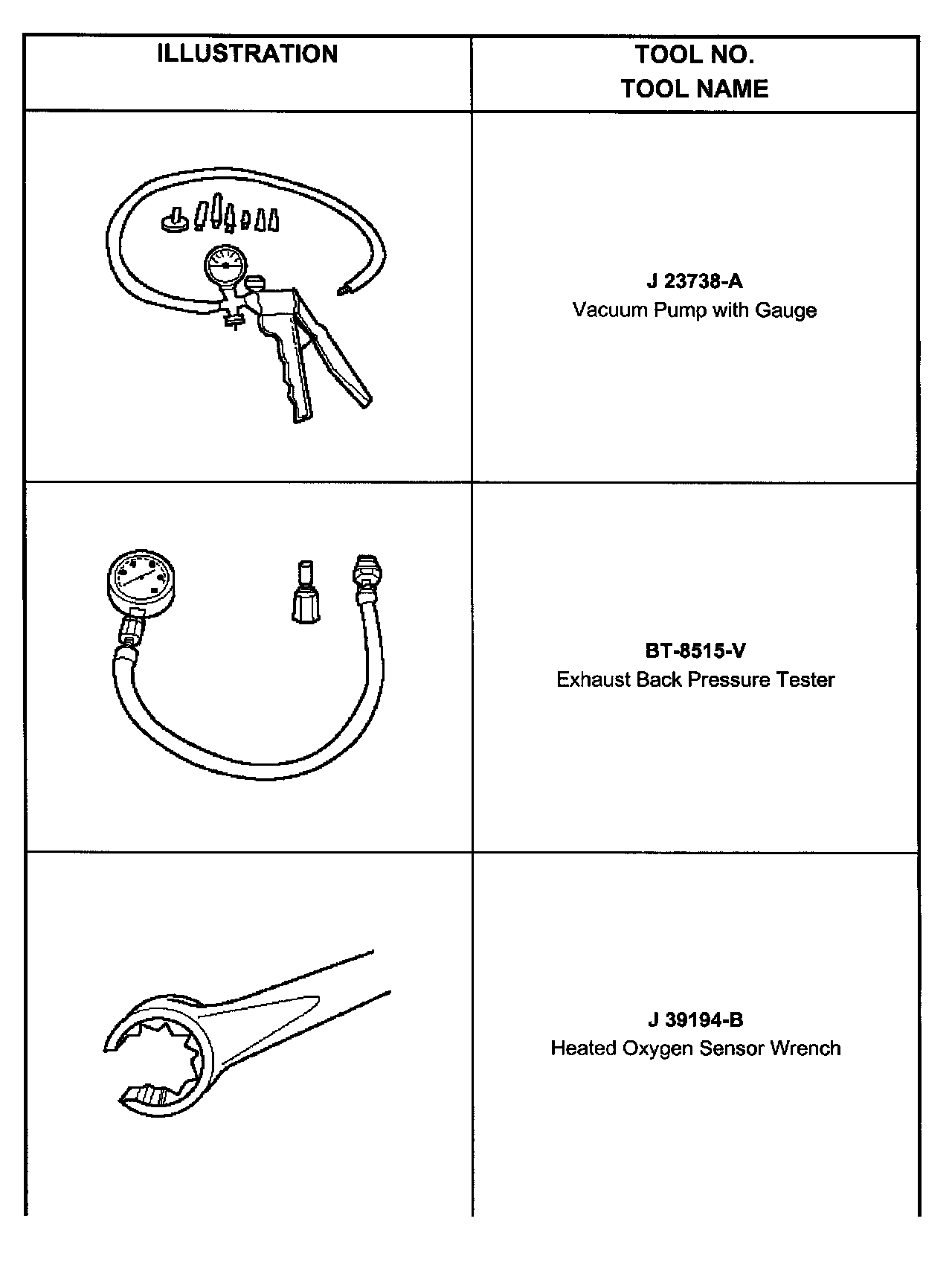
Special Tools (Part 5 Of 6):

Special Tools (Part 6 Of 6):
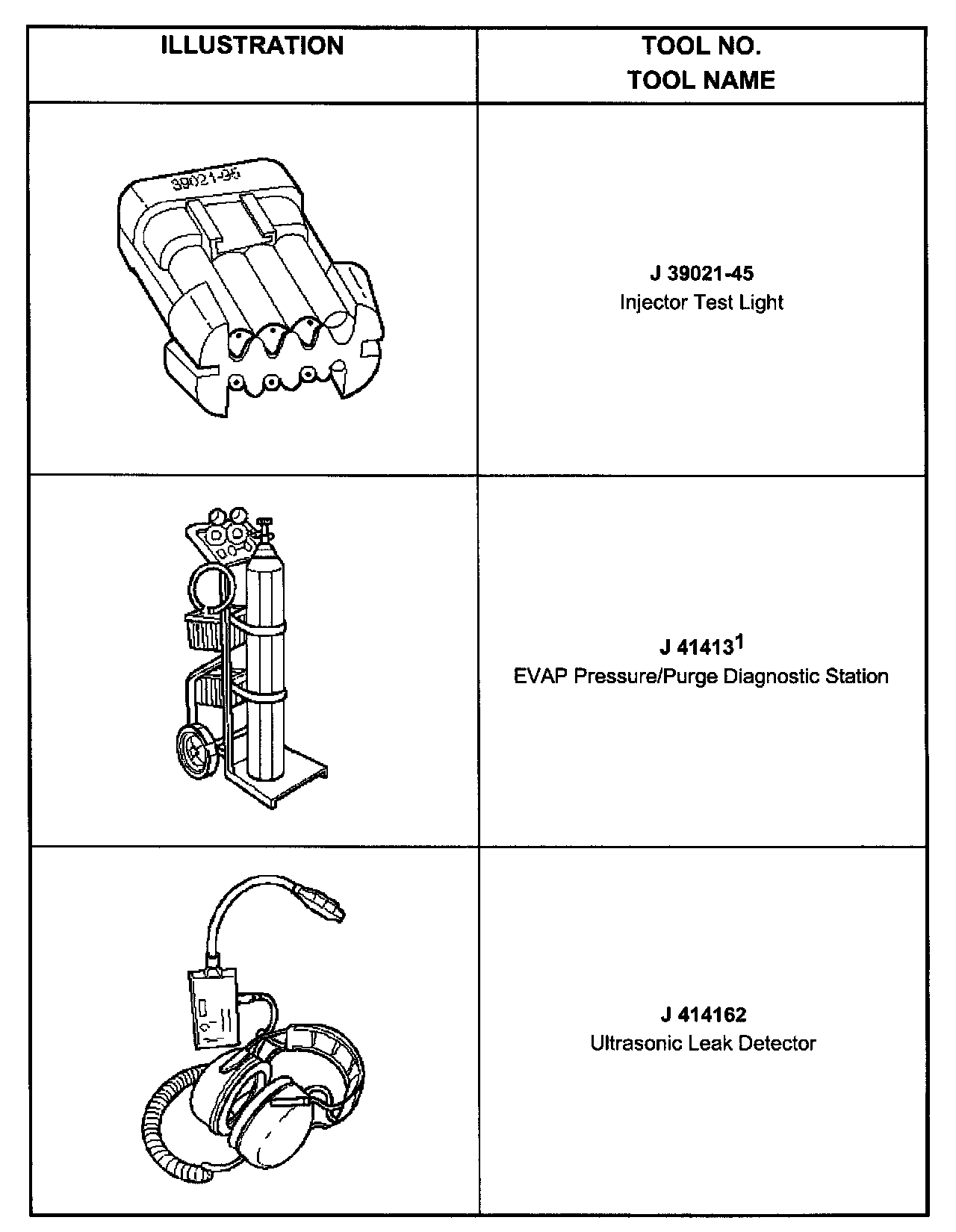
1. J 41413 EVAP Pressure/Purge Diagnostic Station is a multipurpose tool which is used to perform several diagnostic procedures for enhanced emission testing. The station will accommodate a nitrogen gas filled cylinder which is used to pressurize the vehicle EVAP system for a leakdown test and leak location test when a vehicle is repaired for leakage in the enhanced evaporative emission control system. It also has two additional gauges (inches of mercury and inches of water) which are used to measure both source vacuum and EVAP canister purge vacuum to verify correct operation and vapor flow within the canister purge circuit.
2. J 41416 Ultrasonic Leak Detector is a microprocessor-based device used to detect leaks in the enhanced evaporative emission control system. The evaporative system is pressurized to 30 inches of water using the J 41413 EVAP Pressure/Purge Diagnostic System. Small leaks in the EVAP system will emit sound at a high frequency undetectable by a human ear but detectable with the J 41416. The technician traces along the evaporative system and can pinpoint leaks due to corroded lines, cracked hoses, or a damaged EVAP component. The detector includes a high quality set of headphones to block out surrounding shop noise and the LED sensitivity meter allows a visual reference for locating leaks in conjunction with the audio output heard through the headphones. Powered by (1) nine volt battery.
Factory Service Tools
Use the Manual With the Right Hardware
Pair factory procedures with proven DIY tools so the instructions are easier to execute.
Disclosure: Verified tool recommendations may earn an affiliate commission at no cost to you.
When to See a Mechanic
Stop DIY work and contact a certified mechanic immediately if any of the following apply:
- • You smell fuel, burning insulation, or see smoke.
- • Brakes feel soft, pull hard to one side, or make grinding noises.
- • The engine overheats, stalls repeatedly, or misfires under load.
- • You are missing required tools, torque specs, or safe lifting equipment.
- • You are not confident in the next step or safety outcome.