
Safety Warning
DIY auto repair can cause serious injury, fire, or vehicle damage. These guides are for informational purposes only. Always follow OEM torque specs, wear PPE, and consult a certified mechanic if you are unsure. You are solely responsible for your safety.
2000 Isuzu Rodeo LS 2WD V6-3.2LFACTORY OEM SERVICE PROCEDURE
Lifting Instructions
CAUTION:
- If a lifting device other than the original jack is used, it is most important that the device be applied only to the correct lifting points Raising the vehicle from any other point may result in serious damage.
- When jacking or lifting a vehicle at the frame side rail or other prescribed lift points, be certain that lift pads do not contact the catalytic converter, brake pipes or cables, or fuel lines. Such contact may result in damage or unsatisfactory vehicle performance.
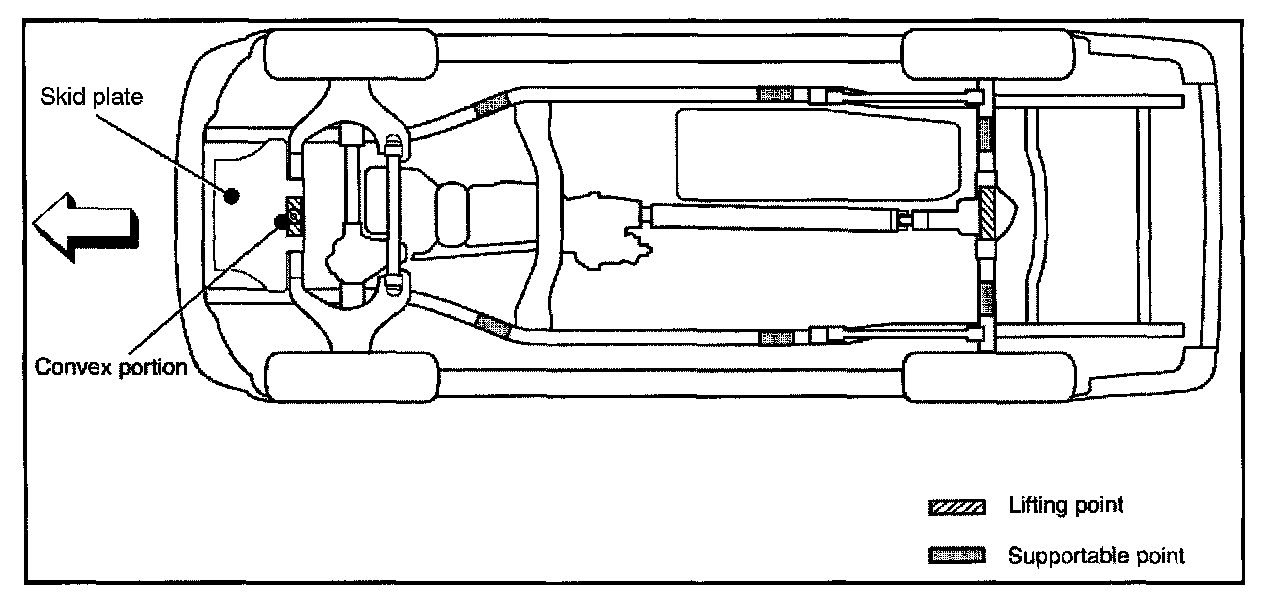
Lifting Points and Supportable Point Locations
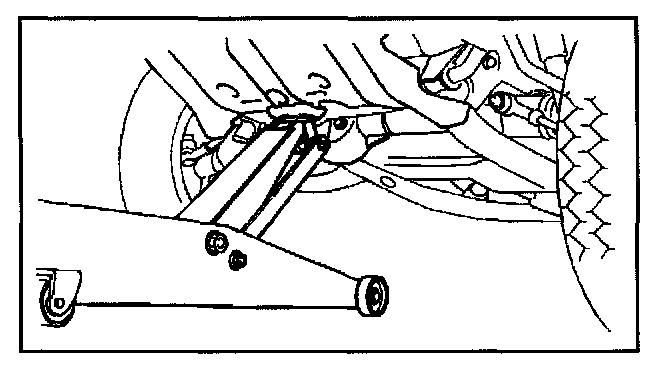
Lifting Point: Front
When using a floor jack, lift on the Convex portion of the skid plate.
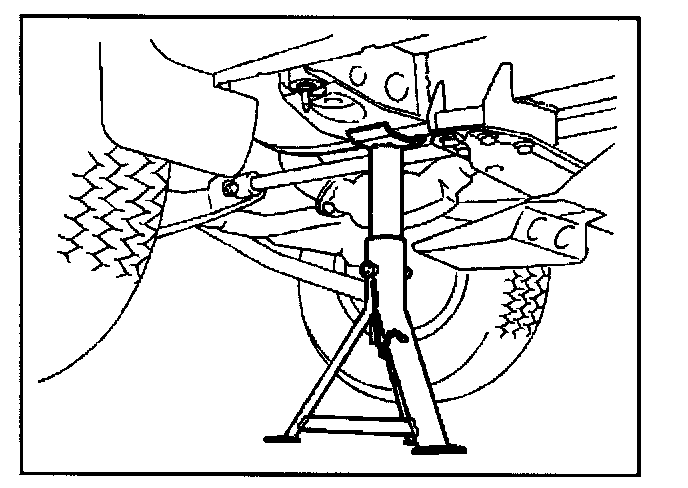
Supportable Point: Front
Position the chassis stands at the bottom of the frame sidemember, behind the front wheel.
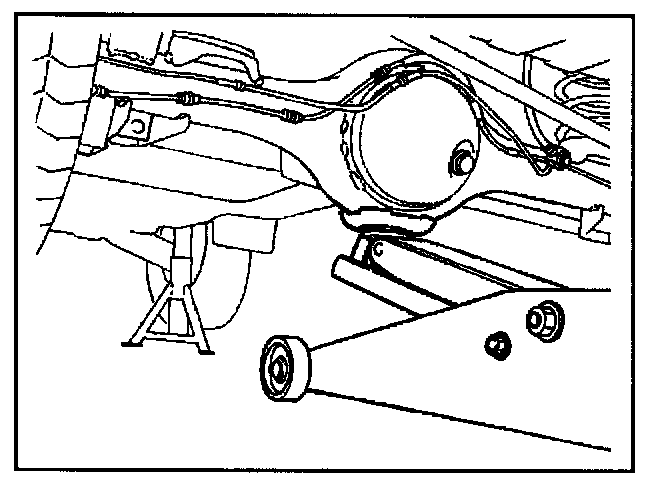
Lifting Point: Rear
Position the floor jack at the center of the rear axle case when lifting the vehicle.
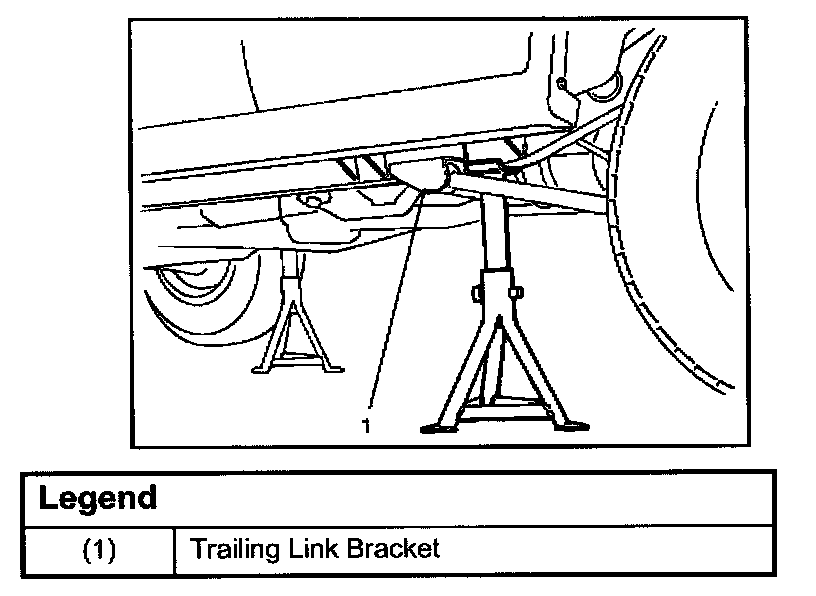
Supportable Point: Rear
Position the chassis stands at the bottom of the frame sidemember, just behind the trailing link bracket.
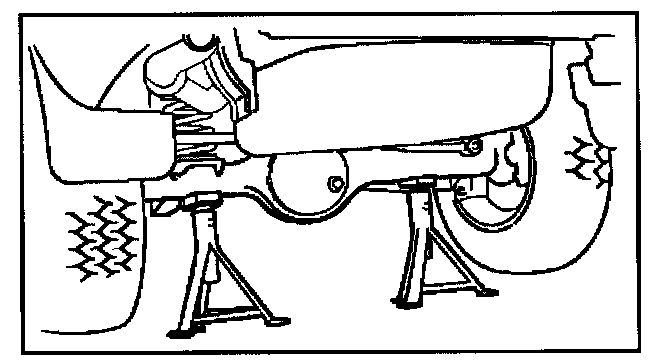
Supportable Point: Rear
Position the chassis stands at the bottom of the rear axle case.
- If a lifting device other than the original jack is used, it is most important that the device be applied only to the correct lifting points Raising the vehicle from any other point may result in serious damage.
- When jacking or lifting a vehicle at the frame side rail or other prescribed lift points, be certain that lift pads do not contact the catalytic converter, brake pipes or cables, or fuel lines. Such contact may result in damage or unsatisfactory vehicle performance.
Lifting Points and Supportable Point Locations
Lifting Point: Front
When using a floor jack, lift on the Convex portion of the skid plate.
Supportable Point: Front
Position the chassis stands at the bottom of the frame sidemember, behind the front wheel.
Lifting Point: Rear
Position the floor jack at the center of the rear axle case when lifting the vehicle.
Supportable Point: Rear
Position the chassis stands at the bottom of the frame sidemember, just behind the trailing link bracket.
Supportable Point: Rear
Position the chassis stands at the bottom of the rear axle case.
Factory Service Tools
Use the Manual With the Right Hardware
Pair factory procedures with proven DIY tools so the instructions are easier to execute.
Disclosure: Verified tool recommendations may earn an affiliate commission at no cost to you.
When to See a Mechanic
Stop DIY work and contact a certified mechanic immediately if any of the following apply:
- • You smell fuel, burning insulation, or see smoke.
- • Brakes feel soft, pull hard to one side, or make grinding noises.
- • The engine overheats, stalls repeatedly, or misfires under load.
- • You are missing required tools, torque specs, or safe lifting equipment.
- • You are not confident in the next step or safety outcome.