
Safety Warning
DIY auto repair can cause serious injury, fire, or vehicle damage. These guides are for informational purposes only. Always follow OEM torque specs, wear PPE, and consult a certified mechanic if you are unsure. You are solely responsible for your safety.
2001 Hyundai Tiburon L4-2.0LFACTORY OEM SERVICE PROCEDURE
Coolant Temperature Sensor/Switch (For Computer): Testing and Inspection
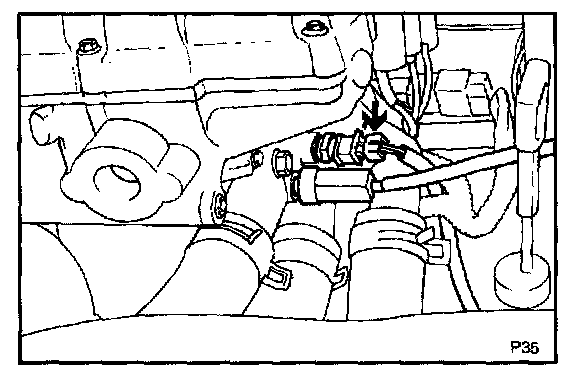
ENGINE COOLANT TEMPERATURE (ECT) SENSOR
The engine coolant temperature sensor is installed in the engine coolant passage of the cylinder head, detects engine coolant temperature and emits signals to the ECM.
This part employs a thermistor which is sensitive to changes in temperature. The electric resistance of a thermistor decreases in response to temperature rise.
The ECM judges engine coolant temperature by the sensor output voltage and provides optimum fuel enrichment when the engine is cold.
Circuit Diagram:

Troubleshooting Procedures:

TROUBLESHOOTING HINTS
1. If the fast idle speed is not enough or the engine gives off dark smoke during the engine warm-up operation, it might be caused by the engine coolant temperature sensor.
2. If the thermostat opening state is abnormal which causes overcooling, the Diagnosis Trouble Code for the Engine Coolant Temperature Sensor can be displayed on HI-SCAN under the following conditions;.
3. The MIL is ON or the DTC is displayed on the HI-SCAN under the following conditions;
1. When the engine coolant temperature is detected as below -40 °C or above 120 °C
2. If the engine coolant temperature does not go up at least 5 °C, even though 130 seconds or more elapsed after starting the engine.
Using Hi-Scan:

Using Voltmeter:

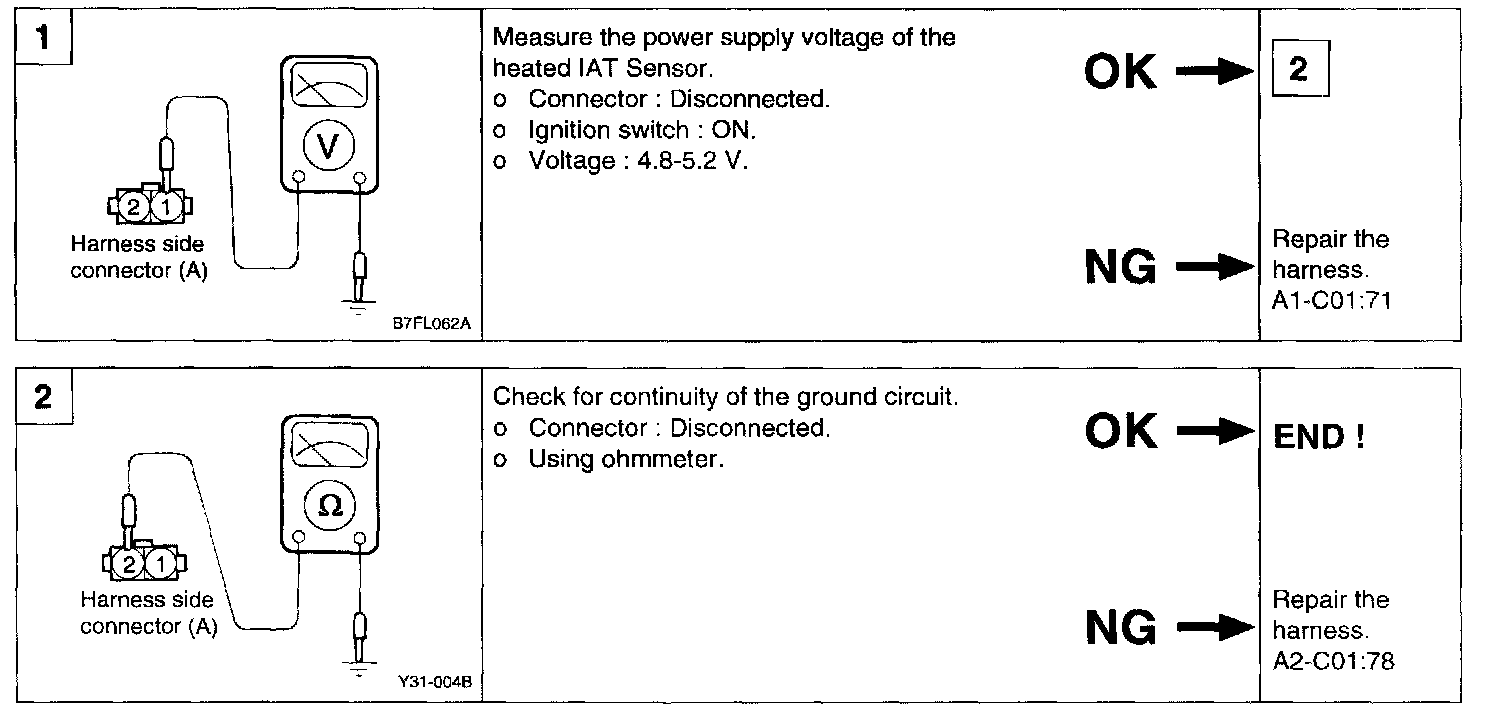
Harness Inspection Procedures:


SENSOR INSPECTION
1. Remove the engine coolant temperature sensor from the intake manifold.
2. With temperature sensing portion of engine coolant temperature sensor immersed in hot water, check resistance.
3. If the resistance deviates from the standard value greatly, replace the sensor.
Factory Service Tools
Use the Manual With the Right Hardware
Pair factory procedures with proven DIY tools so the instructions are easier to execute.
Disclosure: Verified tool recommendations may earn an affiliate commission at no cost to you.
When to See a Mechanic
Stop DIY work and contact a certified mechanic immediately if any of the following apply:
- • You smell fuel, burning insulation, or see smoke.
- • Brakes feel soft, pull hard to one side, or make grinding noises.
- • The engine overheats, stalls repeatedly, or misfires under load.
- • You are missing required tools, torque specs, or safe lifting equipment.
- • You are not confident in the next step or safety outcome.