
Safety Warning
DIY auto repair can cause serious injury, fire, or vehicle damage. These guides are for informational purposes only. Always follow OEM torque specs, wear PPE, and consult a certified mechanic if you are unsure. You are solely responsible for your safety.
2006 Hummer H3 L5-3.5LFACTORY OEM SERVICE PROCEDURE
Camshaft Position Sensor: Testing and Inspection
Camshaft Position (CMP) Actuator Diagnosis
For overall description of the camshaft position actuator refer to Exhaust Camshaft
Position Actuator Description.
The camshaft position actuator will only phase 25-cam degrees retard (counterclockwise). Full advance (clockwise) is 0 degrees.
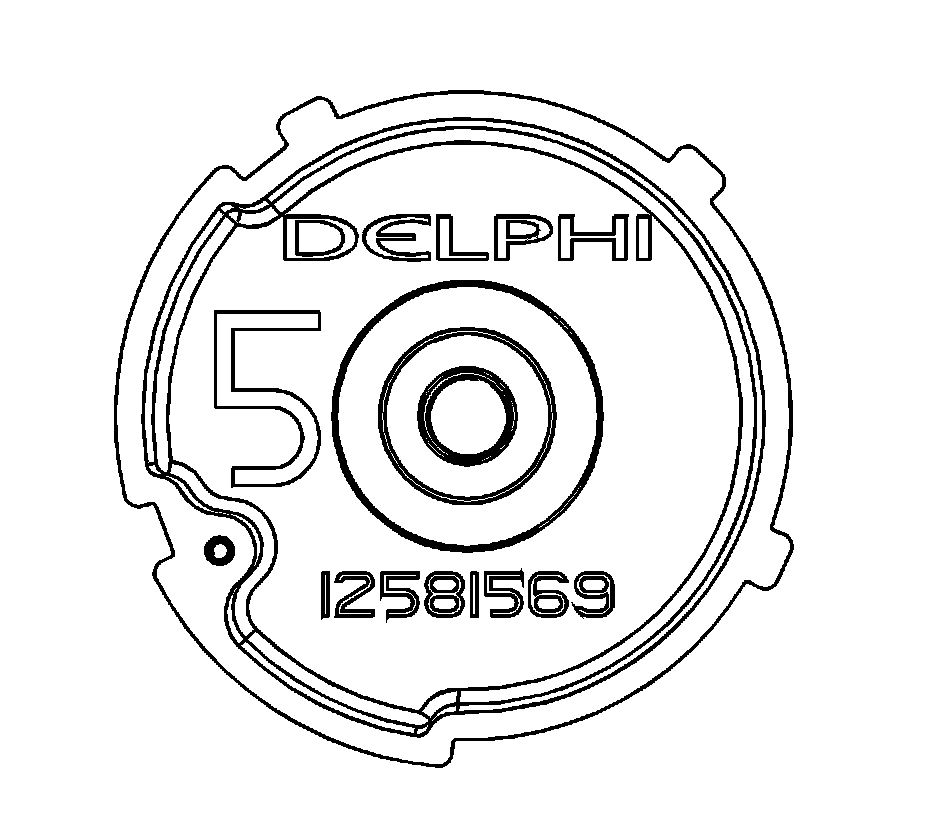
The camshaft position actuator should always be serviced/replaced in the full advanced position (full clockwise or 0 degrees). New replacement (service) camshaft position actuators are shipped at full advance or 0 degrees. To be sure the camshaft position actuator is performing properly, perform the following to help in the diagnostics.
The camshaft position actuator must be removed from the engine to perform the proper diagnostic test.
1. Clamp the camshaft actuator in a vice. Use care not to damage the contact area of the sprocket.
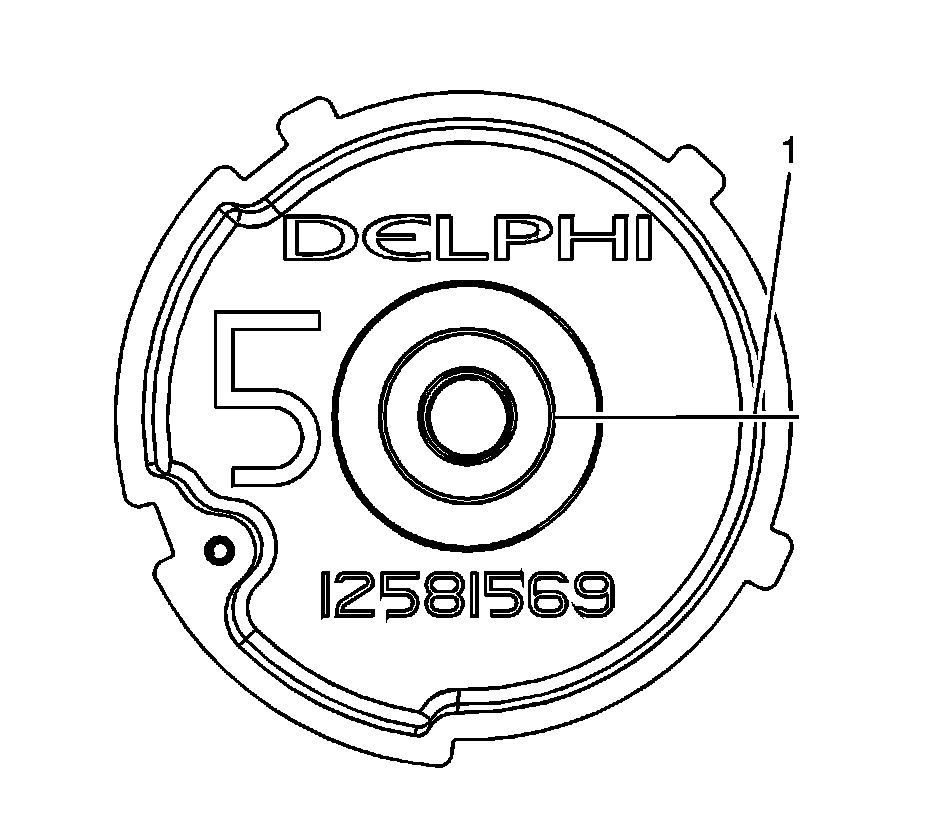
2. Scribe or draw a line (1) on the camshaft position actuator outer ring face, in the full advanced position. With the engine at TDC on #1 cylinder, the wording should be level.
3. Apply compressed air pressure to the oil port (1) on the back side of the actuator to unlock the locking pin.
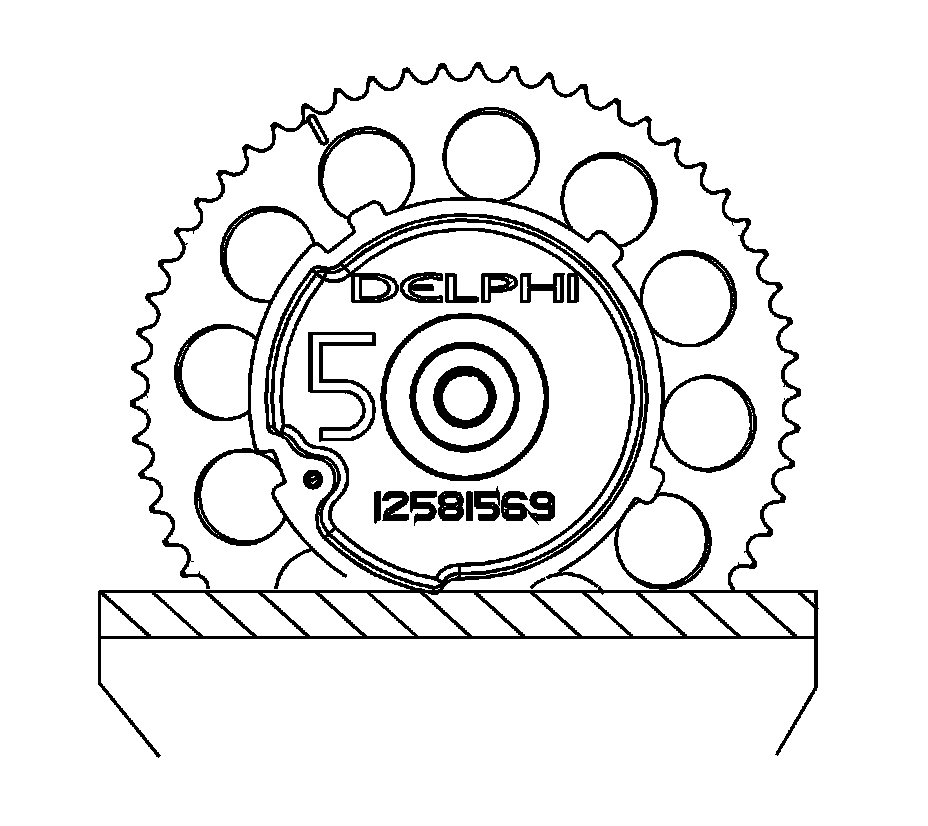
4. Turn the actuator, by hand, to the full counterclockwise position.
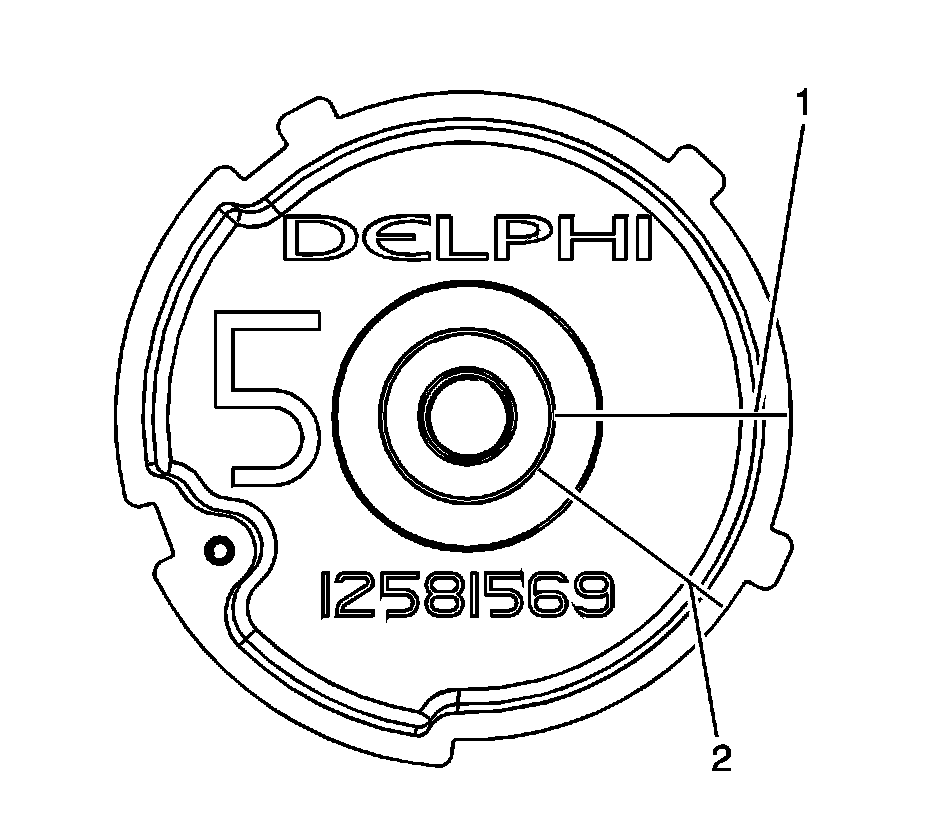
5. Scribe or draw a line (2) on the camshaft position actuator at that position.
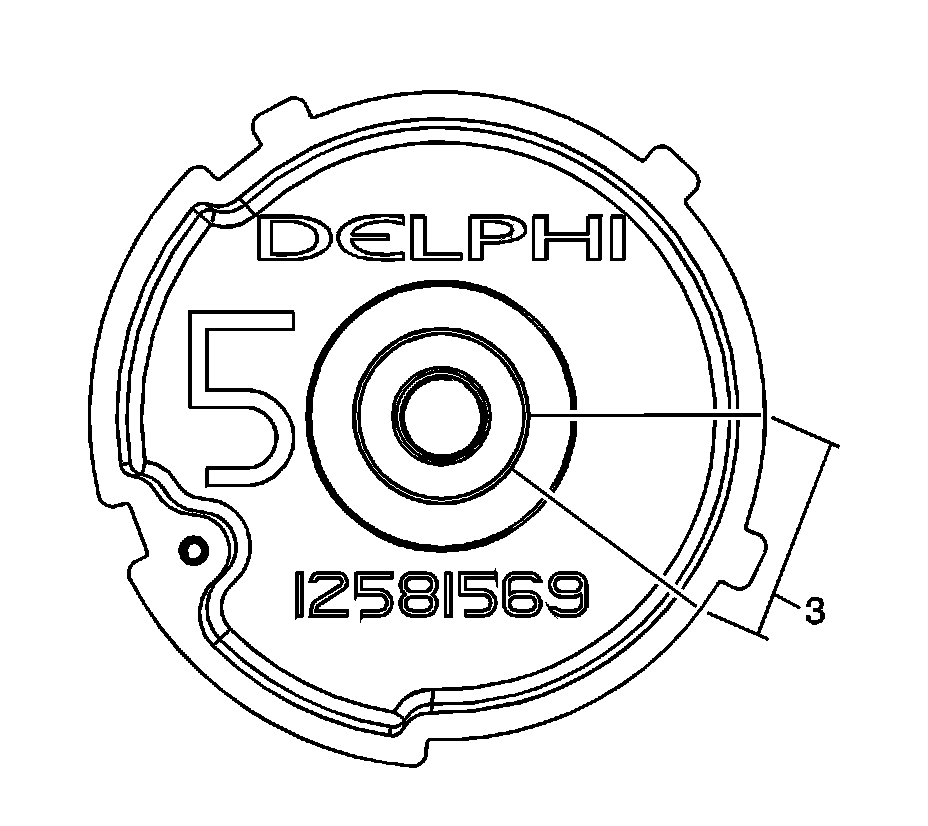
6. Measure the distance between the two lines. The measurement (3) should be 14 - 15 mm (0.55 - 0.59 inch).
Important: It is normal for oil to leak out of the camshaft actuator when compressed air is applied. It is also normal for oil bubbles to form on the camshaft sprocket itself.
The camshaft position actuator must be replaced if it does not unlock when air pressure is applied, does not lock when air pressure is removed, or does not move within the 14 - 15 mm (0.55 - 0.59 inch).
Factory Service Tools
Use the Manual With the Right Hardware
Pair factory procedures with proven DIY tools so the instructions are easier to execute.
Disclosure: Verified tool recommendations may earn an affiliate commission at no cost to you.
When to See a Mechanic
Stop DIY work and contact a certified mechanic immediately if any of the following apply:
- • You smell fuel, burning insulation, or see smoke.
- • Brakes feel soft, pull hard to one side, or make grinding noises.
- • The engine overheats, stalls repeatedly, or misfires under load.
- • You are missing required tools, torque specs, or safe lifting equipment.
- • You are not confident in the next step or safety outcome.