
Safety Warning
DIY auto repair can cause serious injury, fire, or vehicle damage. These guides are for informational purposes only. Always follow OEM torque specs, wear PPE, and consult a certified mechanic if you are unsure. You are solely responsible for your safety.
2003 Hummer H2 V8-6.0LFACTORY OEM SERVICE PROCEDURE
Vehicle Lifting: Service and Repair
LIFTING AND JACKING THE VEHICLE
CAUTION:
- To avoid any vehicle damage, serious personal injury or death, always use the jackstands to support the vehicle when lifting the vehicle with a jack.
- To avoid any vehicle damage, serious personal injury or death when major components are removed from the vehicle and the vehicle is supported by a hoist, support the vehicle with jack stands at the opposite end from which the components are being removed.
NOTE: Perform the following steps before beginning any vehicle lifting or jacking procedure:
- Remove or secure all of the vehicle's contents in order to avoid any shifting or any movement that may occur during the vehicle lifting or jacking procedure.
- The lifting equipment or the jacking equipment weight rating must meet or exceed the weight of the vehicle and any vehicle contents.
- The lifting equipment or the jacking equipment must meet the operational standards of the lifting equipment or jacking equipment's manufacturer.
- Perform the vehicle lifting or jacking procedure on a clean, hard, dry, level surface.
- Perform the vehicle lifting or jacking procedure only at the identified lift points. DO NOT allow the lifting equipment or jacking equipment to contact any other vehicle components.
Failure to perform the previous steps could result in damage to the lifting equipment or the jacking equipment, the vehicle, and/or the vehicle's contents.
For lifting the vehicle, various lift points are recommended. Before you begin any lifting procedure, be sure the vehicle is on a clean, hard, level surface. Be sure all the lifting equipment meets weight standards and is in good working order. Be sure all the vehicle loads are equally distributed and secure. If you are only supporting the vehicle at the frame side rails, make sure the lifting equipment does not put too much stress on or weaken the frame side rails.
If you use any other hoisting methods than those called out, take special care not to damage the fuel tanks, the exhaust system or the underbody.
FRAME CONTACT HOIST
Front Hoist Pads
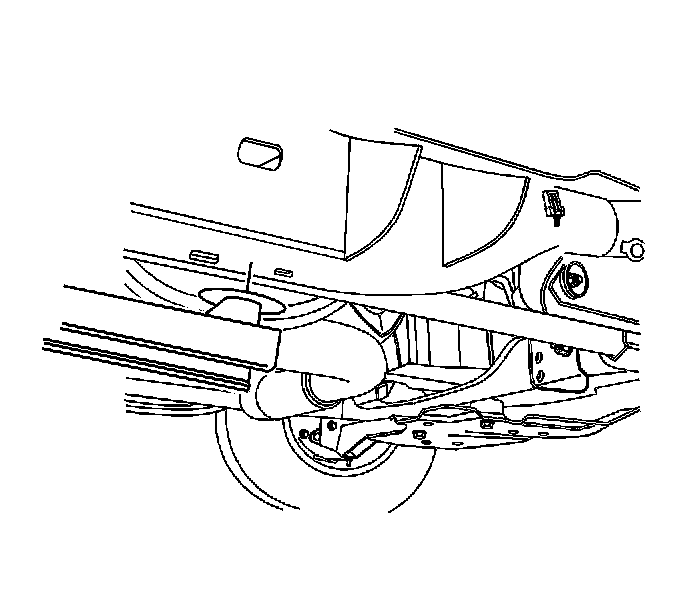
Position the (frame contact) front hoist pads under the front frame between the lower control arm and the frame pad or the front frame pad when using a tip-up hoist pad.
IMPORTANT: The front hoist pads must not contact the rocker panels, the front fenders, or the floor pan.
Rear Hoist Pads
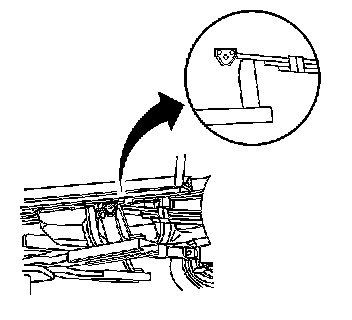
Position the (body/frame contact) rear hoist pads under the rear spring, just behind the hanger, for the tip-up pad only.
Vehicles with rear leaf springs.
IMPORTANT: The rear hoist pads must not contact the body rocker panels or the floor pan.
JACKING
When you are lifting a vehicle with a vehicle jack or a floor jack, block the wheels at the opposite end from which you are lifting. Use jack stands to provide additional support.
Under the Frame Rails
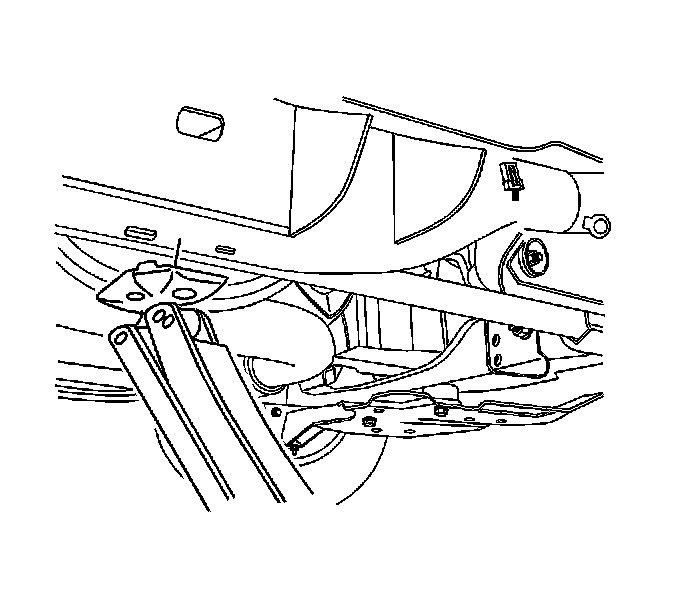
Position the floor jack pad under the frame rail pad.
IMPORTANT: The floor jack pad must not contact rocker panel or the floor pan.
Under the Rear Differential
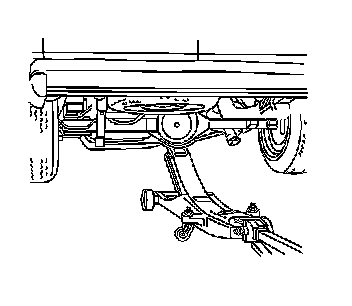
Position the floor jack pad under the center of the rear axle differential.
Care should be taken so as not to damage the establisher bar.
Under the Rear Spring Hanger
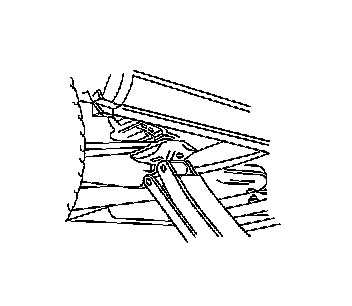
Position the jack under the rear spring hanger.
JACK STANDS
IMPORTANT: When supporting the vehicle with jack stands, the jack stands should be placed under the frame, the front suspension crossmember, or the rear axle.
Factory Service Tools
Use the Manual With the Right Hardware
Pair factory procedures with proven DIY tools so the instructions are easier to execute.
Disclosure: Verified tool recommendations may earn an affiliate commission at no cost to you.
When to See a Mechanic
Stop DIY work and contact a certified mechanic immediately if any of the following apply:
- • You smell fuel, burning insulation, or see smoke.
- • Brakes feel soft, pull hard to one side, or make grinding noises.
- • The engine overheats, stalls repeatedly, or misfires under load.
- • You are missing required tools, torque specs, or safe lifting equipment.
- • You are not confident in the next step or safety outcome.