
Safety Warning
DIY auto repair can cause serious injury, fire, or vehicle damage. These guides are for informational purposes only. Always follow OEM torque specs, wear PPE, and consult a certified mechanic if you are unsure. You are solely responsible for your safety.
2005 Honda Element 2WD L4-2.4LFACTORY OEM SERVICE PROCEDURE
Rod Bearing Selection
Rod Bearing Selection
1. Inspect each connecting rod for cracks and heat damage.
Connecting Rod Big End Bore Code Locations
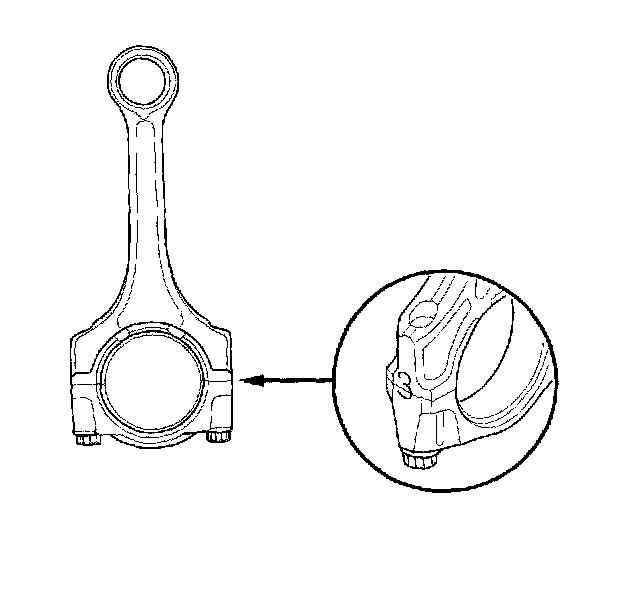
2. Each rod has a tolerance range from 0 to 0.024 mm (0.0009 inch), in 0.006 mm (0.0002 inch) increments, depending on the size of its big end bore. It's then stamped with a number or bar (1, 2, 3 or 4/I, II, III, or IIII) indicating the range. You may find any combination of numbers and bars in any engine. (Half the number or bar is stamped on the bearing cap, the other half is on the rod.)
- If you can't read the code because of an accumulation of oil and varnish, do not scrub it with a wire brush or scraper. Clean it only with solvent or detergent.
Normal Bore Size: 51.0 mm (2.01 inch)
Connecting Rod Journal Code Location
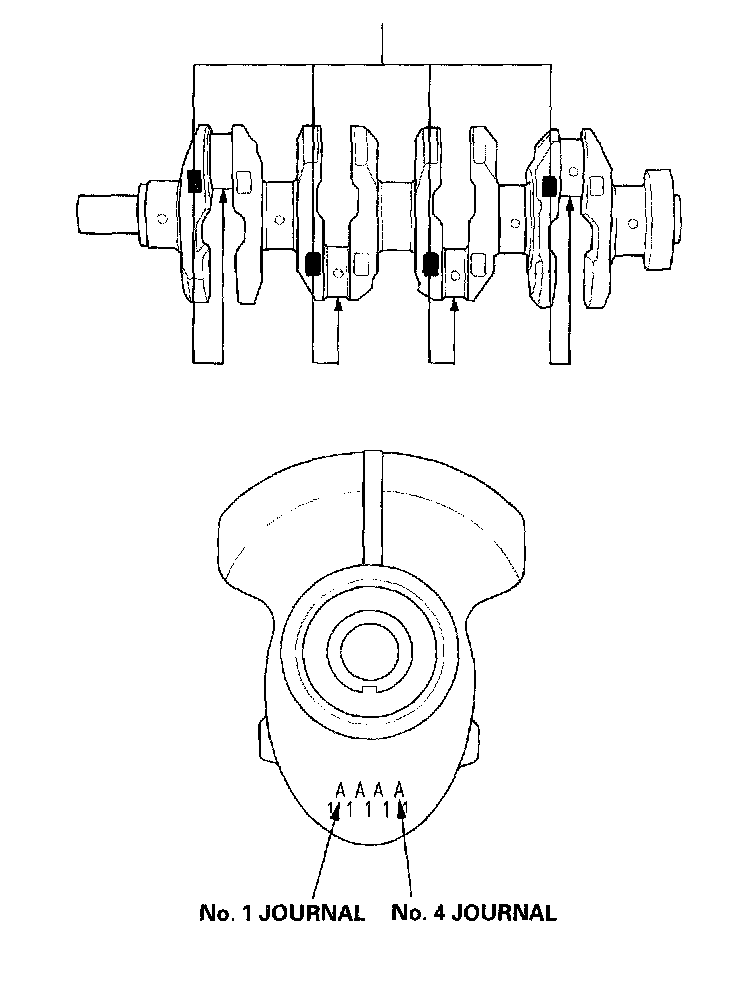
3. The connecting rod journal codes are stamped on the crankshaft in either location.
Connecting Rod Journal Code Location (Letters or Bars)
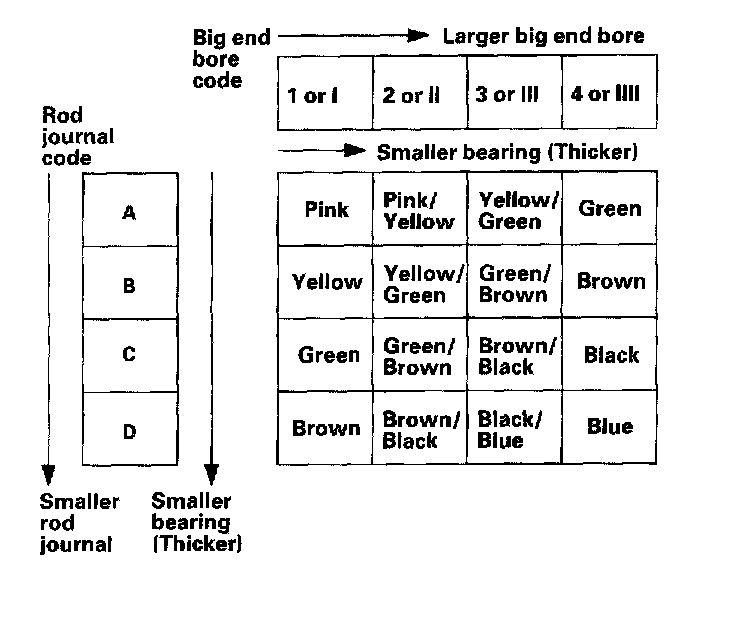
4. Use the big end bore codes and rod journal codes to select appropriate replacement bearings from the table.
NOTE: Color code is on the edge of the bearing. When using bearing halves of different colors, it does not matter which color is used in the top or bottom.
Factory Service Tools
Use the Manual With the Right Hardware
Pair factory procedures with proven DIY tools so the instructions are easier to execute.
Disclosure: Verified tool recommendations may earn an affiliate commission at no cost to you.
When to See a Mechanic
Stop DIY work and contact a certified mechanic immediately if any of the following apply:
- • You smell fuel, burning insulation, or see smoke.
- • Brakes feel soft, pull hard to one side, or make grinding noises.
- • The engine overheats, stalls repeatedly, or misfires under load.
- • You are missing required tools, torque specs, or safe lifting equipment.
- • You are not confident in the next step or safety outcome.