
Safety Warning
DIY auto repair can cause serious injury, fire, or vehicle damage. These guides are for informational purposes only. Always follow OEM torque specs, wear PPE, and consult a certified mechanic if you are unsure. You are solely responsible for your safety.
2005 Honda Element 2WD L4-2.4LFACTORY OEM SERVICE PROCEDURE
Spark Plug: Testing and Inspection
Spark Plug Inspection
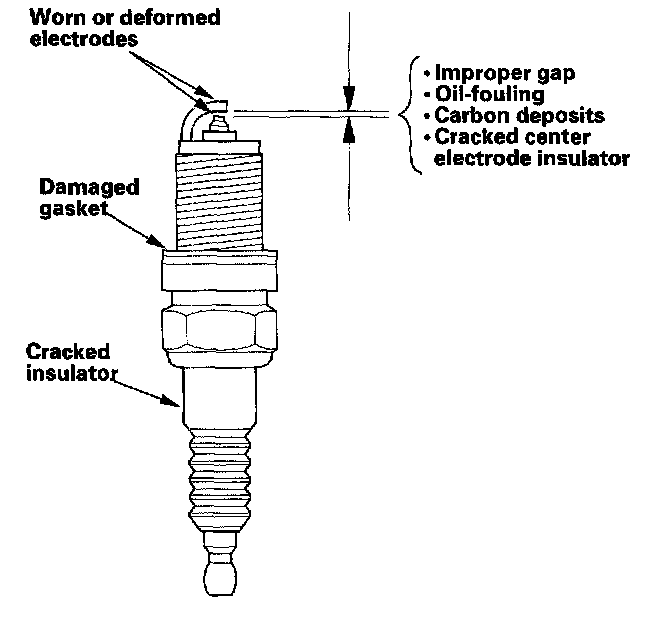
1. Inspect the electrodes and ceramic insulator.
Burned or worn electrodes may be caused by:
- Advanced ignition timing
- Loose spark plug
- Plug heat range too hot
- Insufficient cooling
Fouled plug may be caused by:
- Retarded ignition timing
- Oil in combustion chamber
- Incorrect spark plug gap
- Plug heat range too cold
- Excessive idling/low speed running
- Clogged air cleaner element
- Deteriorated ignition coils
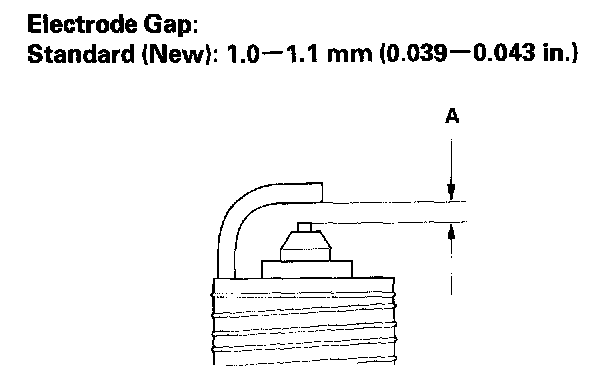
2. Do not adjust the gap (A) of iridium tip plugs; replace the spark plug if the gap is out of specification.
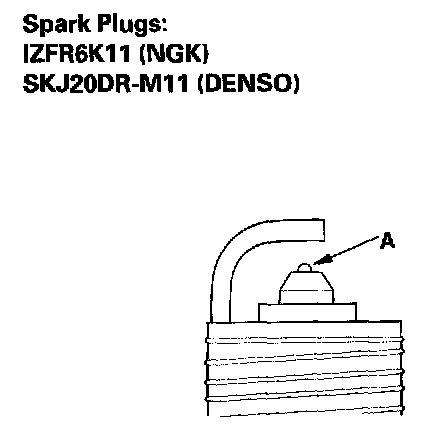
3. Replace the plug at the specified interval or if the center electrode is rounded (A). Use only the spark plugs listed.
4. Apply a small quantity of anti-seize compound to the plug threads, and screw the plugs into the cylinder head finger-tight. Then torque them to 18 N.m (1.8 kgf.m, 13 lbf.ft).
1. Inspect the electrodes and ceramic insulator.
Burned or worn electrodes may be caused by:
- Advanced ignition timing
- Loose spark plug
- Plug heat range too hot
- Insufficient cooling
Fouled plug may be caused by:
- Retarded ignition timing
- Oil in combustion chamber
- Incorrect spark plug gap
- Plug heat range too cold
- Excessive idling/low speed running
- Clogged air cleaner element
- Deteriorated ignition coils
2. Do not adjust the gap (A) of iridium tip plugs; replace the spark plug if the gap is out of specification.
3. Replace the plug at the specified interval or if the center electrode is rounded (A). Use only the spark plugs listed.
4. Apply a small quantity of anti-seize compound to the plug threads, and screw the plugs into the cylinder head finger-tight. Then torque them to 18 N.m (1.8 kgf.m, 13 lbf.ft).
Factory Service Tools
Use the Manual With the Right Hardware
Pair factory procedures with proven DIY tools so the instructions are easier to execute.
Disclosure: Verified tool recommendations may earn an affiliate commission at no cost to you.
When to See a Mechanic
Stop DIY work and contact a certified mechanic immediately if any of the following apply:
- • You smell fuel, burning insulation, or see smoke.
- • Brakes feel soft, pull hard to one side, or make grinding noises.
- • The engine overheats, stalls repeatedly, or misfires under load.
- • You are missing required tools, torque specs, or safe lifting equipment.
- • You are not confident in the next step or safety outcome.