
Safety Warning
DIY auto repair can cause serious injury, fire, or vehicle damage. These guides are for informational purposes only. Always follow OEM torque specs, wear PPE, and consult a certified mechanic if you are unsure. You are solely responsible for your safety.
2004 Honda S2000 L4-2.2LFACTORY OEM SERVICE PROCEDURE
Computers and Control Systems: Description and Operation
PGM-FI System
The Programmed Fuel Injection (PGM-FI) system is a sequential multiport fuel injection system.
Alternator Control
The alternator signals the ECM during charging. The ECM then controls the voltage generated at the alternator according to the electrical load determined by the ELD (Electrical Load Detector) and driving mode. This reduces engine load to improve fuel economy.
A/C Switch
The A/C (air conditioning) switch signals the ECM whenever there is a demand for cooling.
A/C Compressor Clutch Relay
When the ECM receives a demand for cooling from the A/C system, it delays the compressor from being energized, and enriches the mixture to assure smooth transition to the A/C mode.
Barometric Pressure (BARO) Sensor
The BARO sensor is inside the ECM. It converts atmospheric pressure into a voltage signal that modifies the basic duration of the fuel injection discharge.
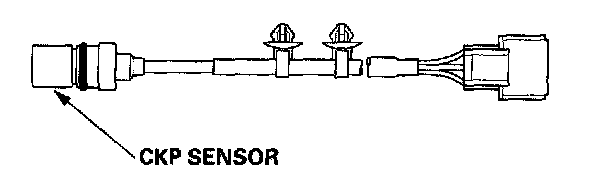
Crankshaft Position (CKP) Sensor
The CKP sensor determines timing for injection of each cylinder and also detects engine speed. The ECM detects misfiring by using the CKP sensor to monitor fluctuations in crankshaft speed. It will then set DTCs depending on how much misfiring occurs.
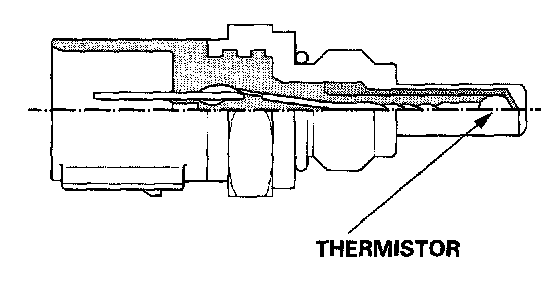
Engine Coolant Temperature (ECT) Sensor
The ECT sensor is a temperature dependent resistor (thermistor). The resistance of the thermistor decreases as the engine coolant temperature increases.

Intake Air Temperature (IAT) Sensor
The IAT sensor is a temperature dependent resistor (thermistor). The resistance of the thermistor decreases as the intake air temperature increases.
Injector Timing and Duration
The ECM contains the memory for basic discharge duration at various engine speeds and manifold pressures. The basic discharge duration, after being read out from the memory, is further modified by signals sent from various sensors to obtain the final discharge duration.
By monitoring long term fuel trim, the ECM detects long term malfunctions in the fuel system, and will set a DTC if the malfunction occurs during two consecutive trips.
Ignition Timing Control
The ECM contains the memory for basic ignition timing at various engine speeds and manifold air flow rates. It also adjusts the timing according to engine coolant temperature.

Knock Sensor
The knock control system adjusts the ignition timing to minimize knock.

Manifold Absolute Pressure (MAP) Sensor
The MAP sensor converts Manifold Absolute Pressure into electrical signals to the ECM.

Primary and Secondary Heated Oxygen Sensors (HO2S)
The heated oxygen sensors detect the oxygen content in the exhaust gas, then sends a signal to the ECM which varies the duration of injection accordingly. To stabilize its output, the sensors have an internal heater. The primary sensor is installed in the exhaust pipe. The secondary sensor is installed in the TWC.
By controlling the air/fuel ratio with sensors, the deterioration of the primary sensor can be evaluated by its feedback period. When the feedback period exceeds a certain value during stable driving conditions, the sensor is considered deteriorated and the ECM sets a DTC.
Starting Control
When the engine is started, the ECM provides a rich mixture by increasing injector duration.

Throttle Position (TP) Sensor
The TP sensor is a potentiometer connected to the throttle valve shaft. As the throttle position changes, the sensor varies the signal voltage to the ECM. The TP sensor is not replaceable apart from the throttle body.

Camshaft Position (CMP Sensor (Top Dead Center (TDC) Sensors)
The CMP A/B (TDC 1/2) sensor determines ignition timing at start up (cranking) and when crank angle is abnormal.
The Programmed Fuel Injection (PGM-FI) system is a sequential multiport fuel injection system.
Alternator Control
The alternator signals the ECM during charging. The ECM then controls the voltage generated at the alternator according to the electrical load determined by the ELD (Electrical Load Detector) and driving mode. This reduces engine load to improve fuel economy.
A/C Switch
The A/C (air conditioning) switch signals the ECM whenever there is a demand for cooling.
A/C Compressor Clutch Relay
When the ECM receives a demand for cooling from the A/C system, it delays the compressor from being energized, and enriches the mixture to assure smooth transition to the A/C mode.
Barometric Pressure (BARO) Sensor
The BARO sensor is inside the ECM. It converts atmospheric pressure into a voltage signal that modifies the basic duration of the fuel injection discharge.
Crankshaft Position (CKP) Sensor
The CKP sensor determines timing for injection of each cylinder and also detects engine speed. The ECM detects misfiring by using the CKP sensor to monitor fluctuations in crankshaft speed. It will then set DTCs depending on how much misfiring occurs.
Engine Coolant Temperature (ECT) Sensor
The ECT sensor is a temperature dependent resistor (thermistor). The resistance of the thermistor decreases as the engine coolant temperature increases.
Intake Air Temperature (IAT) Sensor
The IAT sensor is a temperature dependent resistor (thermistor). The resistance of the thermistor decreases as the intake air temperature increases.
Injector Timing and Duration
The ECM contains the memory for basic discharge duration at various engine speeds and manifold pressures. The basic discharge duration, after being read out from the memory, is further modified by signals sent from various sensors to obtain the final discharge duration.
By monitoring long term fuel trim, the ECM detects long term malfunctions in the fuel system, and will set a DTC if the malfunction occurs during two consecutive trips.
Ignition Timing Control
The ECM contains the memory for basic ignition timing at various engine speeds and manifold air flow rates. It also adjusts the timing according to engine coolant temperature.
Knock Sensor
The knock control system adjusts the ignition timing to minimize knock.
Manifold Absolute Pressure (MAP) Sensor
The MAP sensor converts Manifold Absolute Pressure into electrical signals to the ECM.
Primary and Secondary Heated Oxygen Sensors (HO2S)
The heated oxygen sensors detect the oxygen content in the exhaust gas, then sends a signal to the ECM which varies the duration of injection accordingly. To stabilize its output, the sensors have an internal heater. The primary sensor is installed in the exhaust pipe. The secondary sensor is installed in the TWC.
By controlling the air/fuel ratio with sensors, the deterioration of the primary sensor can be evaluated by its feedback period. When the feedback period exceeds a certain value during stable driving conditions, the sensor is considered deteriorated and the ECM sets a DTC.
Starting Control
When the engine is started, the ECM provides a rich mixture by increasing injector duration.
Throttle Position (TP) Sensor
The TP sensor is a potentiometer connected to the throttle valve shaft. As the throttle position changes, the sensor varies the signal voltage to the ECM. The TP sensor is not replaceable apart from the throttle body.
Camshaft Position (CMP Sensor (Top Dead Center (TDC) Sensors)
The CMP A/B (TDC 1/2) sensor determines ignition timing at start up (cranking) and when crank angle is abnormal.
Factory Service Tools
Use the Manual With the Right Hardware
Pair factory procedures with proven DIY tools so the instructions are easier to execute.
Disclosure: Verified tool recommendations may earn an affiliate commission at no cost to you.
When to See a Mechanic
Stop DIY work and contact a certified mechanic immediately if any of the following apply:
- • You smell fuel, burning insulation, or see smoke.
- • Brakes feel soft, pull hard to one side, or make grinding noises.
- • The engine overheats, stalls repeatedly, or misfires under load.
- • You are missing required tools, torque specs, or safe lifting equipment.
- • You are not confident in the next step or safety outcome.
Rather have a pro handle this?
A certified mobile mechanic comes to your home or office. They bring the tools, you stay comfortable. No tow truck, no waiting room, no surprises.
Comes to youSame-day available12-month warranty
Get a Free QuoteNo obligation. See pricing before you book.