
Safety Warning
DIY auto repair can cause serious injury, fire, or vehicle damage. These guides are for informational purposes only. Always follow OEM torque specs, wear PPE, and consult a certified mechanic if you are unsure. You are solely responsible for your safety.
1992 Geo Metro L3-61 1.0LFACTORY OEM SERVICE PROCEDURE
Oxygen Sensor: Testing and Inspection
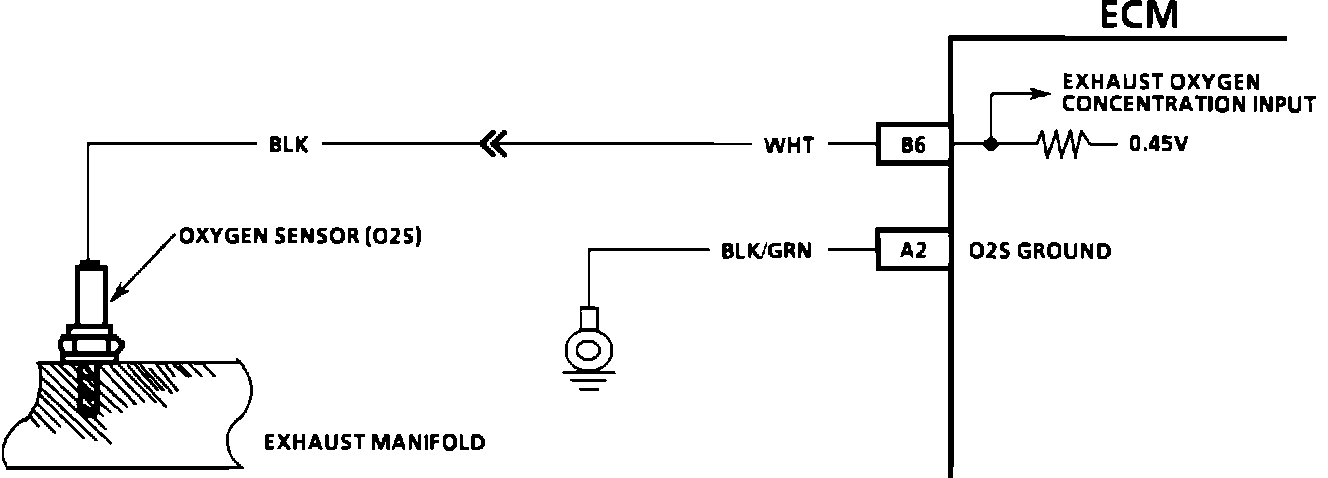
O2S Wiring 93 Metro:
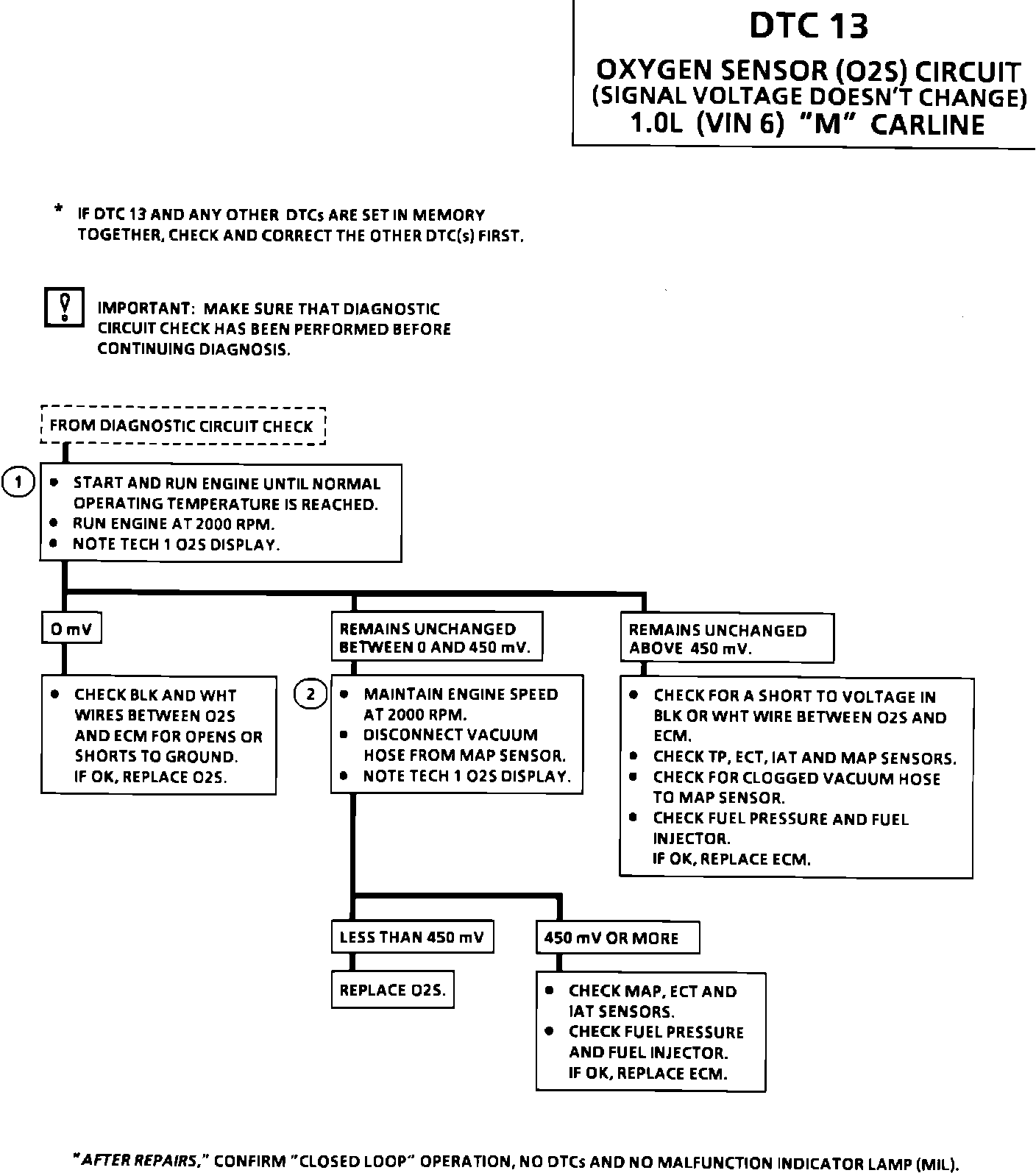
Diagnostic Chart O2S 93 Metro:
CIRCUIT DESCRIPTION:
The oxygen sensor (02S), produces a voltage that varies between .1 volt and .9 volt under normal operating conditions. The ECM monitors this voltage and determines if the exhaust is lean or rich. If the voltage input at the ECM is about .1 volt, the exhaust is lean, and if the voltage input is about .9 volt, the exhaust is rich. If the (O2S) is below 360°C (600°F) it is like an open circuit and will not produce a voltage. This will cause "OPEN LOOP" operation.
TEST DESCRIPTION: The numbers below refer to circled numbers on the diagnostic chart.
1. O2S output voltage, at this step, should be fluctuating between 0 - 1 volt.
2. When the Vacuum hose is removed from the MAP sensor, its output voltage will increase, and the ECM should interpret this as high engine load. The ECM should increase the fuel injector pulse width, causing a rich air/fuel mixture. This should cause the O2S to generate a high voltage output, usually more than 0.900 volt (900 mV).
DIAGNOSTIC AIDS:
Normal voltage on the (H02S) input wire varies between 100 mV and 999 mV (0.1 and 1.0 volt), while in "CLOSED LOOP."
Factory Service Tools
Use the Manual With the Right Hardware
Pair factory procedures with proven DIY tools so the instructions are easier to execute.
Disclosure: Verified tool recommendations may earn an affiliate commission at no cost to you.
When to See a Mechanic
Stop DIY work and contact a certified mechanic immediately if any of the following apply:
- • You smell fuel, burning insulation, or see smoke.
- • Brakes feel soft, pull hard to one side, or make grinding noises.
- • The engine overheats, stalls repeatedly, or misfires under load.
- • You are missing required tools, torque specs, or safe lifting equipment.
- • You are not confident in the next step or safety outcome.