
Safety Warning
DIY auto repair can cause serious injury, fire, or vehicle damage. These guides are for informational purposes only. Always follow OEM torque specs, wear PPE, and consult a certified mechanic if you are unsure. You are solely responsible for your safety.
2003 Freightliner Sprinter 2500 L5-2.7L DSL TurboFACTORY OEM SERVICE PROCEDURE
Starting System
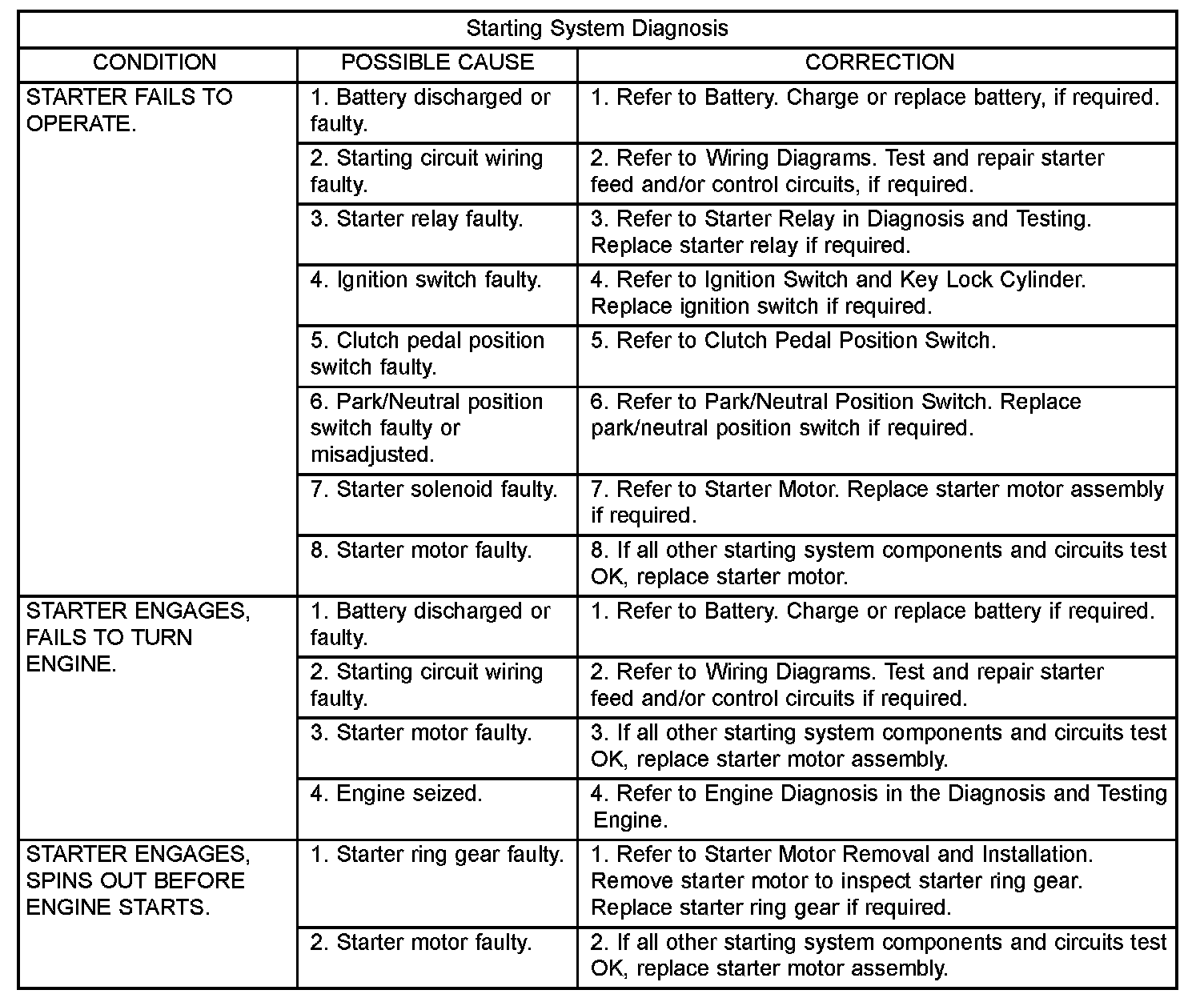
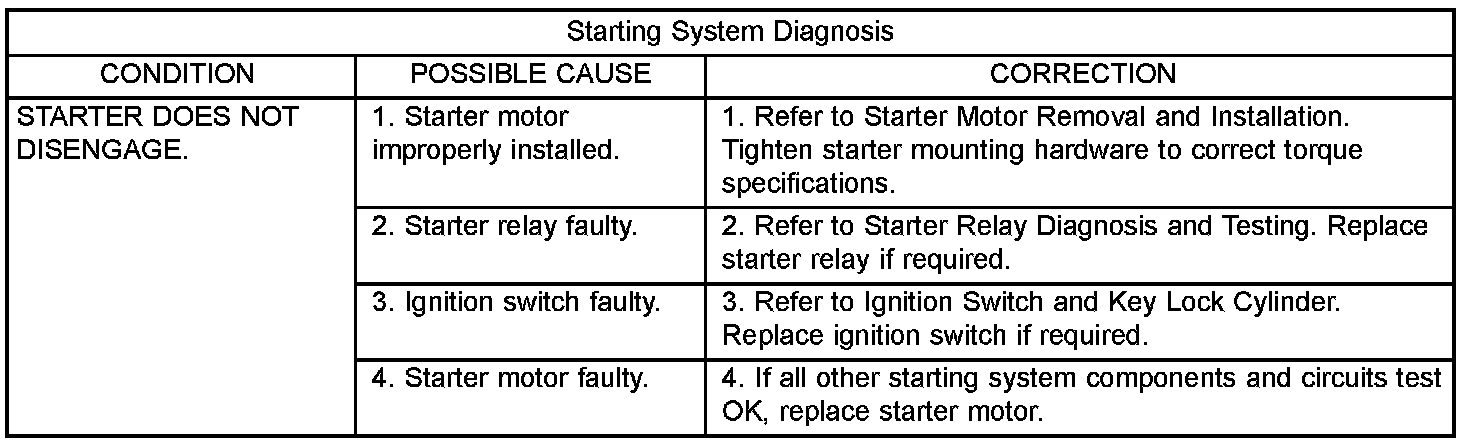
The battery, starting, and charging systems operate in conjunction with one another, and must be tested as a complete system. For correct starting/ charging system operation, all of the components involved in these 3 systems must perform within specifications.
INSPECTION
For complete starter wiring circuit diagrams, refer to Wiring Diagrams. Before removing any unit from starting system for repair or diagnosis, perform the following inspections:
WARNING: ON VEHICLES EQUIPPED WITH AIR-BAGS, REFER TO PASSIVE RESTRAINT SYSTEMS, BEFORE ATTEMPTING ANY STEERING WHEEL, STEERING COLUMN, OR INSTRUMENT PANEL COMPONENT DIAGNOSIS OR SERVICE. FAILURE TO TAKE THE PROPER PRECAUTIONS COULD RESULT IN ACCIDENTAL AIRBAG DEPLOYMENT AND POSSIBLE PERSONAL INJURY.
- Battery - Visually inspect battery for indications of physical damage and loose or corroded cable connections. Determine state-of-charge and cranking capacity of battery. Charge or replace battery if required. Refer to Battery.
- Ignition Switch - Visually inspect ignition switch for indications of physical damage and loose or corroded wire harness connections. Refer to Ignition Switch and Key Lock Cylinder.
- Park/Neutral Position Switch - Visually inspect park/neutral position switch for indications of physical damage and loose or corroded wire harness connections. Refer to Park/Neutral Position Switch in 21, Transmission.
- Starter Relay - Visually inspect starter relay for indications of physical damage and loose or corroded wire harness connections.
- Starter Motor - Visually inspect starter motor for indications of physical damage and loose or corroded wire harness connections.
- Starter Solenoid - Visually inspect starter solenoid for indications of physical damage and loose or corroded wire harness connections.
- Wiring - Visually inspect wire harnesses for damage or corrosion. Repair or replace any faulty wiring, as required. Refer to Wiring Diagrams.
TESTING
COLD CRANKING TEST
For complete starter wiring circuit diagrams, refer to Wiring Diagrams. The battery must be fully-charged and load-tested before proceeding. Refer to Battery.
Volts-Amps Tester Connections - Typical:
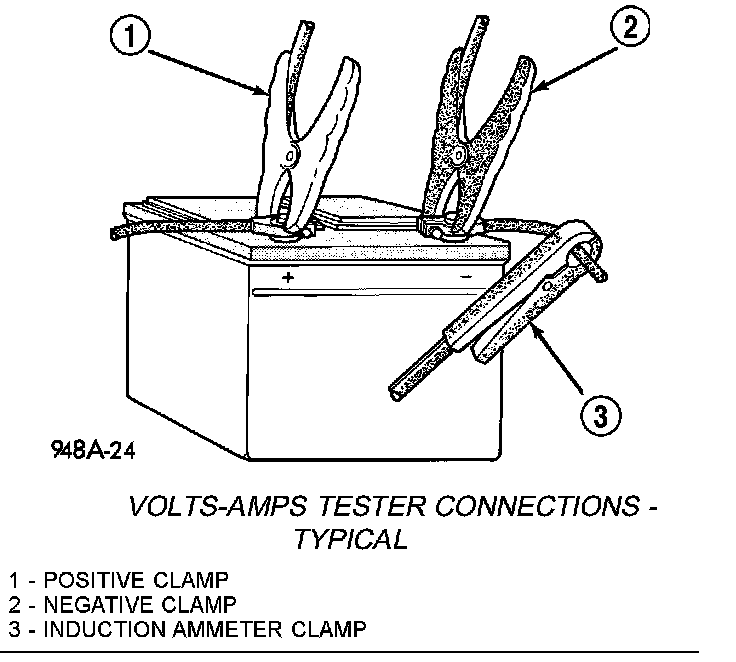
1. Connect volt-ampere tester to battery terminals. See instructions provided by manufacturer of volt-ampere tester being used.
2. Fully engage parking brake.
3. Place gearshift selector lever in Park position.
4. Verify that all lamps and accessories are turned off.
5. To prevent engine from starting, remove Fuel Pump Relay. This relay is located in Power Distribution Center (PDC). Refer to label on PDC cover for relay location.
WARNING: IF EQUIPPED WITH DIESEL ENGINE, ATTEMPT TO START ENGINE A FEW TIMES BEFORE PROCEEDING WITH FOLLOWING STEP.
6. Rotate and hold ignition switch in Start position. Note cranking voltage and current (amperage) draw readings shown on volt-ampere tester.
a. If voltage reads below 9.6 volts, refer to Starter Motor in Diagnosis and Testing. If starter motor is OK, refer to Engine Diagnosis in 9, Engine for further testing of engine. If starter motor is not OK, replace faulty starter motor.
b. If voltage reads above 9.6 volts and current (amperage) draw reads below specifications, refer to Feed Circuit Test in this section.
c. If voltage reads 12.5 volts or greater and starter motor does not turn, refer to Control Circuit Testing in this section.
d. If voltage reads 12.5 volts or greater and starter motor turns very slowly, refer to Feed Circuit Test in this section.
NOTE: A cold engine will increase starter current (amperage) draw reading, and reduce battery voltage reading.
Factory Service Tools
Use the Manual With the Right Hardware
Pair factory procedures with proven DIY tools so the instructions are easier to execute.
Disclosure: Verified tool recommendations may earn an affiliate commission at no cost to you.
When to See a Mechanic
Stop DIY work and contact a certified mechanic immediately if any of the following apply:
- • You smell fuel, burning insulation, or see smoke.
- • Brakes feel soft, pull hard to one side, or make grinding noises.
- • The engine overheats, stalls repeatedly, or misfires under load.
- • You are missing required tools, torque specs, or safe lifting equipment.
- • You are not confident in the next step or safety outcome.