
Safety Warning
DIY auto repair can cause serious injury, fire, or vehicle damage. These guides are for informational purposes only. Always follow OEM torque specs, wear PPE, and consult a certified mechanic if you are unsure. You are solely responsible for your safety.
2002 Freightliner Sprinter 2500 L5-2.7L DSL TurboFACTORY OEM SERVICE PROCEDURE
Engine Control Module: Description and Operation
ECM:
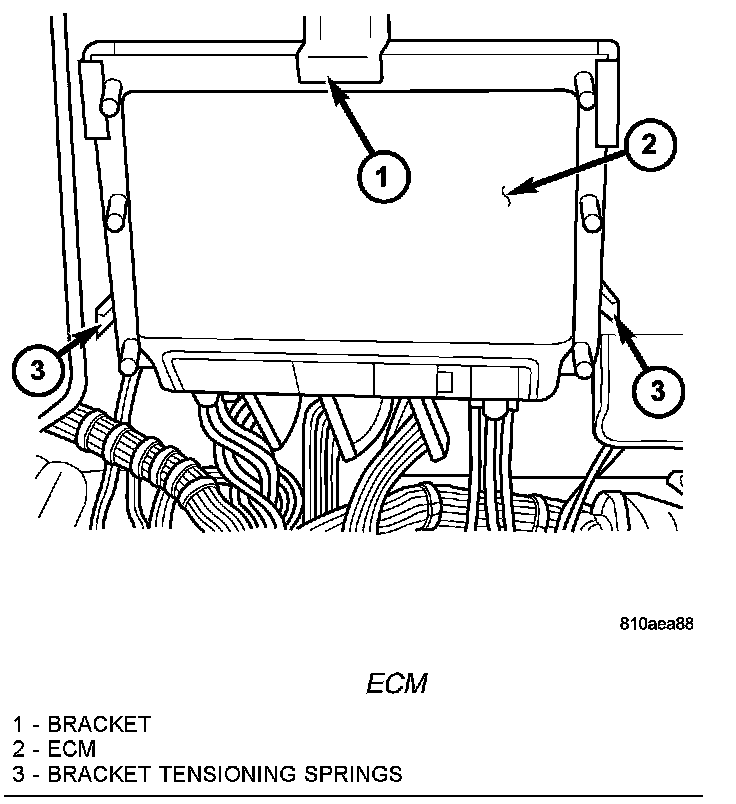
The electronic control module (ECM) is mounted to the left lower dash panel and consists of an electronic printed circuit board which is designed as a multi-layer board assembly fitted on both sides. The routing of the five wiring harness connectors at the ECM connectors are split into interfering cables and sensitive cables in order to achieve improved electromagnetic compatibility. The ECM stores engine specific data, monitors the connected sensor and analyzes their measurement.
Its task consists in controlling the following systems in line with the analysis of the input signals:
- Fuel Supply System
- Injected Quantity Control
- Emission Control System
- Charge Pressure Control
- Cruise Control
- A/C Compressor Shut-Off
- Pre-Heating Output Relay for the Glow Plugs
- Vehicle Theft
- Air Bag
- Monitors inputs/outputs, checks plausibility and stores faults
- Share information with other control modules
- Diagnosis
If a sensor should fail, provided the fault is not serious, the ECM will continue to operate the engine in Limp-Home Mode (emergency mode) using a default value for the missing signal. The ECM ensures that continuing to operate the engine will not cause damage or effect safety,otherwise a Engine shut-off process will be carried out.
Factory Service Tools
Use the Manual With the Right Hardware
Pair factory procedures with proven DIY tools so the instructions are easier to execute.
Disclosure: Verified tool recommendations may earn an affiliate commission at no cost to you.
When to See a Mechanic
Stop DIY work and contact a certified mechanic immediately if any of the following apply:
- • You smell fuel, burning insulation, or see smoke.
- • Brakes feel soft, pull hard to one side, or make grinding noises.
- • The engine overheats, stalls repeatedly, or misfires under load.
- • You are missing required tools, torque specs, or safe lifting equipment.
- • You are not confident in the next step or safety outcome.