
Safety Warning
DIY auto repair can cause serious injury, fire, or vehicle damage. These guides are for informational purposes only. Always follow OEM torque specs, wear PPE, and consult a certified mechanic if you are unsure. You are solely responsible for your safety.
2012 Ford Focus L4-2.0LFACTORY OEM SERVICE PROCEDURE
Frame: Service and Repair
Frame Members
WARNING: Before beginning any service procedure, REFER to Safety Warnings . Failure to follow this instruction may result in serious personal injury.
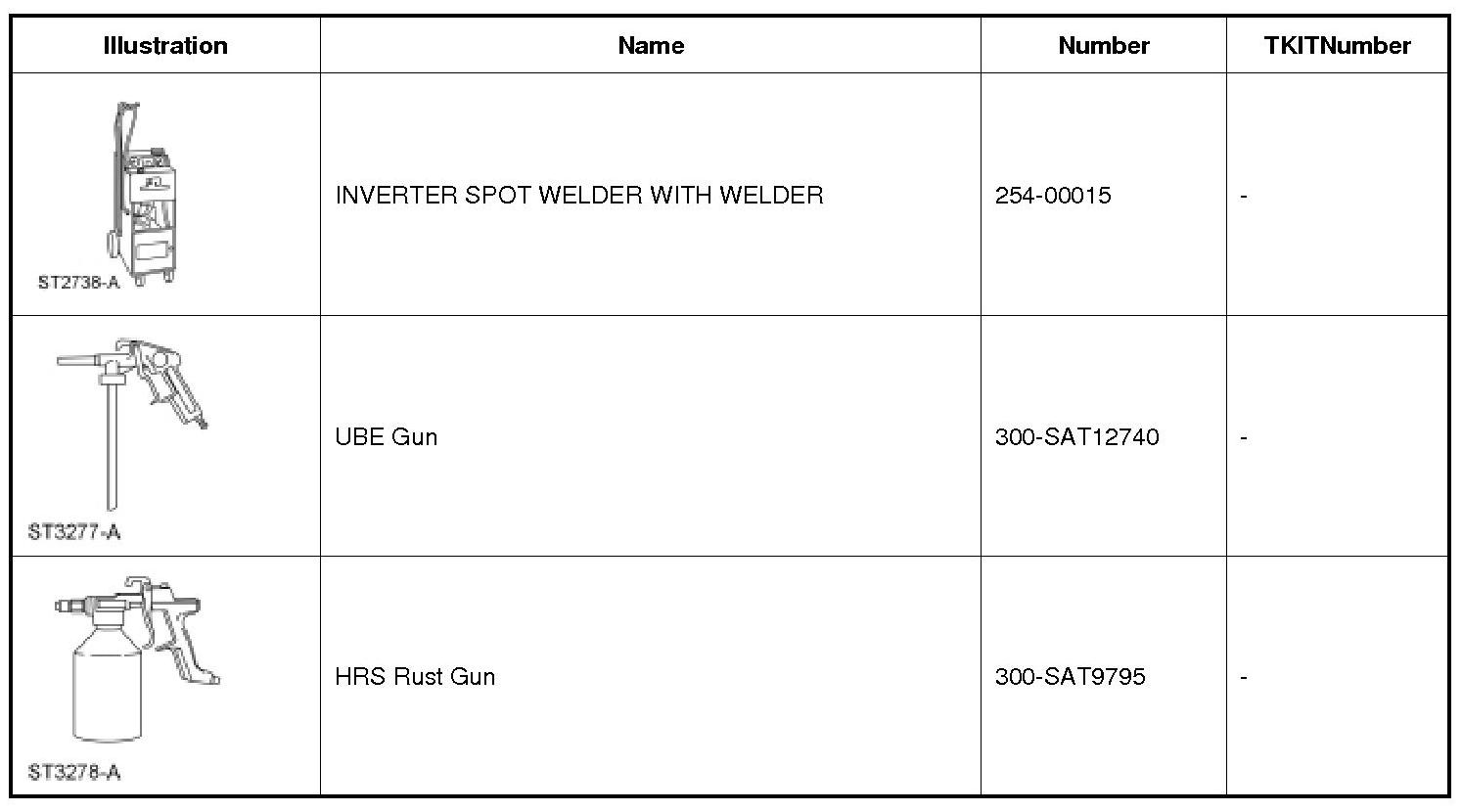
Special Tool(s)
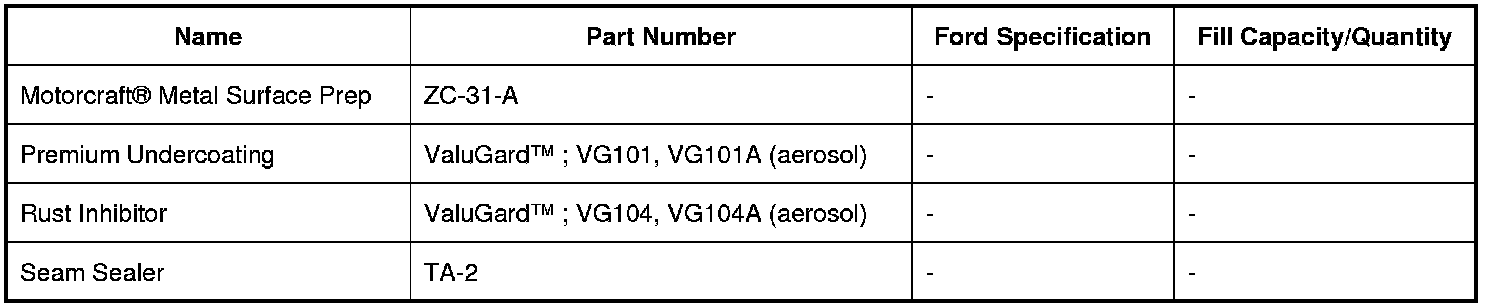
Material(s)
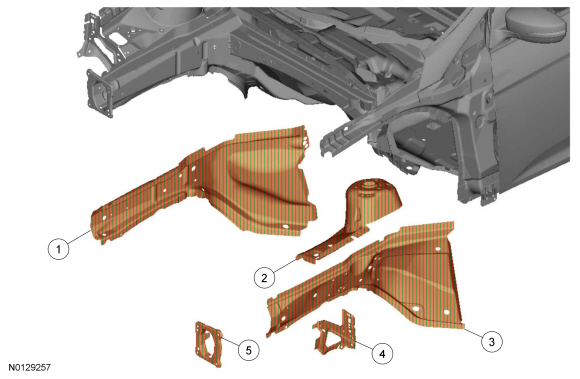
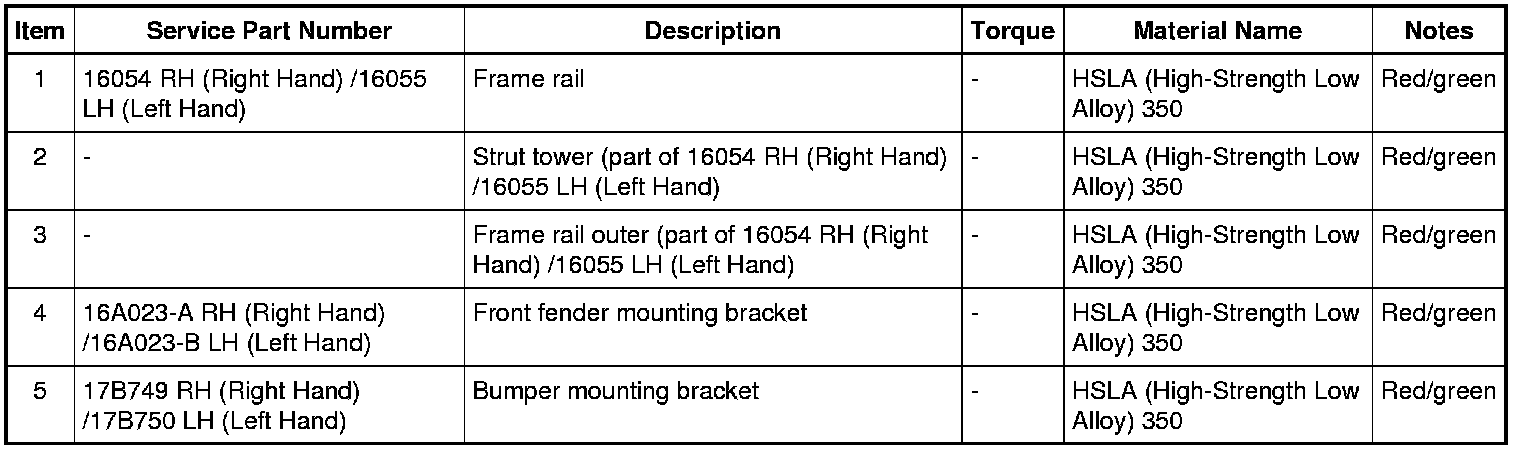
Exploded View
WARNING: Never install used or reconditioned parts (as specified below) from pre-owned, salvaged or damaged vehicles. The use of such parts could lead to serious injury. Never use non-Ford parts or accessories for completing repairs. Ford Motor Company does not approve or recognize body and structural repair procedures, tools, parts or anything but new genuine Ford equipment. Ford cannot attest to the safety, quality, durability or legality of non-Ford parts or accessories. Use of such parts could lead to serious personal injury as they may contain damage which is not visible. Ford does not approve use of the following:
- Salvaged or used parts
- Major body clips or assemblies from salvage vehicles
- Aftermarket structural or body components
- Salvaged or reconditioned wheels
- Used SRS (Supplemental Restraint System) components
- air bags
- restraint system modules
- safety belts, buckles or retractors
- crash sensors
Returning a vehicle to pre-accident condition can only be assured if repair procedures are carried out by skilled technicians using new genuine Ford parts and Ford-approved methods. Structural component repair procedures approved by Ford, using genuine Ford parts, have been validated by Ford Motor Company engineers. Ford Motor Company does not endorse, cannot attest to, and makes no representations regarding structural repairs (frames, rails, aprons and body panels) carried out using non-genuine Ford Motor Company parts or non-Ford-approved methods. In particular, Ford makes no representations that the vehicle will meet any crash safety or anti-corrosion performance requirement. Such parts and methods have not been tested by Ford, and may not meet Ford's requirements for safety, performance, strength, quality, durability and corrosion protection. Ford Motor Company bears no responsibility or liability of any kind if repairs are performed using alternative structural component repair procedures and/or parts.
Front Frame Rail/Apron
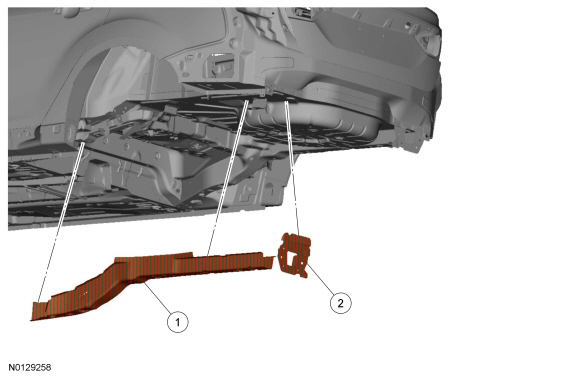
Rear Frame Rail - 4-Door Sedan

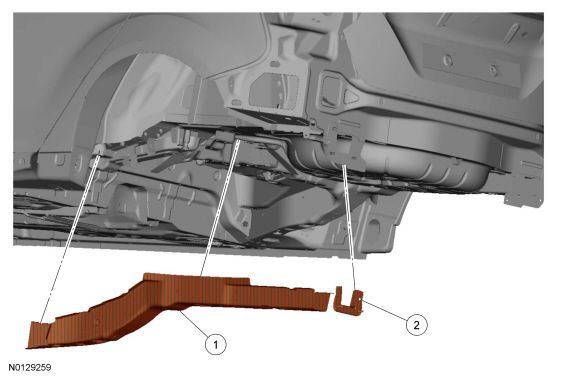
Rear Frame Rail - 5-Door Hatchback

Removal
NOTICE: Because of the unique manufacturing and design features in the front and rear frame rails Ford Motor Company does not permit or recognize sectioning of these components. Frame rails must be removed and replaced at the factory seams.
1. NOTE: To assure correct fit, the vehicle must be dimensionally returned to a pre-accident condition before removal of any front or rear frame rail.
Dimensionally restore the vehicle to a pre-accident condition. REFER to Body Dimensions or to dimensioning provided by frame rack manufacturer.
2. Remove the frame rail spot welds and remove the rail at the factory seams.
Installation
1. Position the frame rail to the vehicle and assure correct fit. REFER to Body Dimensions or dimensioning information provided by frame rack manufacturer.
2. NOTE: Factory spot welds may be substituted by MIG (Metal Inert Gas) plug welds or STRW (Squeeze-Type Resistance Spot Welding). Welds must match factory spot welds in both location and quantity.
NOTE: See the Ford recommended steel repairability matrix. REFER to General Specifications for correct welding guidelines.
Temporarily tack-weld the component and check for dimensionally correct positioning.
3. Weld the component in place following recommended applications and restore corrosion protection. REFER to Restoring Corrosion Protection Following Repair .
Factory Service Tools
Use the Manual With the Right Hardware
Pair factory procedures with proven DIY tools so the instructions are easier to execute.
Disclosure: Verified tool recommendations may earn an affiliate commission at no cost to you.
When to See a Mechanic
Stop DIY work and contact a certified mechanic immediately if any of the following apply:
- • You smell fuel, burning insulation, or see smoke.
- • Brakes feel soft, pull hard to one side, or make grinding noises.
- • The engine overheats, stalls repeatedly, or misfires under load.
- • You are missing required tools, torque specs, or safe lifting equipment.
- • You are not confident in the next step or safety outcome.