
Safety Warning
DIY auto repair can cause serious injury, fire, or vehicle damage. These guides are for informational purposes only. Always follow OEM torque specs, wear PPE, and consult a certified mechanic if you are unsure. You are solely responsible for your safety.
2011 Ford Taurus AWD V6-3.5LFACTORY OEM SERVICE PROCEDURE
Headlamp Control Module 2 (HCM-2)
Headlamp Control Module 2 (HCM-2)
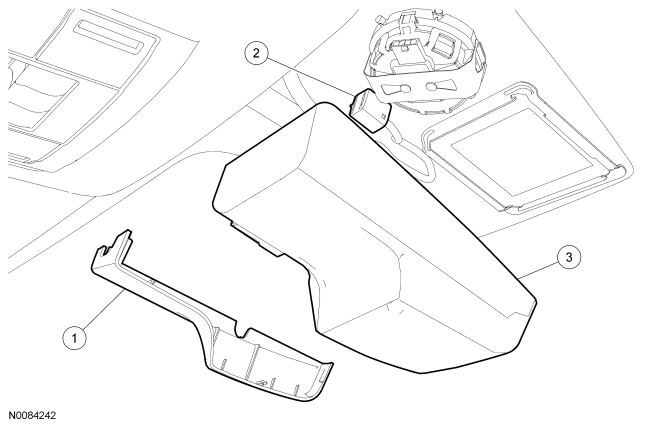
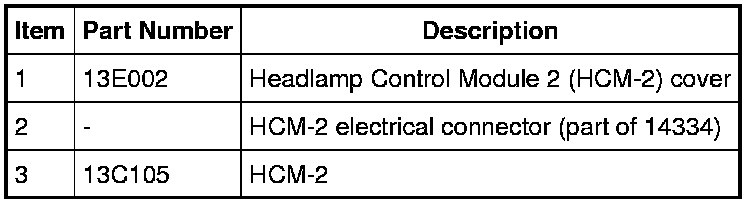
NOTE: View of the forward side of the HCM-2.

Removal and Installation
1. If installing a new Headlamp Control Module 2 (HCM-2), upload the HCM-2 configuration information to the scan tool. For additional information, refer to Programmable Module Installation (PMI) in Module Configuration Programmable Module Installation (PMI).
2. Unsnap the connector access cover from the LH side of the HCM-2.
3. Disconnect the electrical connector from the headliner harness.
4. NOTICE: Do not use a metal tool or screwdriver, or pry on the cover or bracket. Damage to the bracket or windshield can occur.
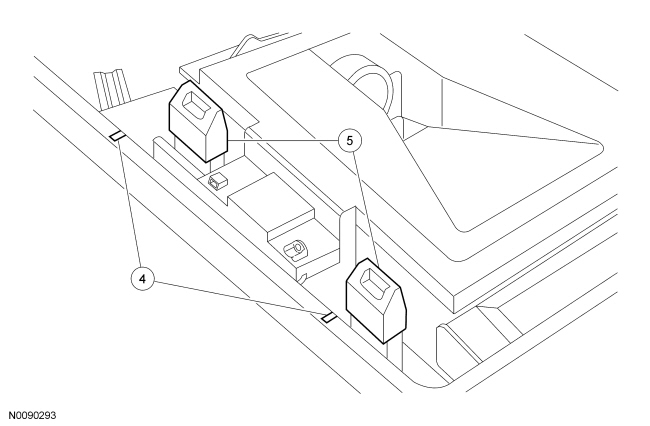
NOTE: The snap locations are marked on the HCM-2 housing with 2 very small cutouts on the RH side.
NOTE: The HCM-2 is removed by separating the right side of the assembly from the windshield and sliding to the right. There is also hook-and-loop tape between the inside of the cover and the rain sensor.
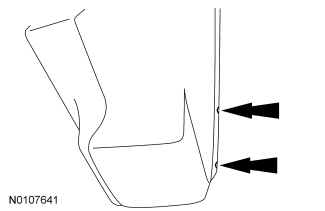
While gently pulling downward on the right side of the cover, insert a thin plastic flat-bladed tool at each cutout notch and release the retaining clips.
- Separate the HCM-2 from the windshield and disconnect the electrical connector from the rain sensor.
5. To install, reverse the removal procedure.
- Gently press the upper portion of the cover to fasten the hook-and-loop tape.
- If installing a new HCM-2, upload the HCM-2 configuration information to the scan tool. For additional information, refer to PMI in Module Configuration Testing and Inspection.
Factory Service Tools
Use the Manual With the Right Hardware
Pair factory procedures with proven DIY tools so the instructions are easier to execute.
Disclosure: Verified tool recommendations may earn an affiliate commission at no cost to you.
When to See a Mechanic
Stop DIY work and contact a certified mechanic immediately if any of the following apply:
- • You smell fuel, burning insulation, or see smoke.
- • Brakes feel soft, pull hard to one side, or make grinding noises.
- • The engine overheats, stalls repeatedly, or misfires under load.
- • You are missing required tools, torque specs, or safe lifting equipment.
- • You are not confident in the next step or safety outcome.