
Safety Warning
DIY auto repair can cause serious injury, fire, or vehicle damage. These guides are for informational purposes only. Always follow OEM torque specs, wear PPE, and consult a certified mechanic if you are unsure. You are solely responsible for your safety.
2011 Ford Fusion AWD V6-3.5LFACTORY OEM SERVICE PROCEDURE
Timing Component Alignment Marks: Locations
Timing Chain Alignment
NOTICE: During engine repair procedures, cleanliness is extremely important. Any foreign material, including any material created while cleaning gasket surfaces, that enters the oil passages, coolant passages or the oil pan can cause engine failure.
NOTE: The engine comes equipped with either a composite RH timing chain guide requiring the timing chain to ride on the outer side of the guide or a stamped steel RH timing chain guide requiring the timing chain to ride on the inner side of the guide. All replacement RH timing chain guides will be the stamped steel design.
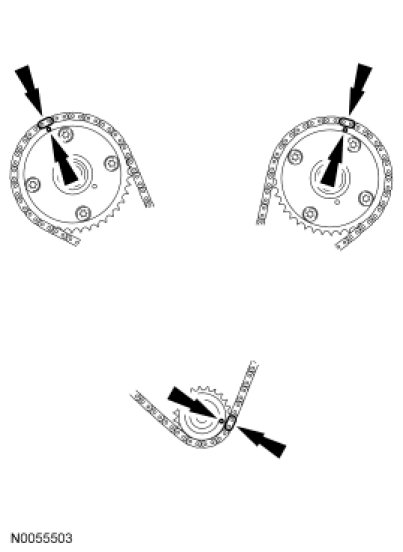
Assemble the RH Variable Camshaft Timing (VCT) assembly, the RH exhaust camshaft sprocket and the RH secondary timing chain.
- Align the colored links with the timing marks.
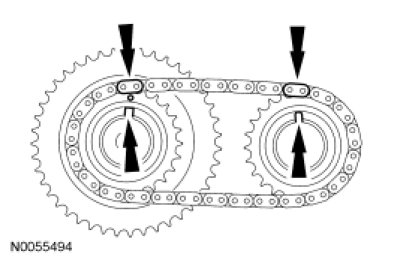
Position the RH secondary timing assembly onto the camshafts.
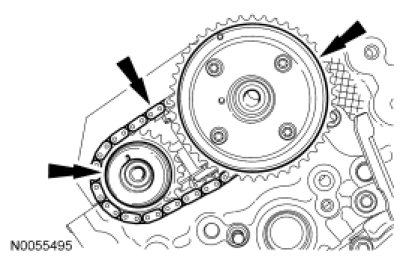
Assemble the LH VCT assembly, the LH exhaust camshaft sprocket and the LH secondary timing chain.
- Align the colored links with the timing marks.
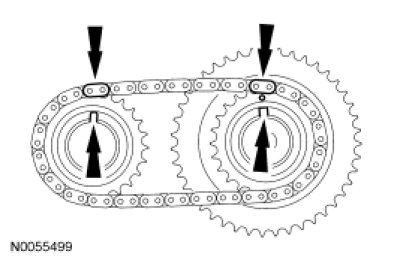
Position the LH secondary timing assembly onto the camshafts.
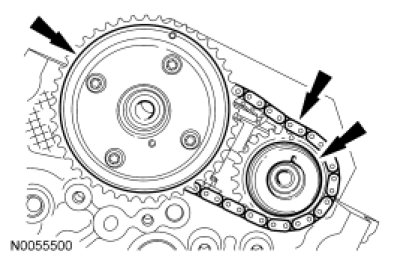
Install the crankshaft timing chain sprocket.

Install the primary timing chain with the colored links aligned with the timing marks on the VCT assemblies and the crankshaft sprocket.
Factory Service Tools
Use the Manual With the Right Hardware
Pair factory procedures with proven DIY tools so the instructions are easier to execute.
Disclosure: Verified tool recommendations may earn an affiliate commission at no cost to you.
When to See a Mechanic
Stop DIY work and contact a certified mechanic immediately if any of the following apply:
- • You smell fuel, burning insulation, or see smoke.
- • Brakes feel soft, pull hard to one side, or make grinding noises.
- • The engine overheats, stalls repeatedly, or misfires under load.
- • You are missing required tools, torque specs, or safe lifting equipment.
- • You are not confident in the next step or safety outcome.