
Safety Warning
DIY auto repair can cause serious injury, fire, or vehicle damage. These guides are for informational purposes only. Always follow OEM torque specs, wear PPE, and consult a certified mechanic if you are unsure. You are solely responsible for your safety.
2009 Ford Edge AWD V6-3.5LFACTORY OEM SERVICE PROCEDURE
Diagnostic Trouble Code (DTC) Chart
Diagnostic Trouble Code (DTC) Chart
NOTE: Most powertrain (P-code) DTCs are diagnosed in Computers and Control Systems Information. If the P-code retrieved is not listed below, refer to Computers and Control Systems Information to continue diagnostics.
NOTE: The Smart Junction Box (SJB) is also known as the Generic Electronic Module (GEM).
NOTE: Some of these modules utilize a 5-character DTC followed by a 2-character failure-type code. The failure-type code provides information about specific fault conditions such as opens, or shorts to ground. Continuous memory DTCs have an additional 2-character DTC status code suffix to assist in determining DTC history.
B100B-B1117:
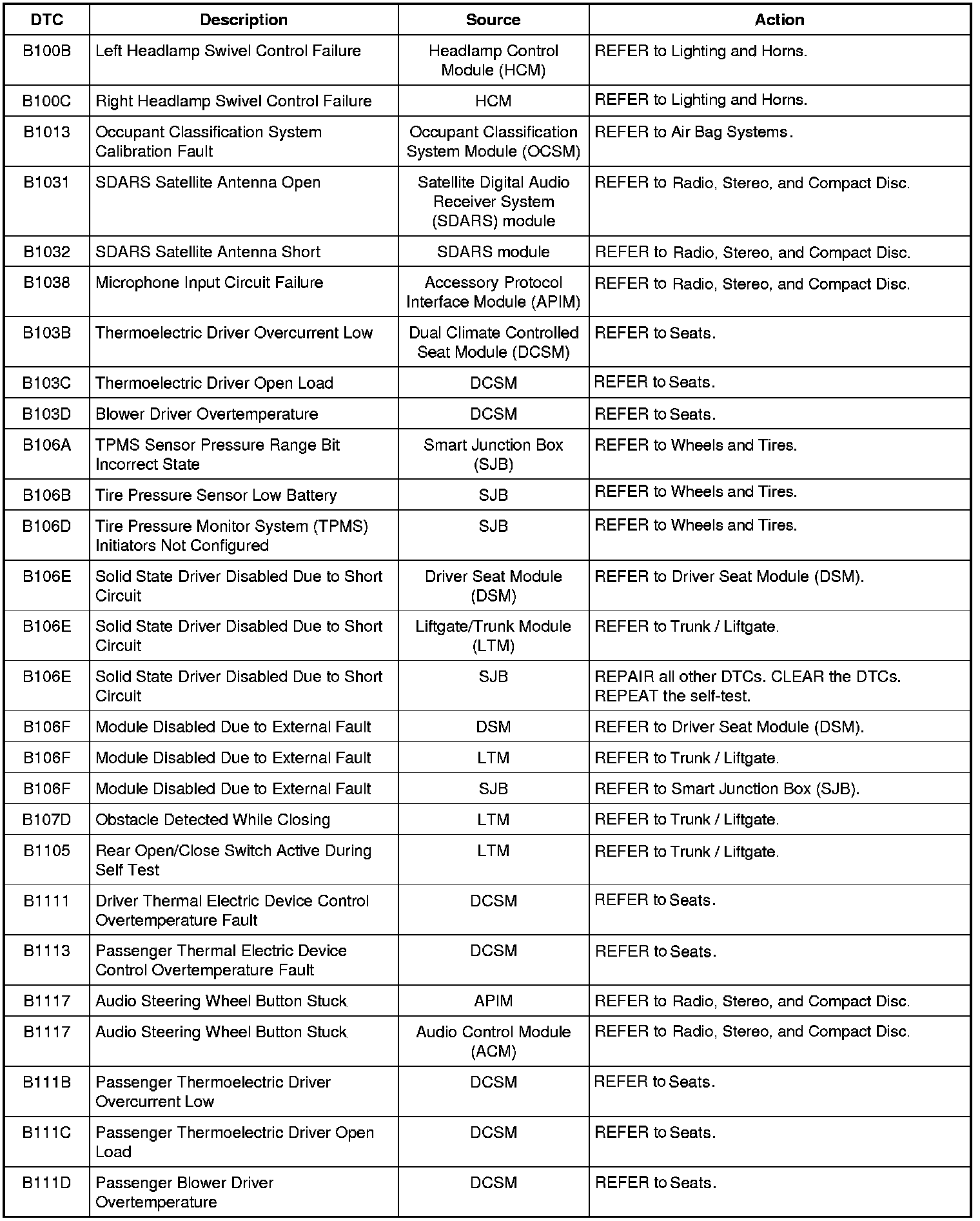
B11BA:1C-B1255:
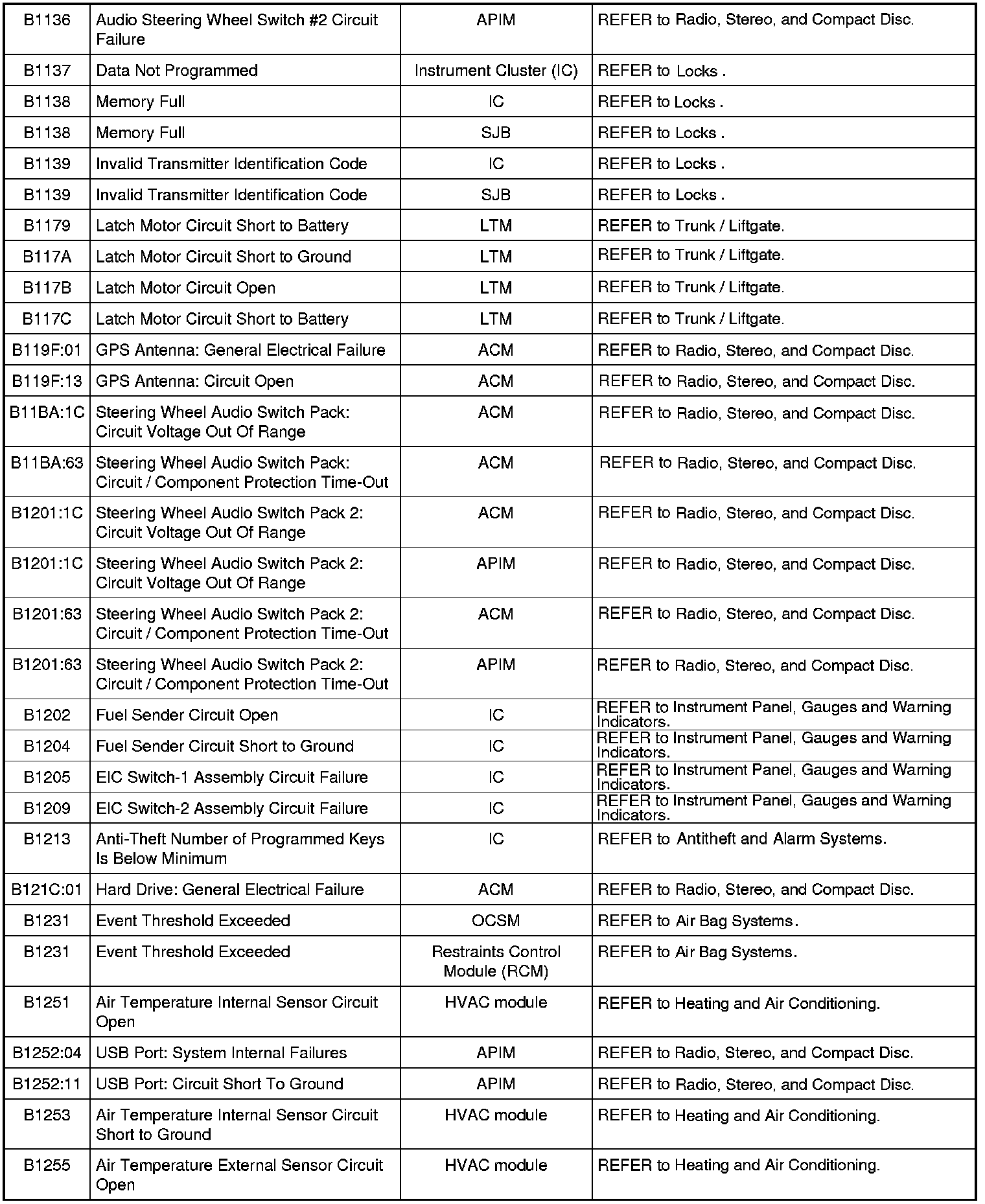
B1257-B1342:
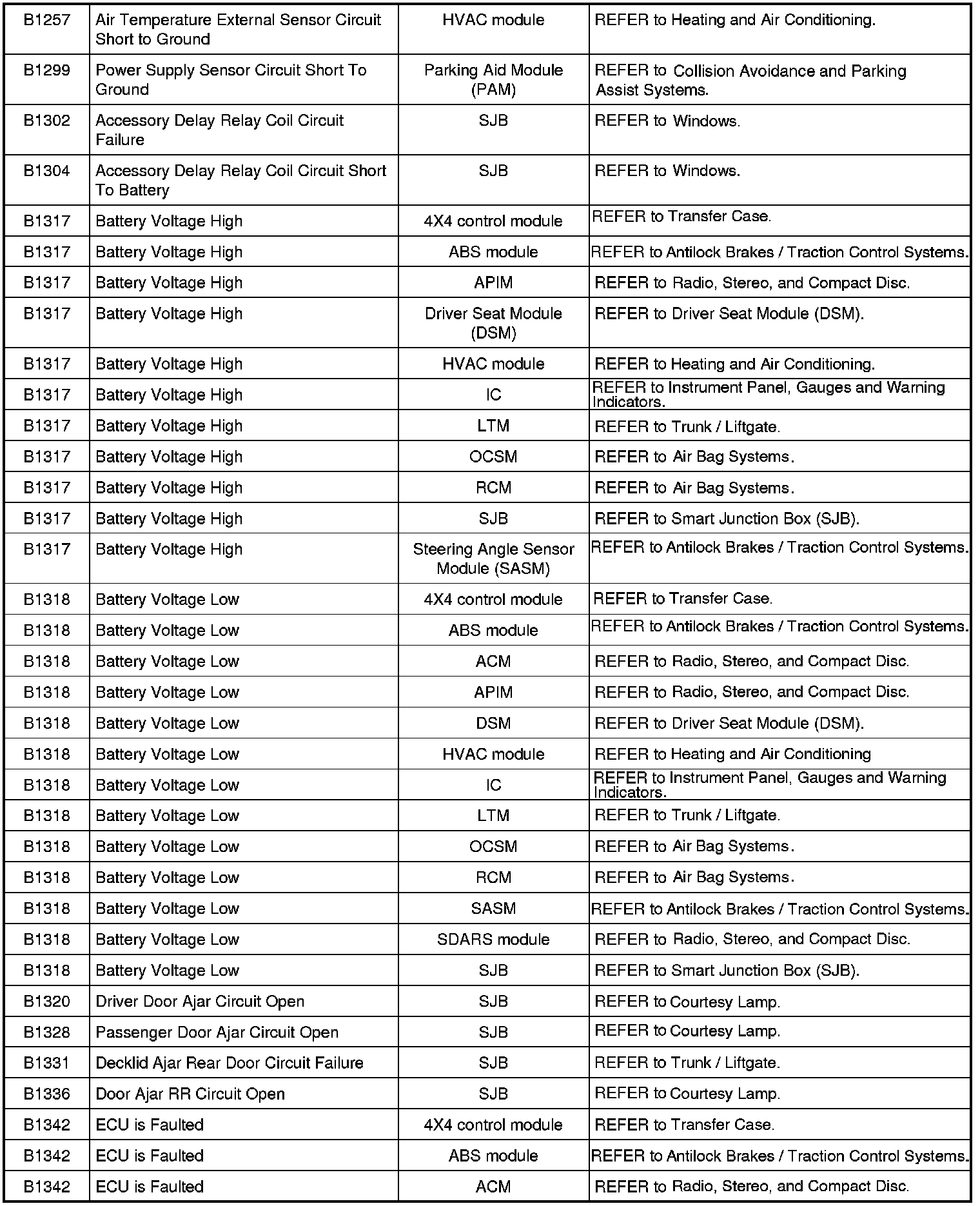
B1342-B1666:
B1667-B1952:
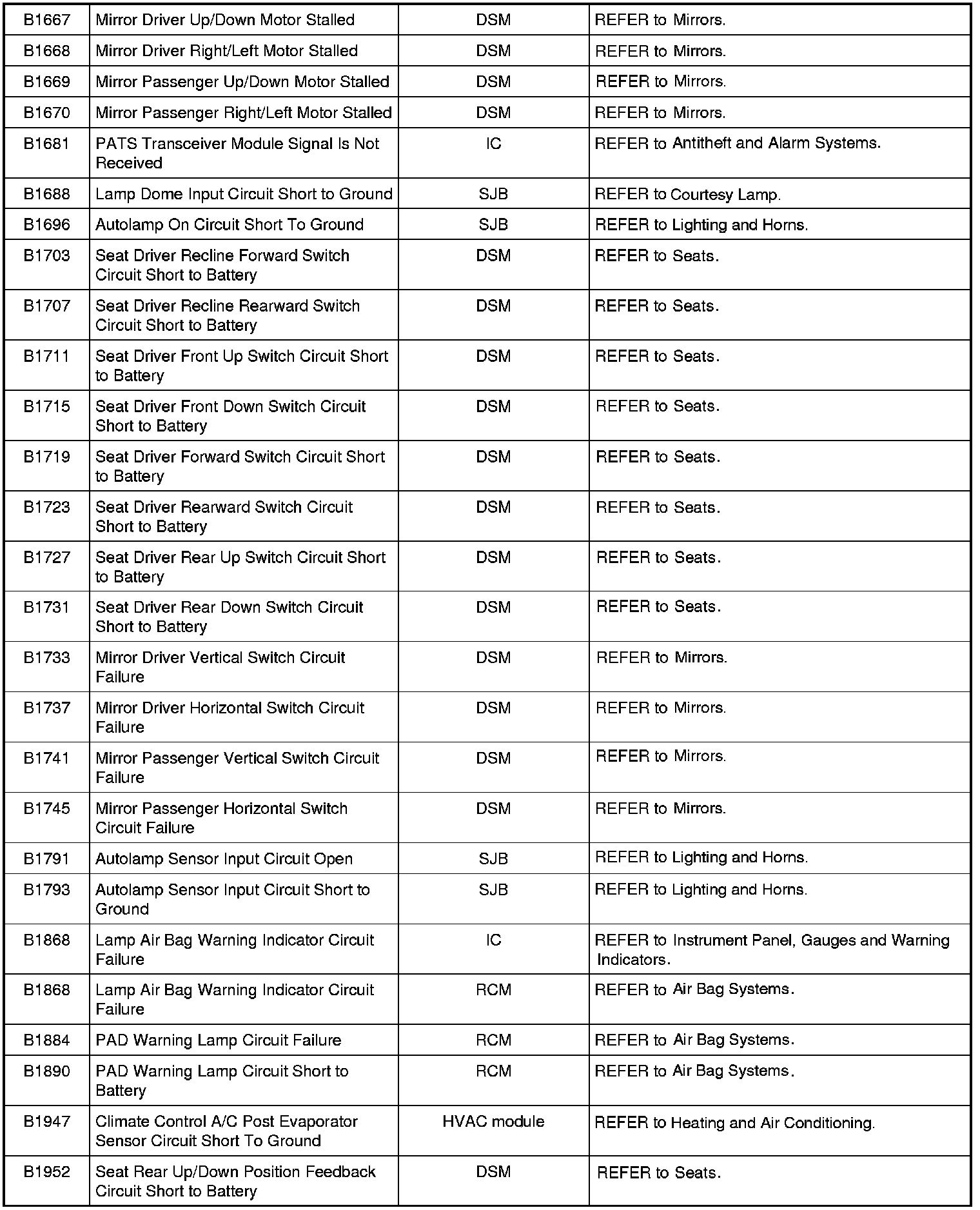
B1A01:01-B1965:
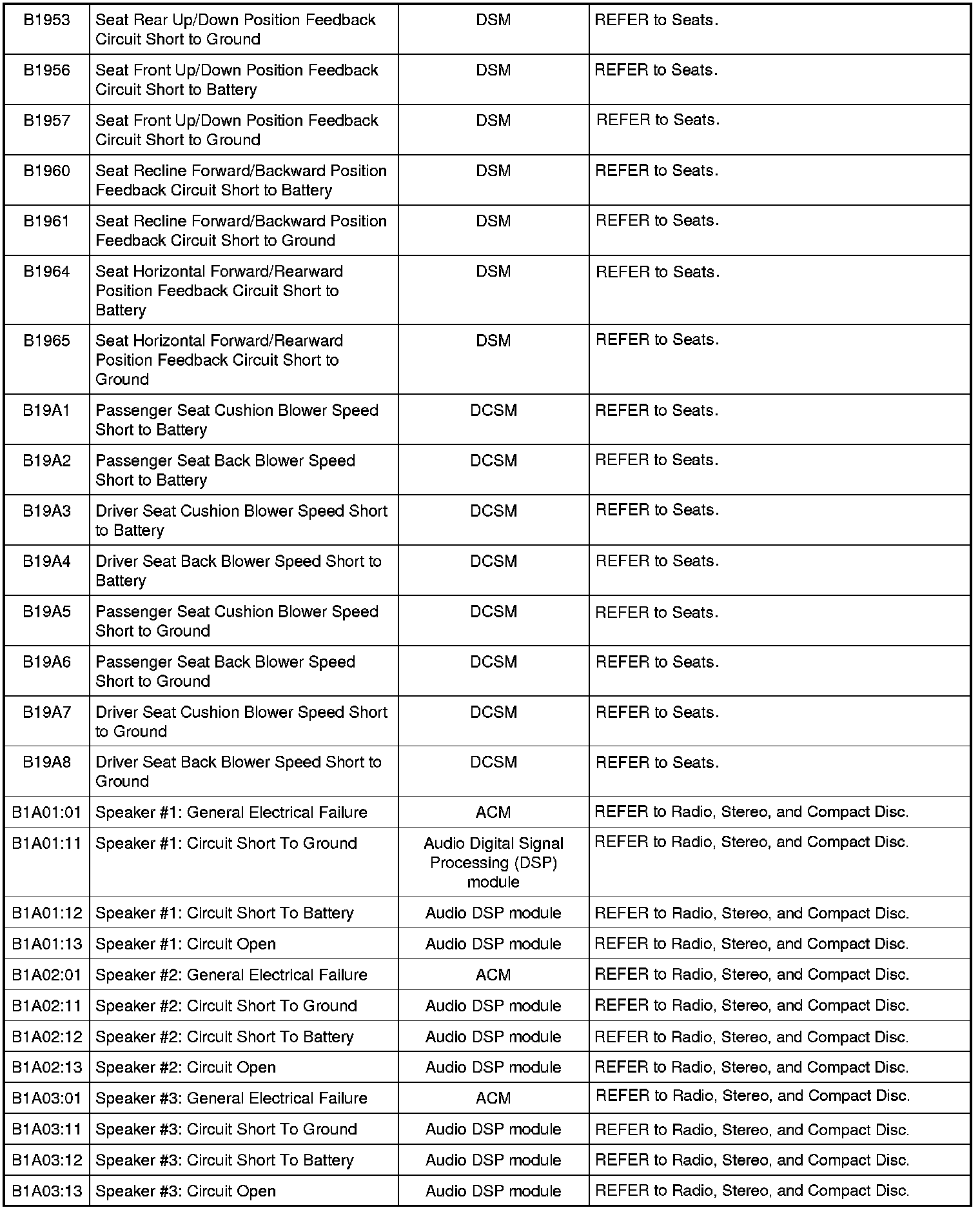
B1A04:01-B1D79:01:
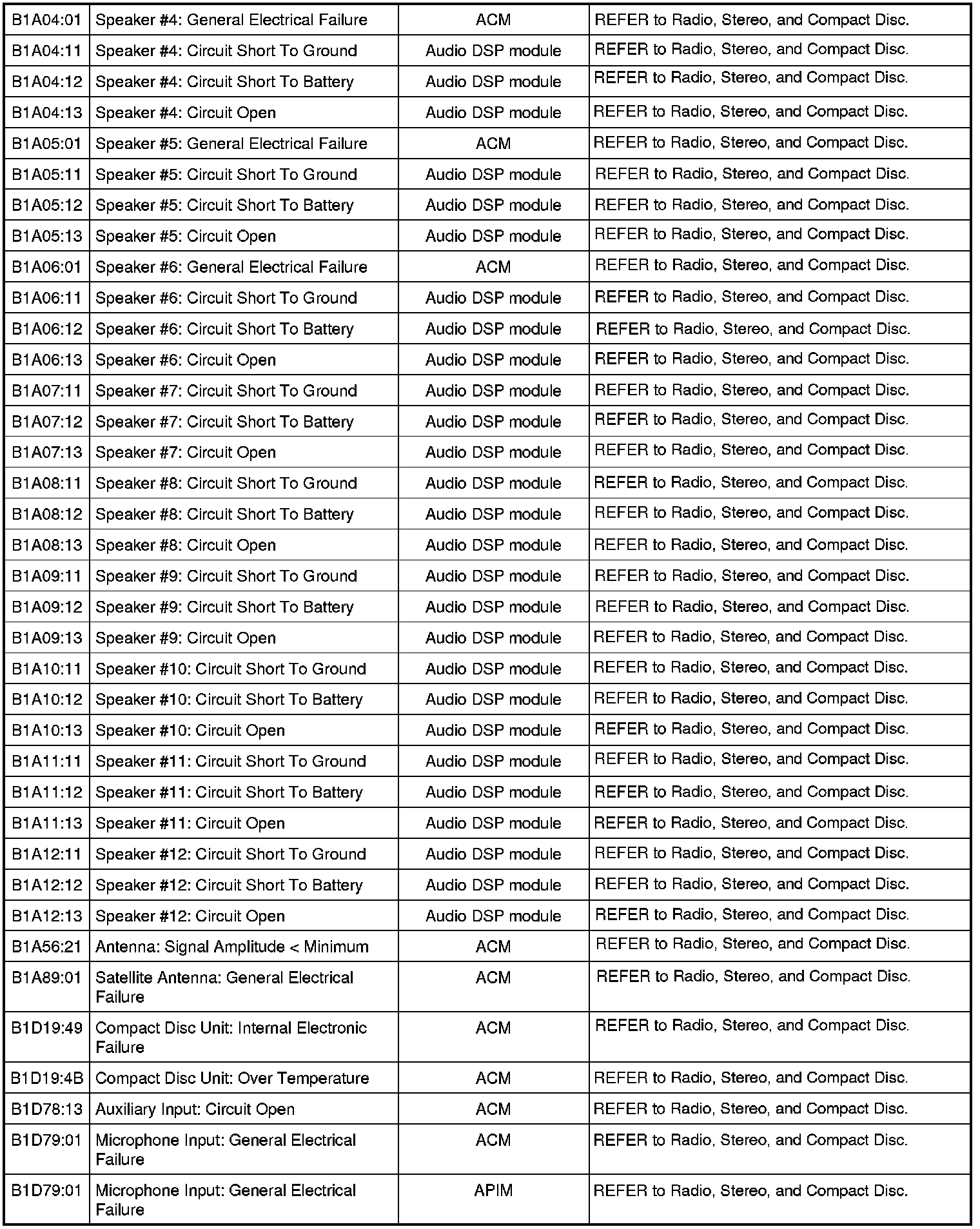
B201A-B2290:
B229B-B2433:
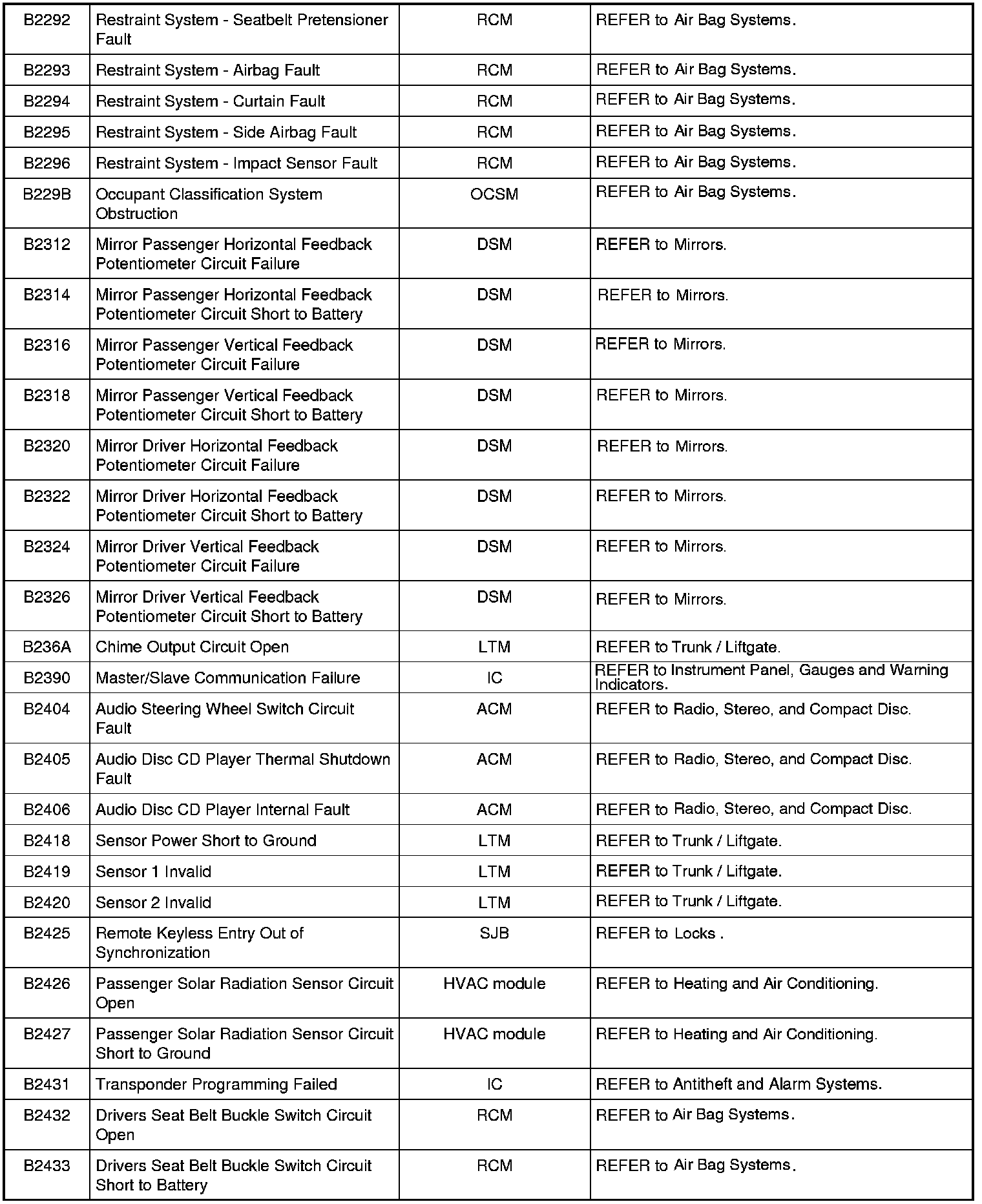
B2434-B2703:
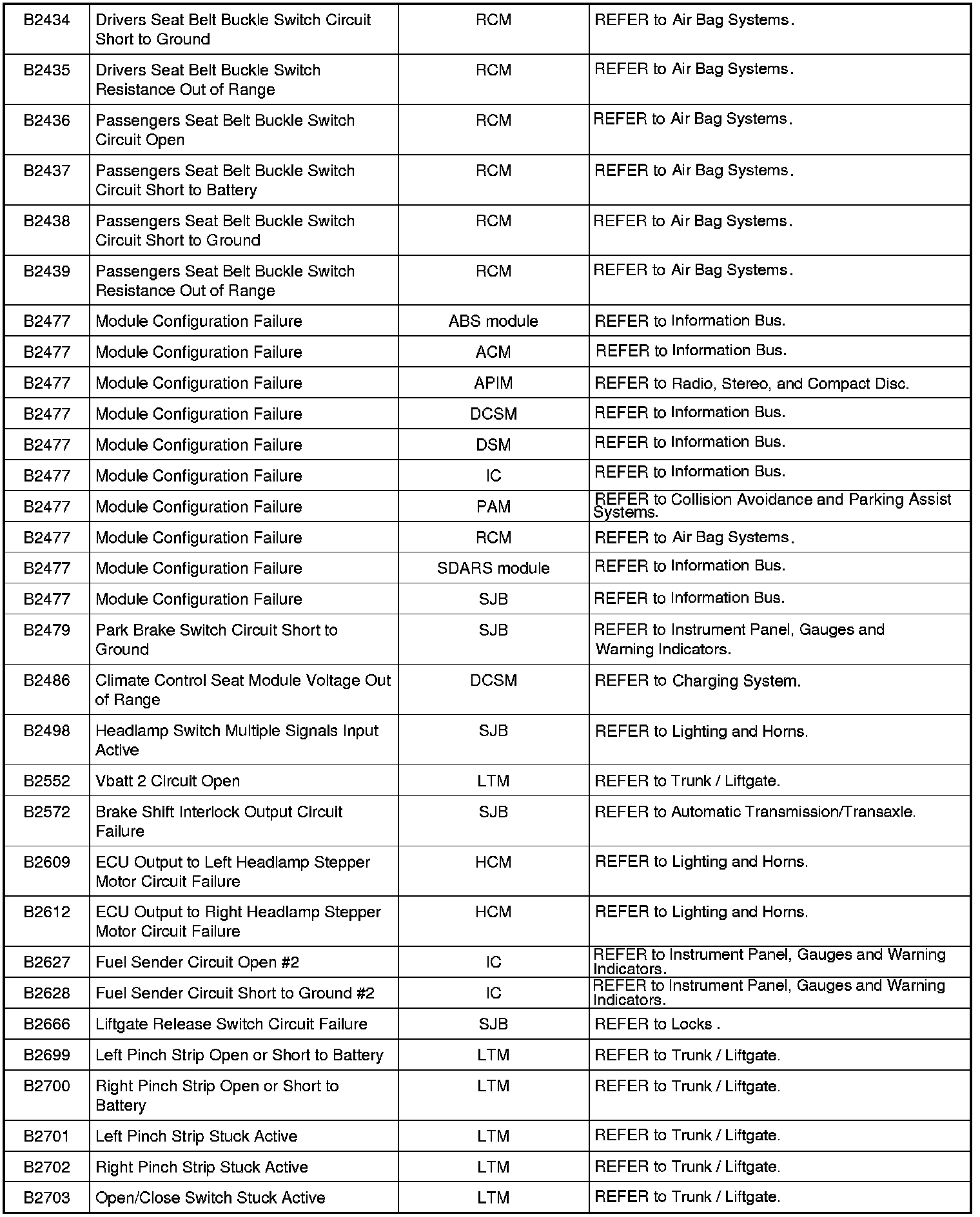
B272A-B2936:
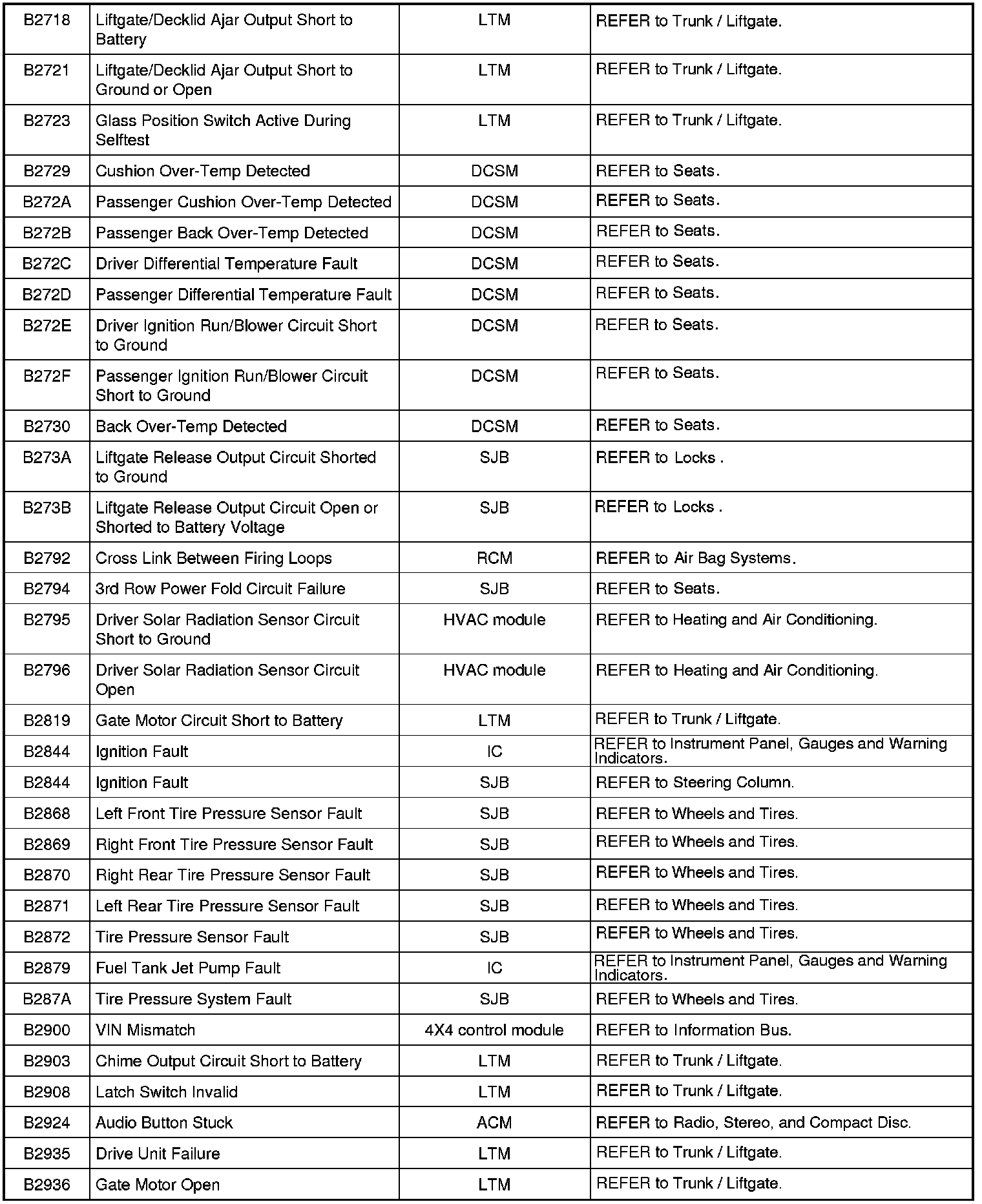
B2A2A-B2965:
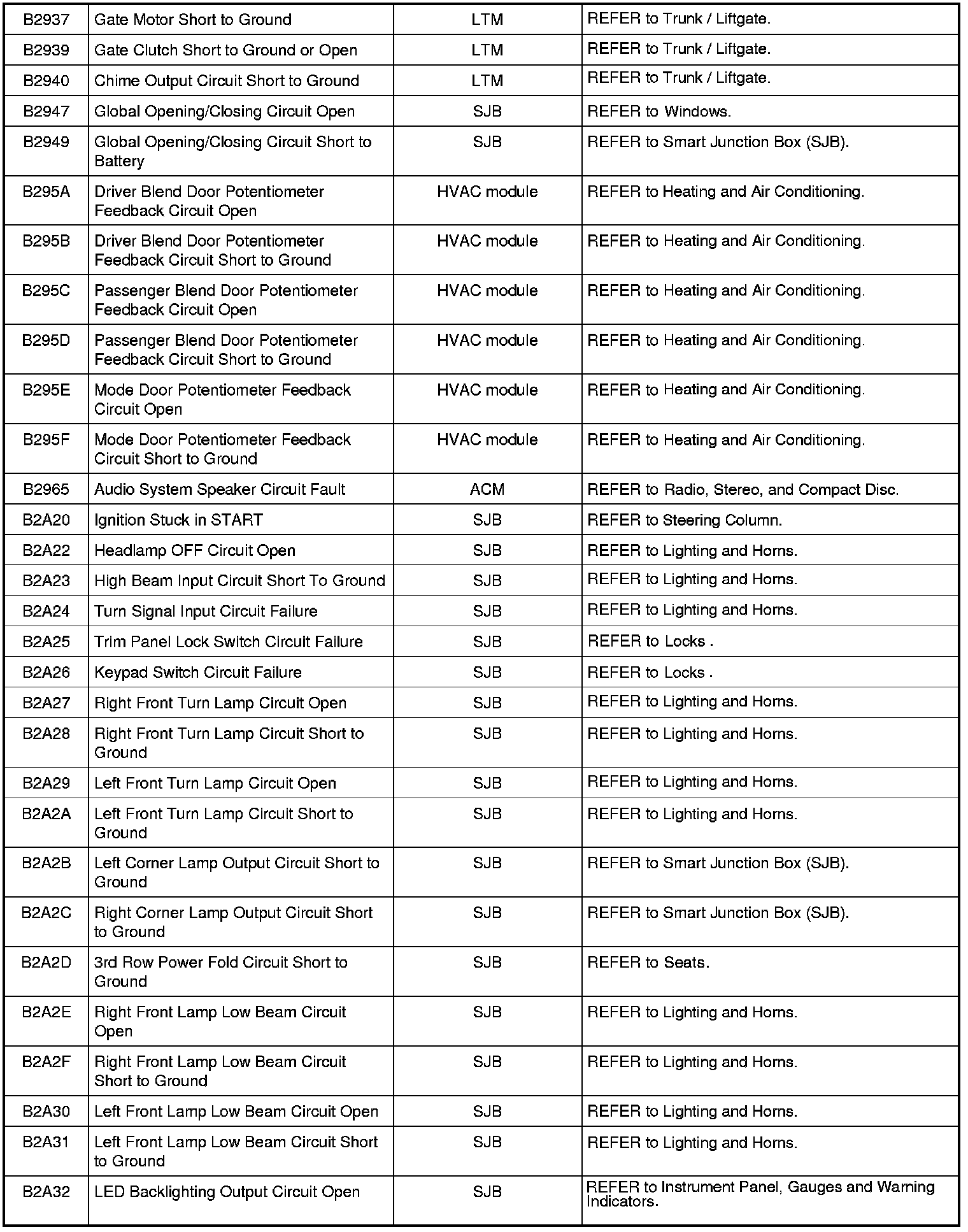
B2A3A-B2A39 / C1093-C1254:
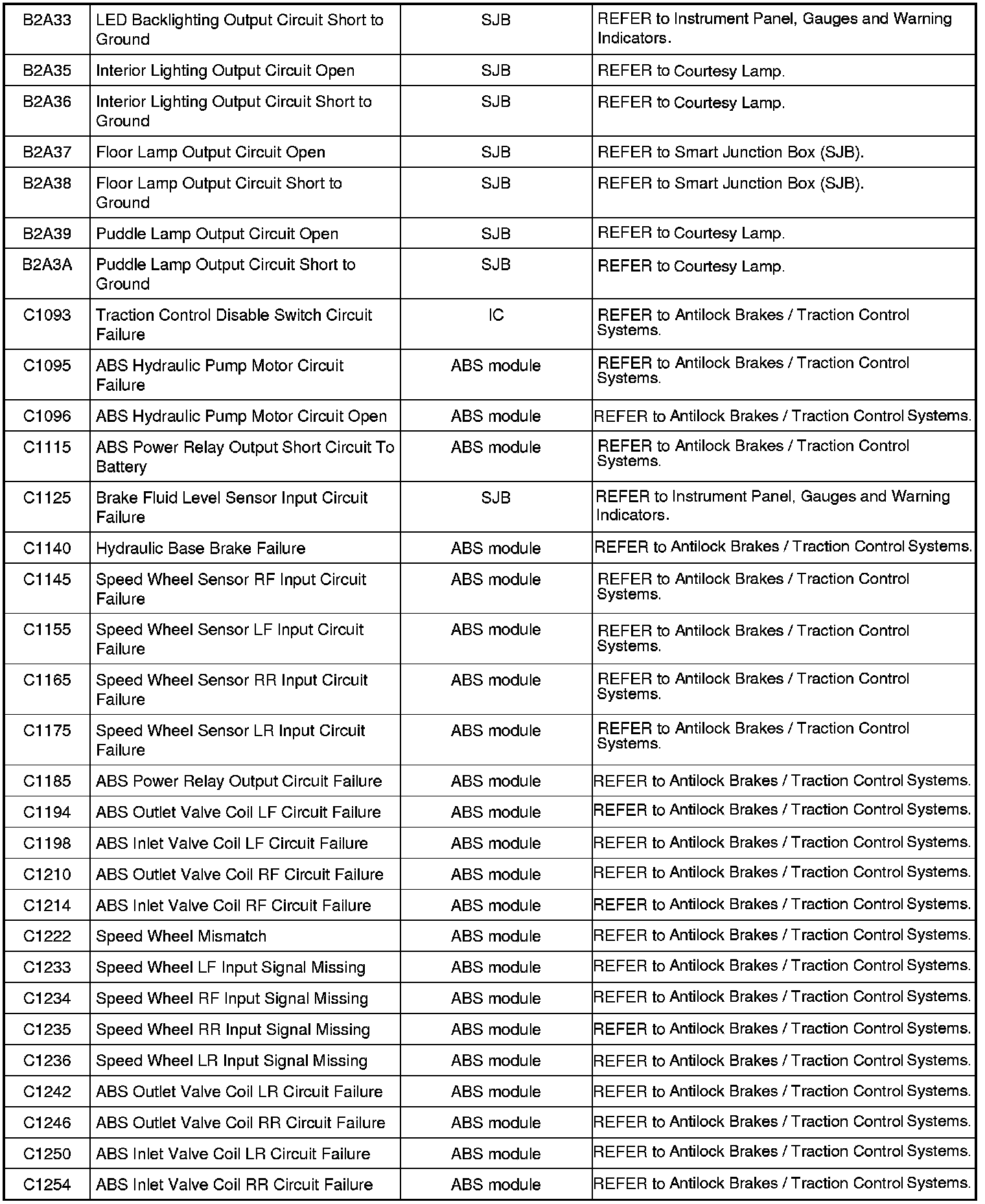
C1278-C1700:
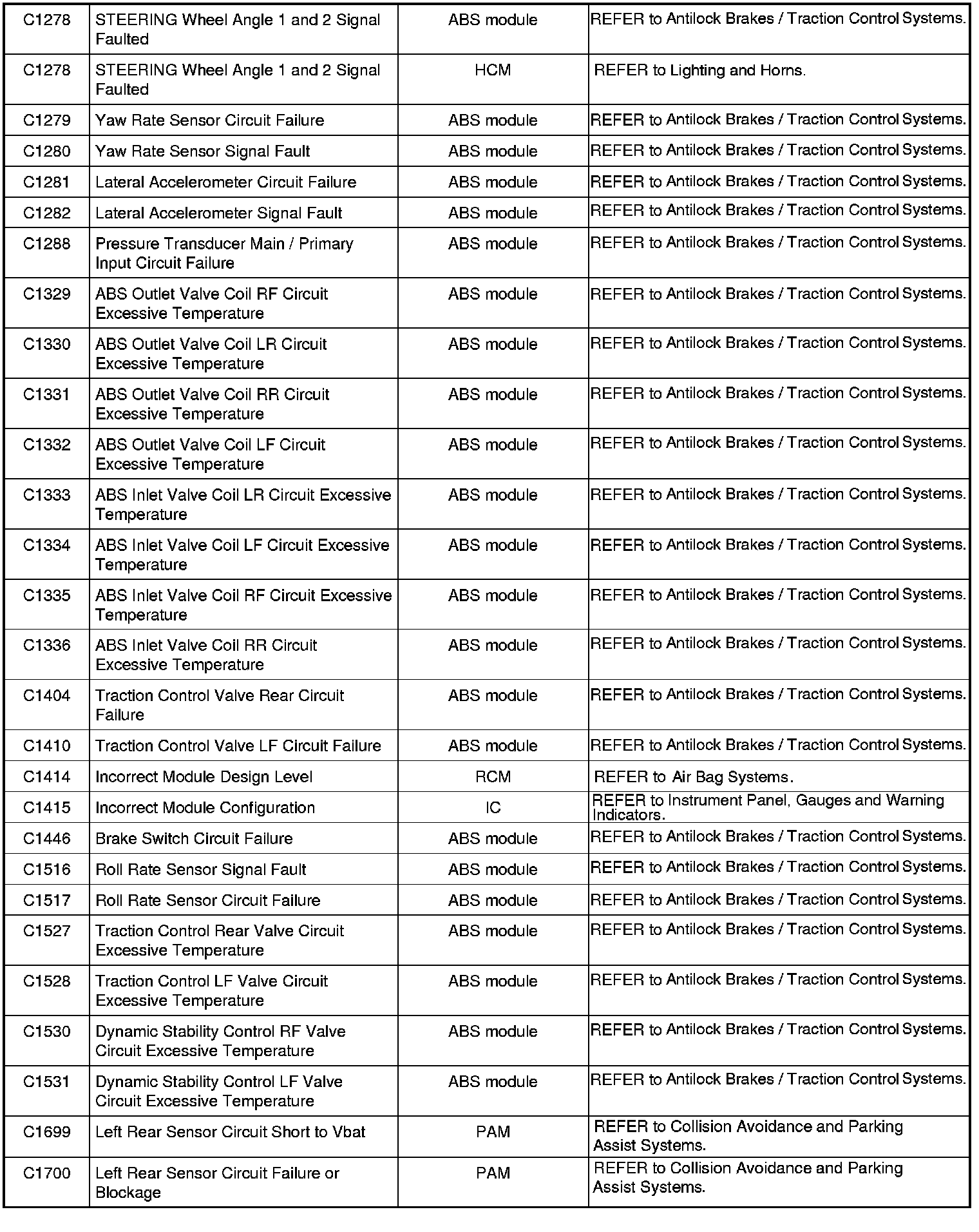
C1701-C2784 / P0457-P0532:
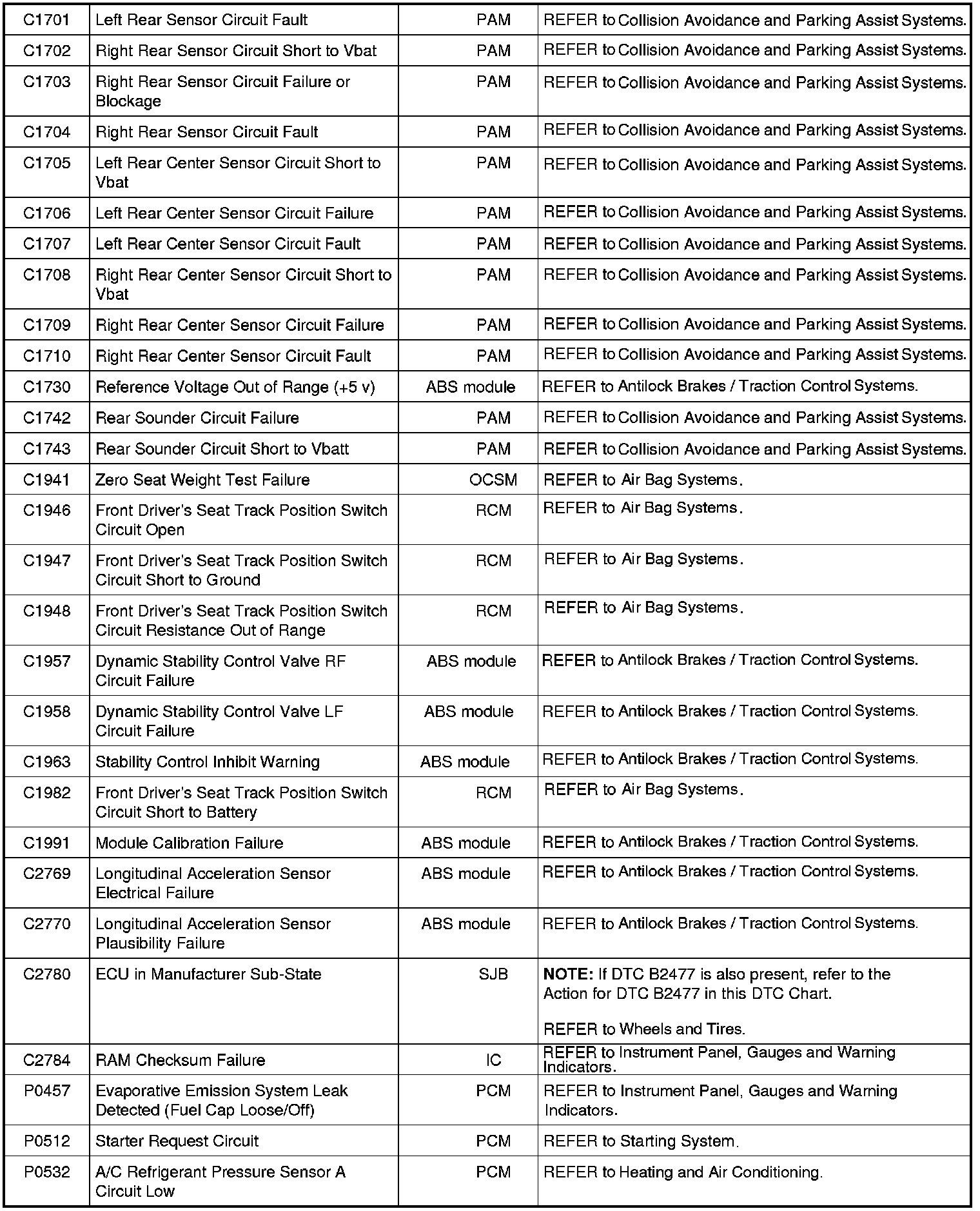
P062F-P0734:
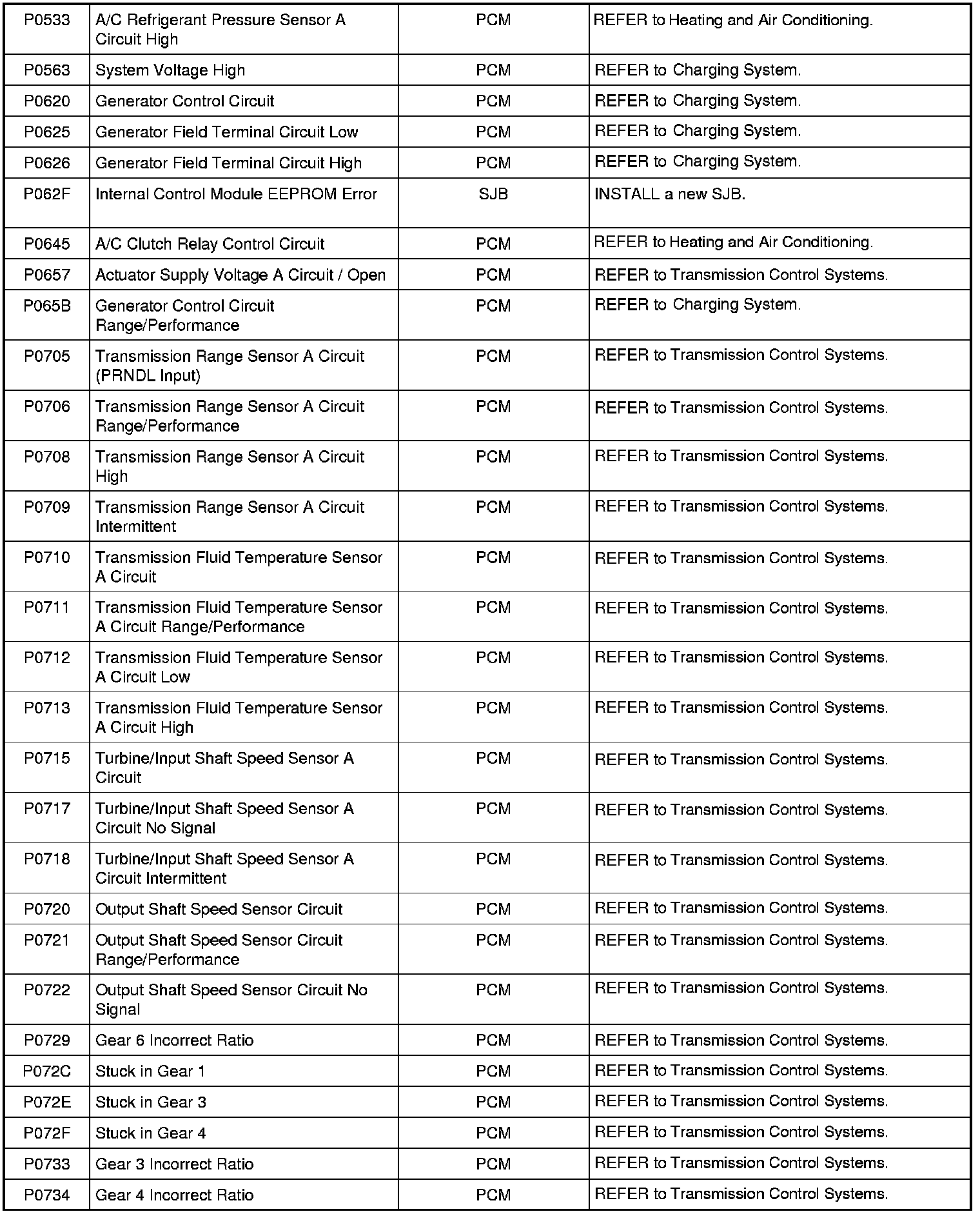
P073A-P0962:
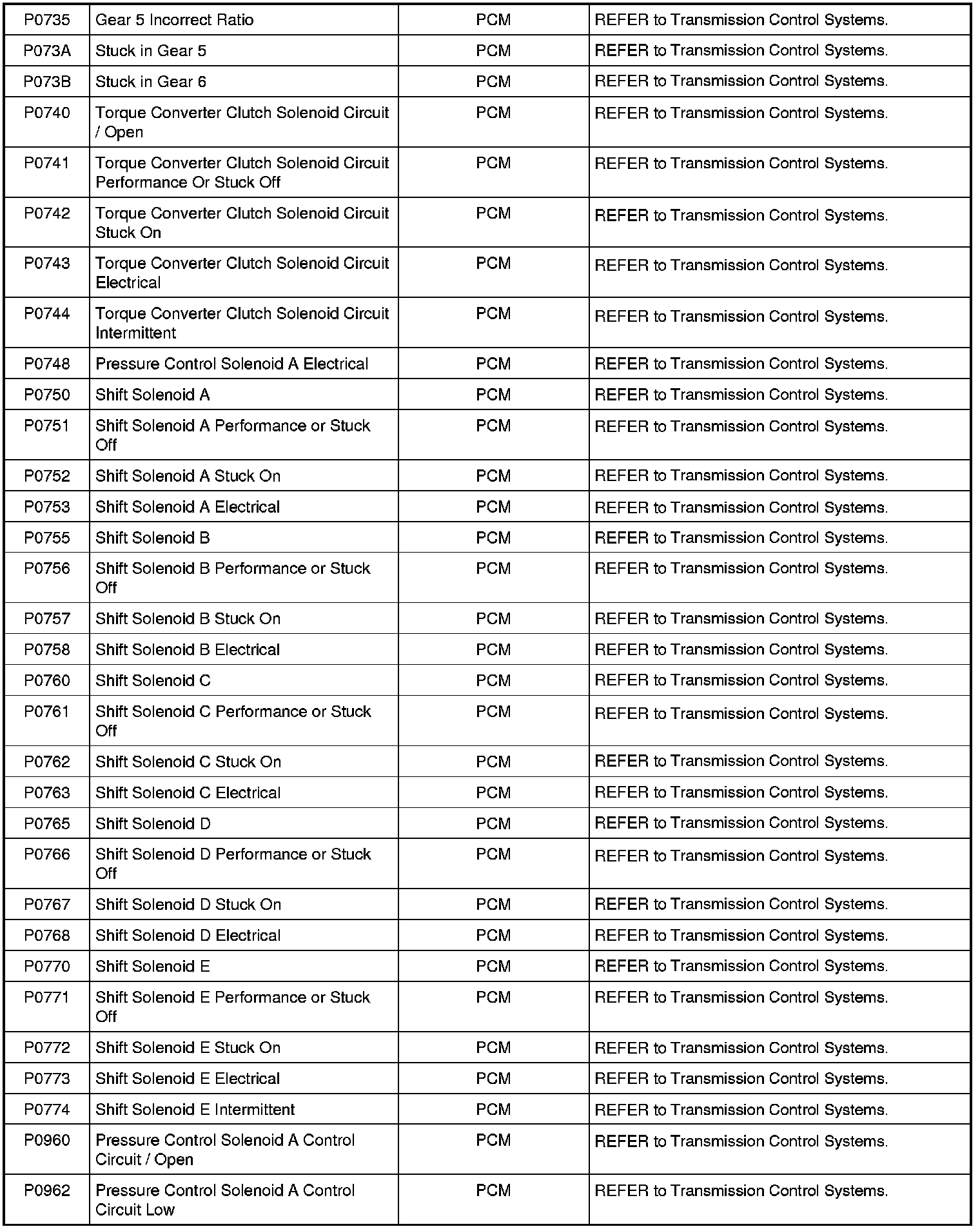
P163E-P2703:
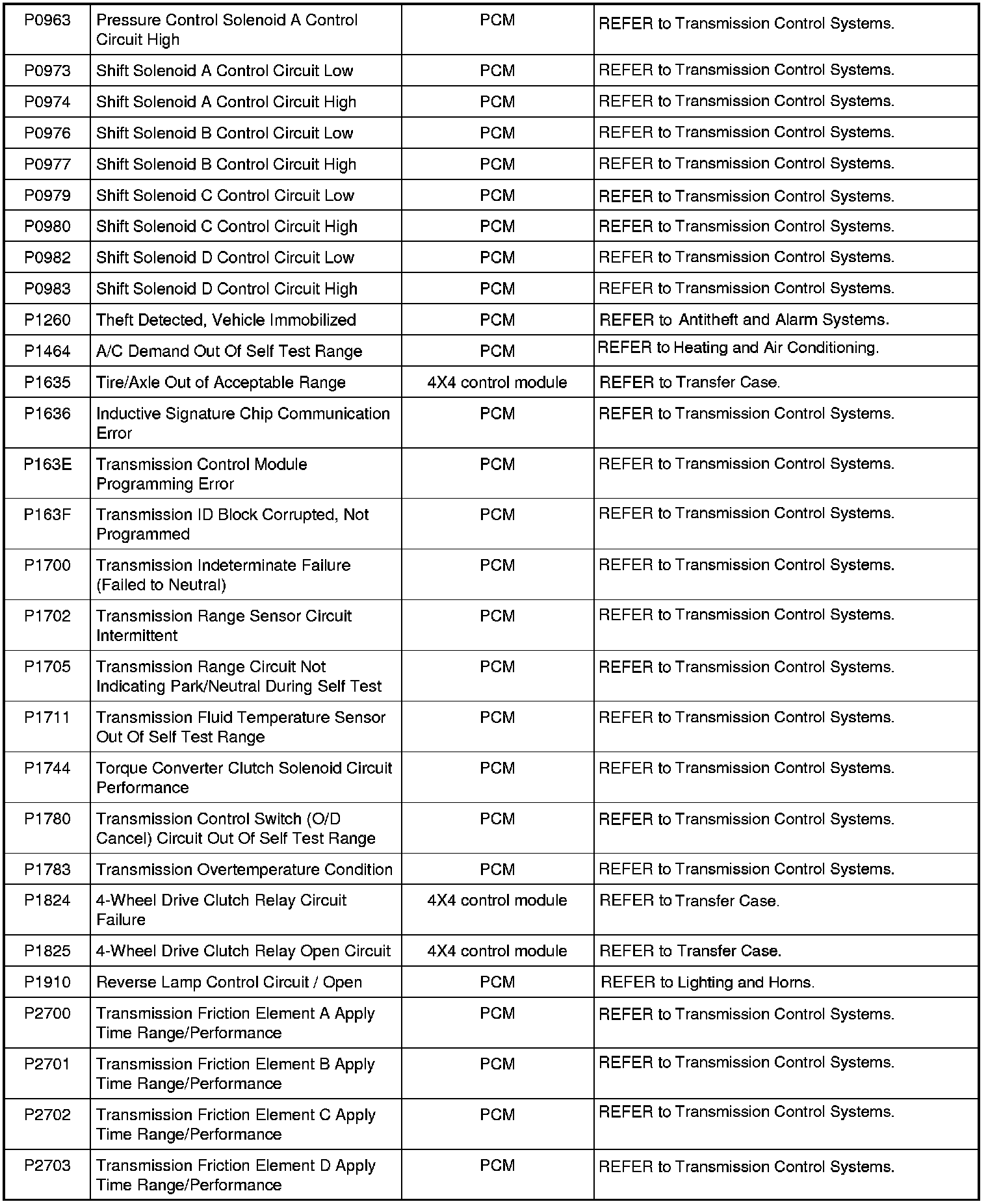
PXXXX-P2783 / U0002-U0140:
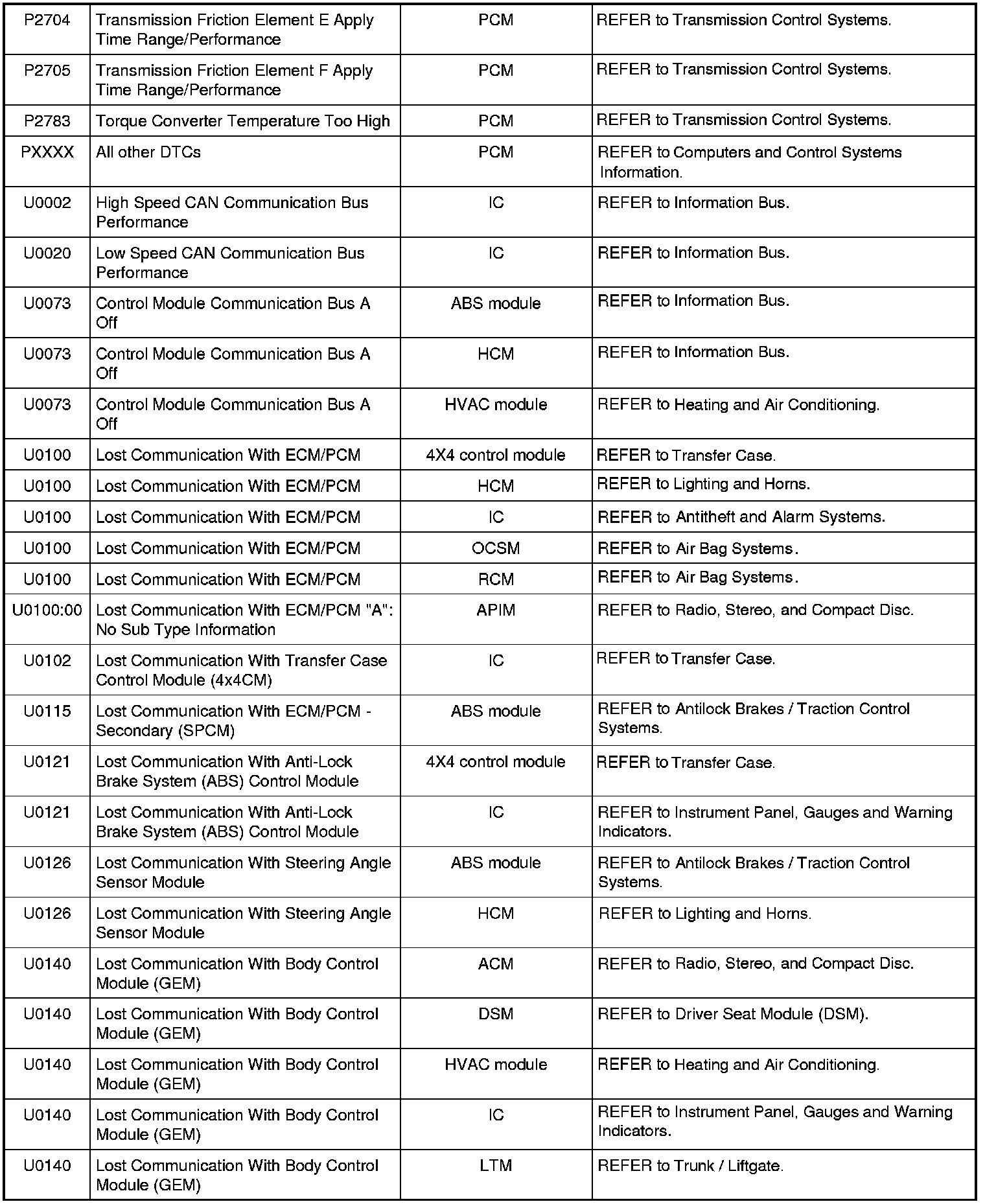
U0140-U0159:
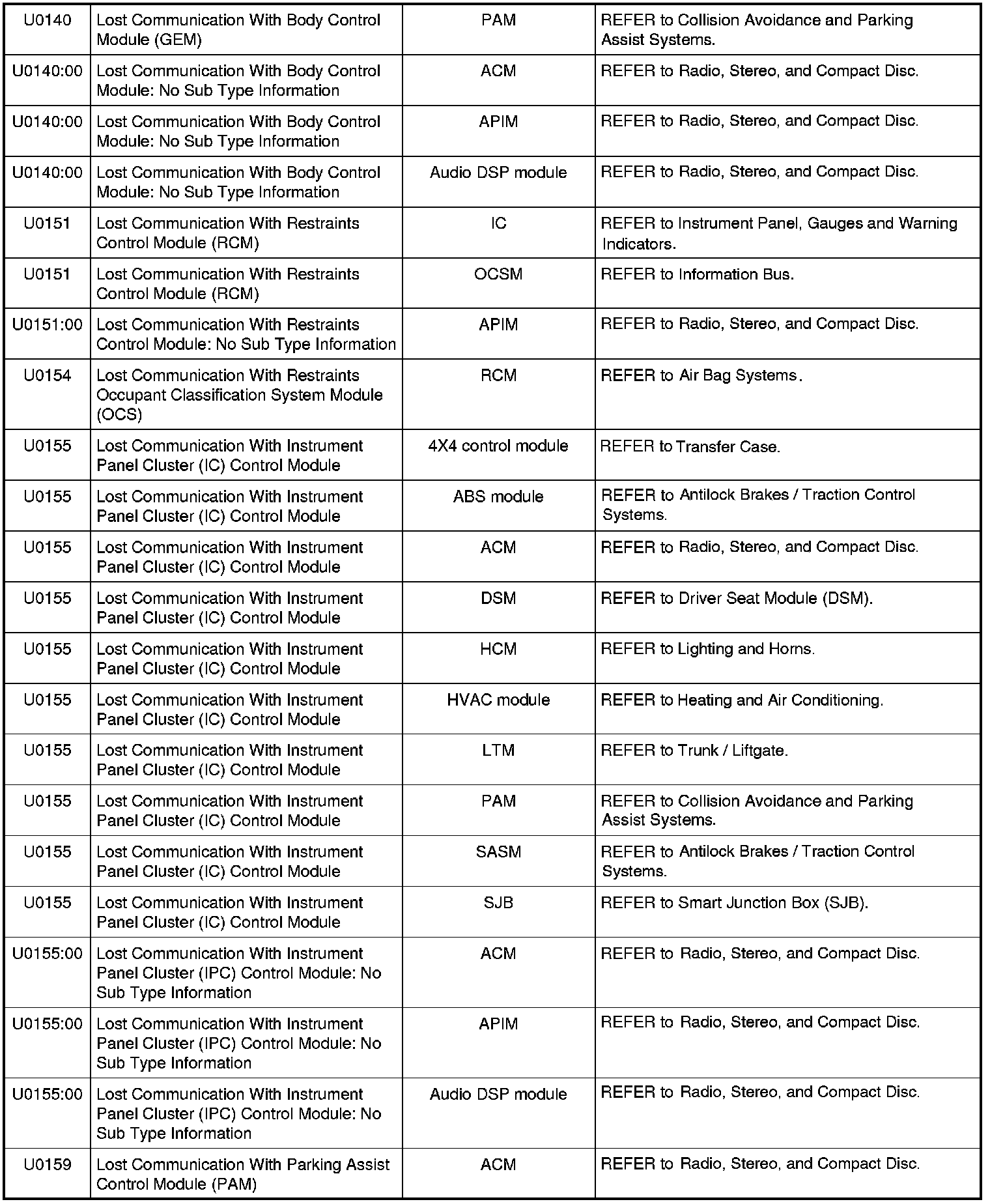
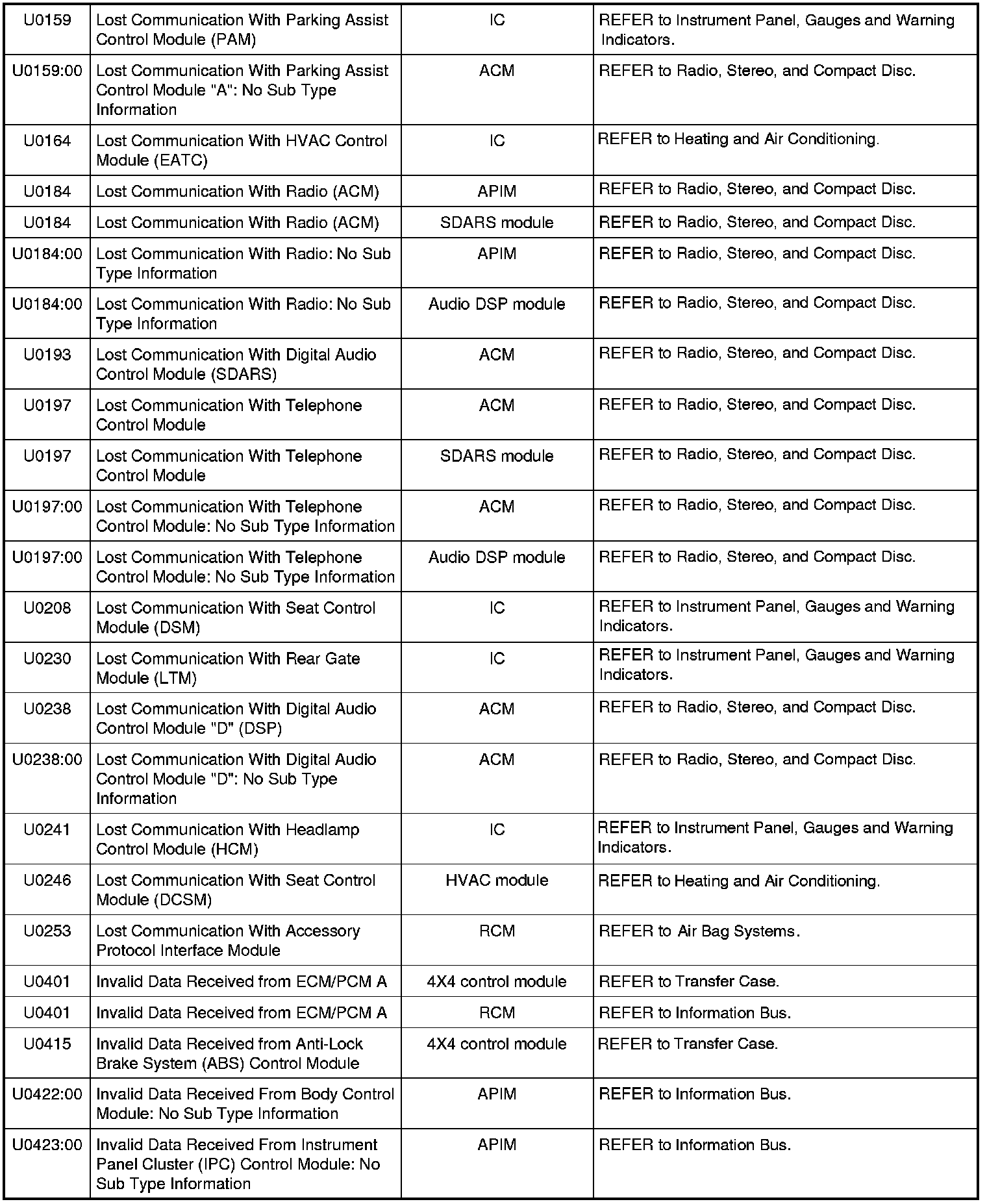
U0159-U0423:00:
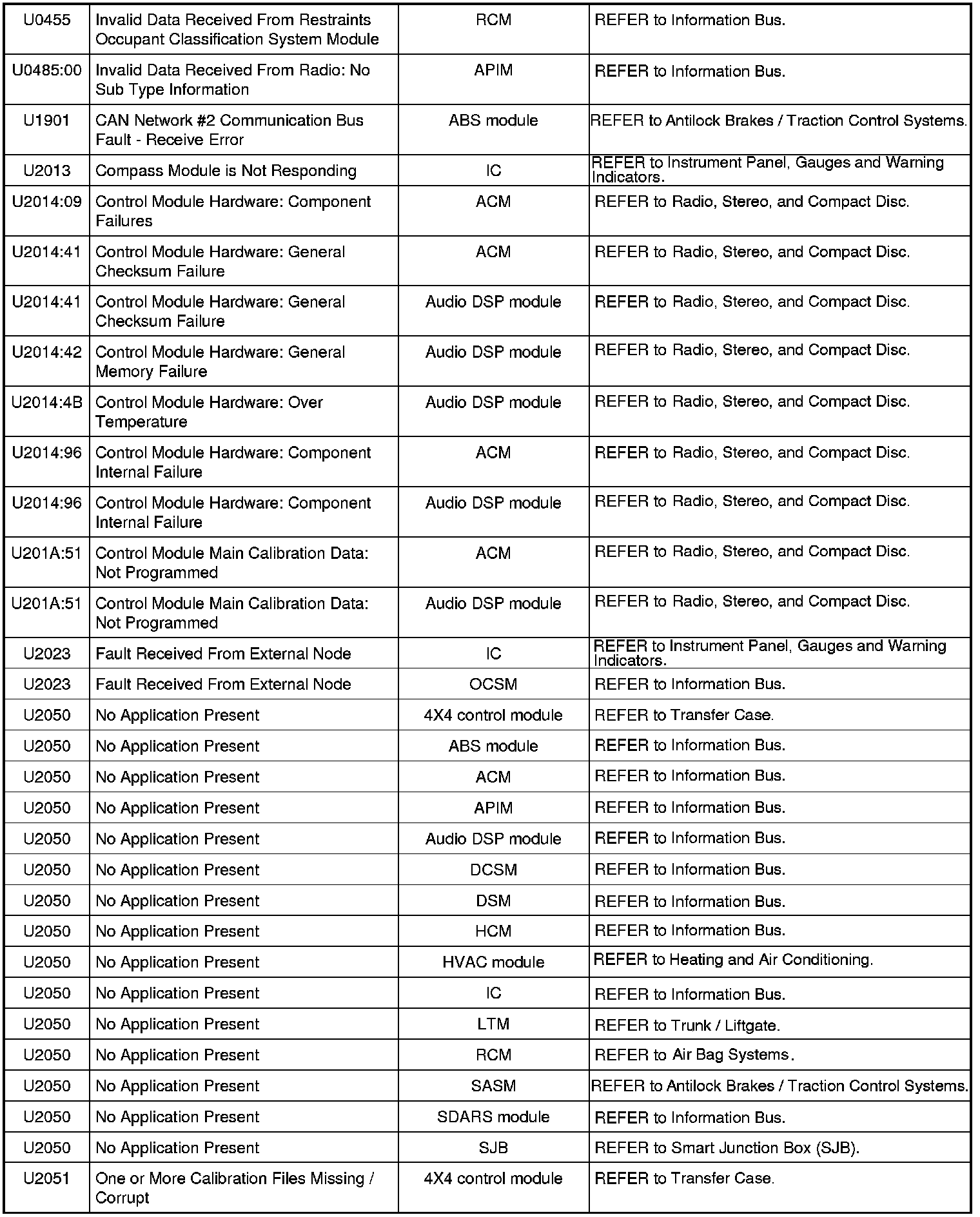
U201A:51-U2051:
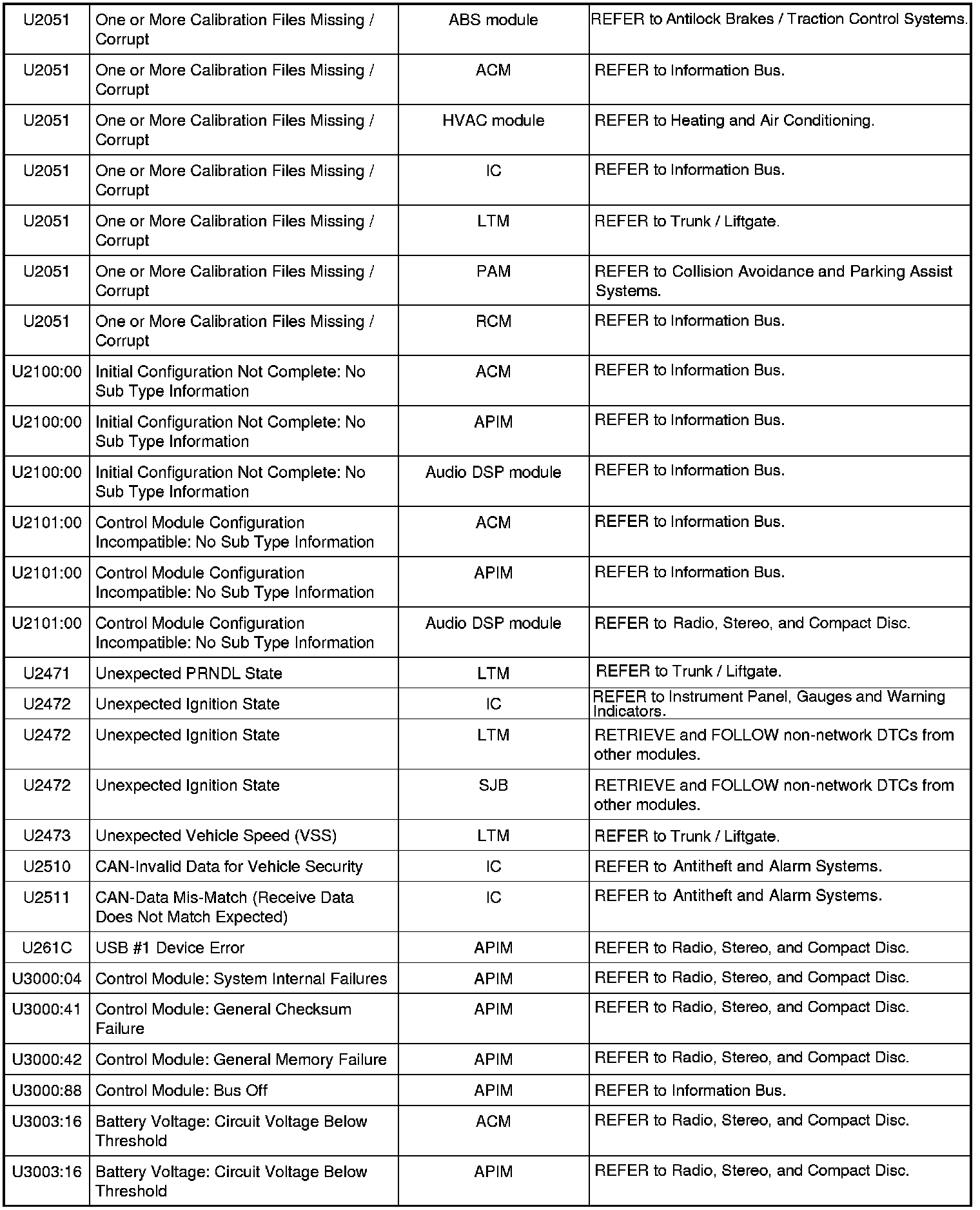
U261C-U3003:16:
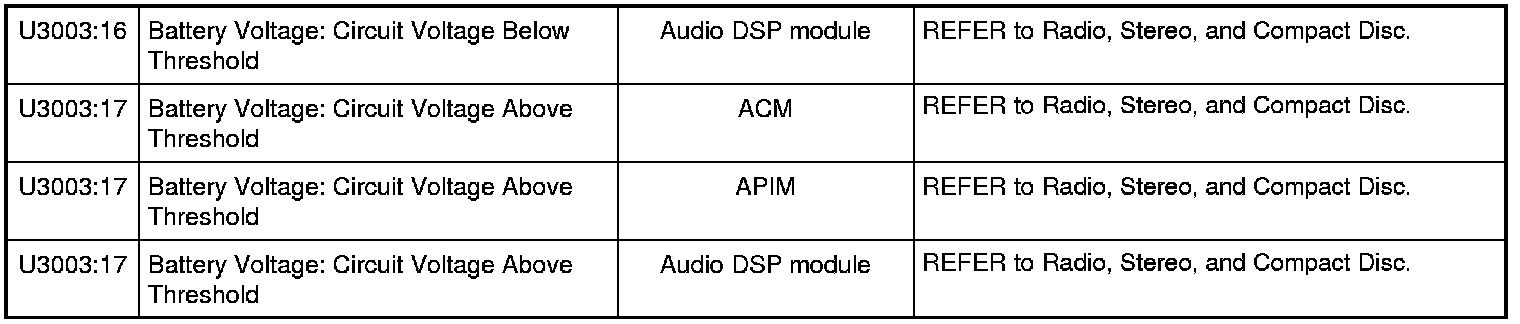
U3003:16-U3003:17:
Factory Service Tools
Use the Manual With the Right Hardware
Pair factory procedures with proven DIY tools so the instructions are easier to execute.
Disclosure: Verified tool recommendations may earn an affiliate commission at no cost to you.
When to See a Mechanic
Stop DIY work and contact a certified mechanic immediately if any of the following apply:
- • You smell fuel, burning insulation, or see smoke.
- • Brakes feel soft, pull hard to one side, or make grinding noises.
- • The engine overheats, stalls repeatedly, or misfires under load.
- • You are missing required tools, torque specs, or safe lifting equipment.
- • You are not confident in the next step or safety outcome.