
Safety Warning
DIY auto repair can cause serious injury, fire, or vehicle damage. These guides are for informational purposes only. Always follow OEM torque specs, wear PPE, and consult a certified mechanic if you are unsure. You are solely responsible for your safety.
2005 Ford Excursion 2WD V10-6.8L VIN SFACTORY OEM SERVICE PROCEDURE
System Specifications
Piston diameter (Grade 2) at right angle-to-pin bore 90.180 ± 0.005 mm
Piston-to-bore clearance (-0.005) to +0.025 mm
Pin bore diameter (piston) 22.008 - 22.014 mm
Pin diameter 22.0010 - 22.0030 mm
Clearance (negative or positive) 0.013 - 0.005 mm
Pin bore diameter (rod) 22.012 - 22.024 mm
Clearance 0.009 - 0.023 mm
Ring groove width
Top 1.500 - 1.505 mm
Intermediate 1.502 - 1.504 mm
Oil control 3.030 - 3.050 mm
Piston ring gap
Top 0.15 - 0.30 mm
Intermediate 0.25 - 0.50 mm
Oil control 0.15 - 0.65 mm
Crankshaft
Main bearing journal diameter 67.481 - 67.505
Maximum out-of-round 0.0075 mm between cross sections
Maximum taper (Straightness) 0.004 mm
Runout: FIM of center journals when located on front and rear journal 0.05 mm 3 Places
Clearance-crankshaft journal-to-main bearing clearance 0.048 - 0.024 mm
Connecting rod journal diameter 53.003 - 52.983 mm
Maximum out-of-round 0.0075 mm between cross sections
Maximum taper 0.004 mm
Crankshaft end play 0.075 - 0.377 mm
Connecting Rod
Big end journal inside diameter with assembled liners 53.049 - 53.027 mm
Rod bearing-to-journal clearance 0.064 - 0.026 mm
Pin bore diameter (rod) 22.024 - 22.012 mm
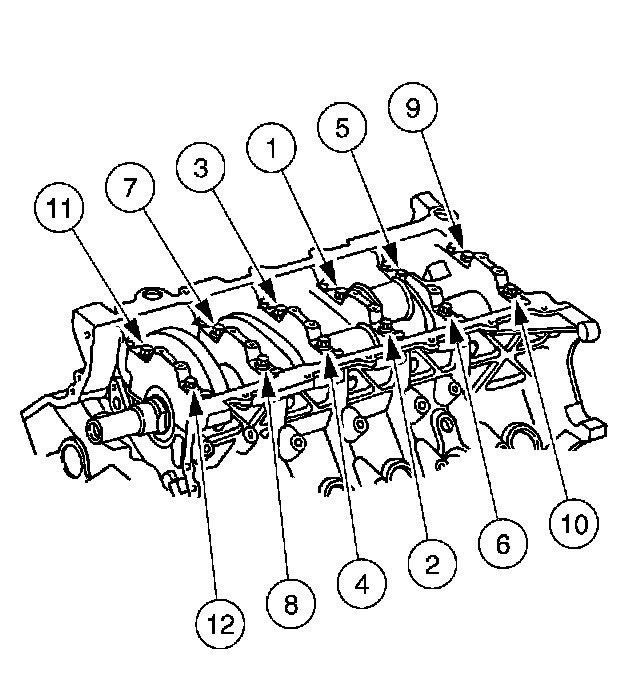
Crankshaft Main Bearing
Stage 1: Tighten to 40 Nm (30 ft. lbs.).
Stage 2: Tighten an additional 90 degrees.
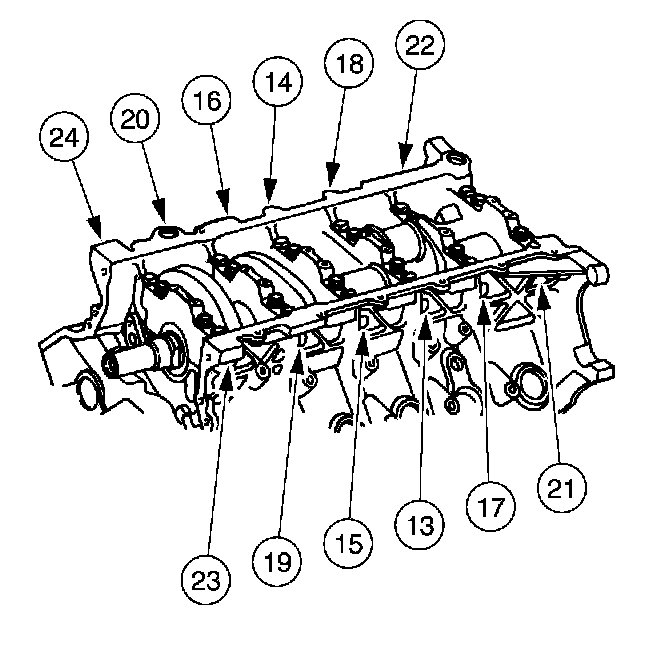
Stage 1: Tighten to 30 Nm (22 ft. lbs.).
Stage 2: Tighten an additional 90 degrees.
Connecting Rod Bolts
Stage 1: Tighten to 43 Nm (32 ft. lbs.).
Stage 2: Tighten an additional 105 degrees.
Crankshaft Pulley
Stage 1: Tighten to 90 Nm (66 ft. lbs.).
Stage 2: Loosen 360 degrees.
Stage 3: Tighten to 50 Nm (37 ft. lbs.).
Stage 4: Tighten an additional 90 degrees.
Piston-to-bore clearance (-0.005) to +0.025 mm
Pin bore diameter (piston) 22.008 - 22.014 mm
Pin diameter 22.0010 - 22.0030 mm
Clearance (negative or positive) 0.013 - 0.005 mm
Pin bore diameter (rod) 22.012 - 22.024 mm
Clearance 0.009 - 0.023 mm
Ring groove width
Top 1.500 - 1.505 mm
Intermediate 1.502 - 1.504 mm
Oil control 3.030 - 3.050 mm
Piston ring gap
Top 0.15 - 0.30 mm
Intermediate 0.25 - 0.50 mm
Oil control 0.15 - 0.65 mm
Crankshaft
Main bearing journal diameter 67.481 - 67.505
Maximum out-of-round 0.0075 mm between cross sections
Maximum taper (Straightness) 0.004 mm
Runout: FIM of center journals when located on front and rear journal 0.05 mm 3 Places
Clearance-crankshaft journal-to-main bearing clearance 0.048 - 0.024 mm
Connecting rod journal diameter 53.003 - 52.983 mm
Maximum out-of-round 0.0075 mm between cross sections
Maximum taper 0.004 mm
Crankshaft end play 0.075 - 0.377 mm
Connecting Rod
Big end journal inside diameter with assembled liners 53.049 - 53.027 mm
Rod bearing-to-journal clearance 0.064 - 0.026 mm
Pin bore diameter (rod) 22.024 - 22.012 mm
Crankshaft Main Bearing
Stage 1: Tighten to 40 Nm (30 ft. lbs.).
Stage 2: Tighten an additional 90 degrees.
Stage 1: Tighten to 30 Nm (22 ft. lbs.).
Stage 2: Tighten an additional 90 degrees.
Connecting Rod Bolts
Stage 1: Tighten to 43 Nm (32 ft. lbs.).
Stage 2: Tighten an additional 105 degrees.
Crankshaft Pulley
Stage 1: Tighten to 90 Nm (66 ft. lbs.).
Stage 2: Loosen 360 degrees.
Stage 3: Tighten to 50 Nm (37 ft. lbs.).
Stage 4: Tighten an additional 90 degrees.
Factory Service Tools
Use the Manual With the Right Hardware
Pair factory procedures with proven DIY tools so the instructions are easier to execute.
Disclosure: Verified tool recommendations may earn an affiliate commission at no cost to you.
When to See a Mechanic
Stop DIY work and contact a certified mechanic immediately if any of the following apply:
- • You smell fuel, burning insulation, or see smoke.
- • Brakes feel soft, pull hard to one side, or make grinding noises.
- • The engine overheats, stalls repeatedly, or misfires under load.
- • You are missing required tools, torque specs, or safe lifting equipment.
- • You are not confident in the next step or safety outcome.