
Safety Warning
DIY auto repair can cause serious injury, fire, or vehicle damage. These guides are for informational purposes only. Always follow OEM torque specs, wear PPE, and consult a certified mechanic if you are unsure. You are solely responsible for your safety.
2003 Ford Excursion 2WD V8-7.3L DSL Turbo VIN FFACTORY OEM SERVICE PROCEDURE
Compressor
REMOVAL
CAUTION: If installing a new air conditioning compressor due to an internal failure of the old unit, you must carry out the following procedures to remove contamination from the air conditioning system.
^ If A/C flushing equipment is available, carry out flushing of the air conditioning system prior to installing a new air conditioning compressor.
^ If A/C flushing equipment is not available, carry out filtering of the air conditioning system after a new air conditioning compressor has been installed.
^ Install a new evaporator core orifice as directed by the A/C flushing or filtering procedure.
^ Install a new suction accumulator as directed by the A/C flushing or filtering procedure.
NOTE: Installation of a new suction accumulator is not required when repairing the air conditioning system except when there is physical evidence of system contamination from a failed A/C compressor or damage to the suction accumulator.
1. If flushing of the refrigerant system has not been performed, recover the refrigerant.
2. Remove the drive belt from the A/C compressor pulley.
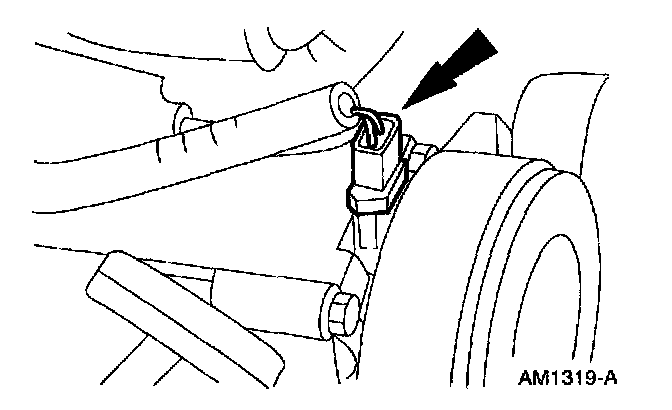
3. Disconnect the wire harness connector from the A/C clutch field coil.
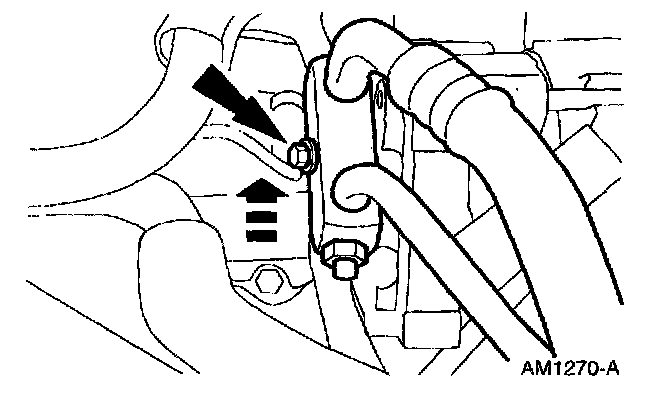
4. Loosen the bolt and remove the A/C manifold and tube assembly from the A/C compressor.
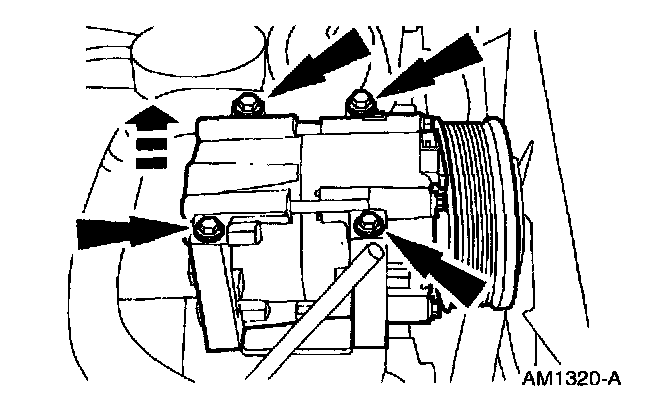
5. Remove the bolts and remove the A/C compressor.
INSTALLATION
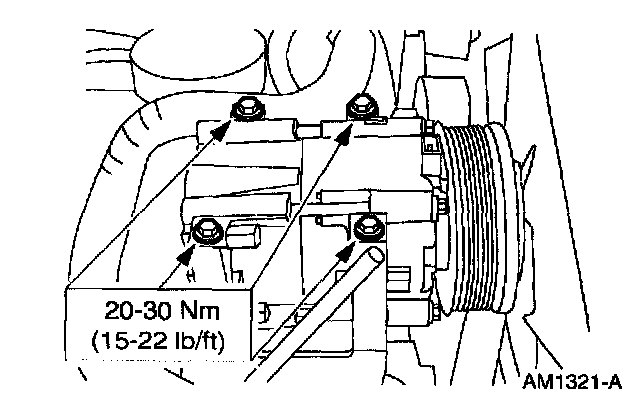
1. To install, reverse the removal procedure.
^ If filtering of the refrigerant system is not to be performed, service the replacement A/C compressor with the proper amount of PAG Refrigerant Compressor Oil (R-134a Systems) F7AZ-19589-DA (Motorcraft YN-12-C) or equivalent meeting Ford specification WSH-M1C231-B.
^ Lubricate the O-ring seal with PAG Refrigerant Compressor Oil (R-134a Systems) F7AZ-19589-DA (Motorcraft YN-12-C) or equivalent meeting Ford specification WSH-M1C231-B.
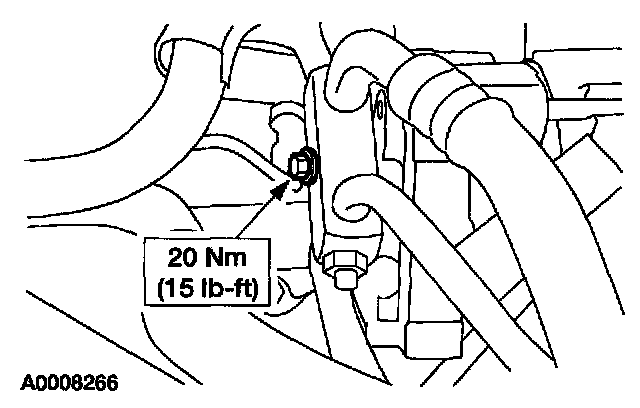
2. If filtering of the refrigerant system is not to be performed, evacuate, charge and leak test the refrigerant system.
CAUTION: If installing a new air conditioning compressor due to an internal failure of the old unit, you must carry out the following procedures to remove contamination from the air conditioning system.
^ If A/C flushing equipment is available, carry out flushing of the air conditioning system prior to installing a new air conditioning compressor.
^ If A/C flushing equipment is not available, carry out filtering of the air conditioning system after a new air conditioning compressor has been installed.
^ Install a new evaporator core orifice as directed by the A/C flushing or filtering procedure.
^ Install a new suction accumulator as directed by the A/C flushing or filtering procedure.
NOTE: Installation of a new suction accumulator is not required when repairing the air conditioning system except when there is physical evidence of system contamination from a failed A/C compressor or damage to the suction accumulator.
1. If flushing of the refrigerant system has not been performed, recover the refrigerant.
2. Remove the drive belt from the A/C compressor pulley.
3. Disconnect the wire harness connector from the A/C clutch field coil.
4. Loosen the bolt and remove the A/C manifold and tube assembly from the A/C compressor.
5. Remove the bolts and remove the A/C compressor.
INSTALLATION
1. To install, reverse the removal procedure.
^ If filtering of the refrigerant system is not to be performed, service the replacement A/C compressor with the proper amount of PAG Refrigerant Compressor Oil (R-134a Systems) F7AZ-19589-DA (Motorcraft YN-12-C) or equivalent meeting Ford specification WSH-M1C231-B.
^ Lubricate the O-ring seal with PAG Refrigerant Compressor Oil (R-134a Systems) F7AZ-19589-DA (Motorcraft YN-12-C) or equivalent meeting Ford specification WSH-M1C231-B.
2. If filtering of the refrigerant system is not to be performed, evacuate, charge and leak test the refrigerant system.
Factory Service Tools
Use the Manual With the Right Hardware
Pair factory procedures with proven DIY tools so the instructions are easier to execute.
Disclosure: Verified tool recommendations may earn an affiliate commission at no cost to you.
When to See a Mechanic
Stop DIY work and contact a certified mechanic immediately if any of the following apply:
- • You smell fuel, burning insulation, or see smoke.
- • Brakes feel soft, pull hard to one side, or make grinding noises.
- • The engine overheats, stalls repeatedly, or misfires under load.
- • You are missing required tools, torque specs, or safe lifting equipment.
- • You are not confident in the next step or safety outcome.