
Safety Warning
DIY auto repair can cause serious injury, fire, or vehicle damage. These guides are for informational purposes only. Always follow OEM torque specs, wear PPE, and consult a certified mechanic if you are unsure. You are solely responsible for your safety.
2003 Ford Excursion 2WD V8-6.0L DSL TurboFACTORY OEM SERVICE PROCEDURE
Compression Check: Testing and Inspection
Alldata Editors Note - Ford does not provide a cranking pressure specification, only an acceptable range.
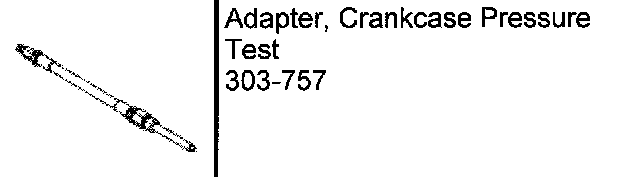
Special Tool
Compression Test
1. Make sure the oil in the crankcase is the correct viscosity and at the correct level.
2. Operate the engine until it is at normal operating temperature. Turn the ignition switch to the OFF position.
3. NOTE: Failure to remove all the glow plugs may result in inconsistent test results. Remove the glow plugs. Glow Plug System
4. NOTE: The battery charger must be left connected during the compression test and disconnected when the test is complete.
Connect a battery charger to the battery.
5. NOTE: It may be necessary to install a commercially available adapter fitting to connect the Crankcase Pressure Test Adapter to the commercially available diesel compression gauge.
Install the Crankcase Pressure Test Adapter and a commercially available diesel engine compression gauge.
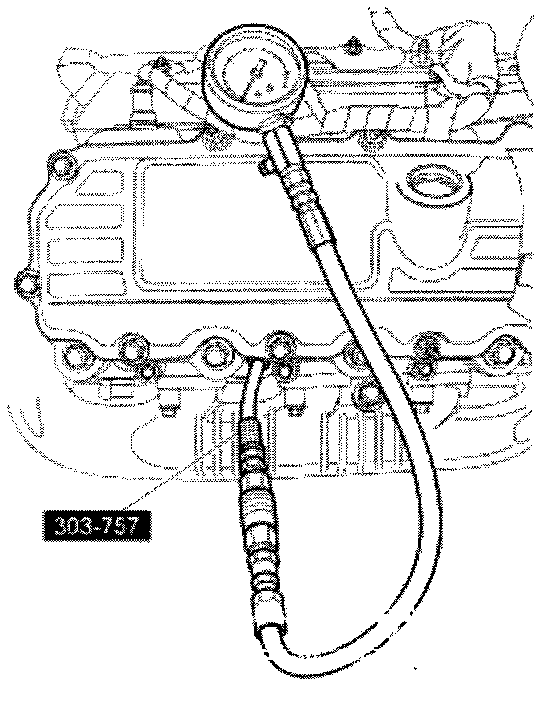
6. Install an auxiliary starter switch to the starting circuit. With the ignition switch in the OFF position, crank the engine a consistent number of strokes (minimum of 2 compression strokes to 12 compression strokes). Record the readings.
7. Repeat the test on each cylinder, cranking the engine the same number of compression strokes, record the readings. Compare the readings of the 8 cylinders. There must be no more than a 10% difference between the readings.
8. Investigate and repair any cylinder(s) that are outside of the 10% range.
9. Install the glow plugs. Glow Plug System
Factory Service Tools
Use the Manual With the Right Hardware
Pair factory procedures with proven DIY tools so the instructions are easier to execute.
Disclosure: Verified tool recommendations may earn an affiliate commission at no cost to you.
When to See a Mechanic
Stop DIY work and contact a certified mechanic immediately if any of the following apply:
- • You smell fuel, burning insulation, or see smoke.
- • Brakes feel soft, pull hard to one side, or make grinding noises.
- • The engine overheats, stalls repeatedly, or misfires under load.
- • You are missing required tools, torque specs, or safe lifting equipment.
- • You are not confident in the next step or safety outcome.