
Safety Warning
DIY auto repair can cause serious injury, fire, or vehicle damage. These guides are for informational purposes only. Always follow OEM torque specs, wear PPE, and consult a certified mechanic if you are unsure. You are solely responsible for your safety.
2000 Ford Excursion 2WD V8-7.3L DSL Turbo VIN FFACTORY OEM SERVICE PROCEDURE
Engine General Specifications

Engine Specifcations

Drive Belt Tension
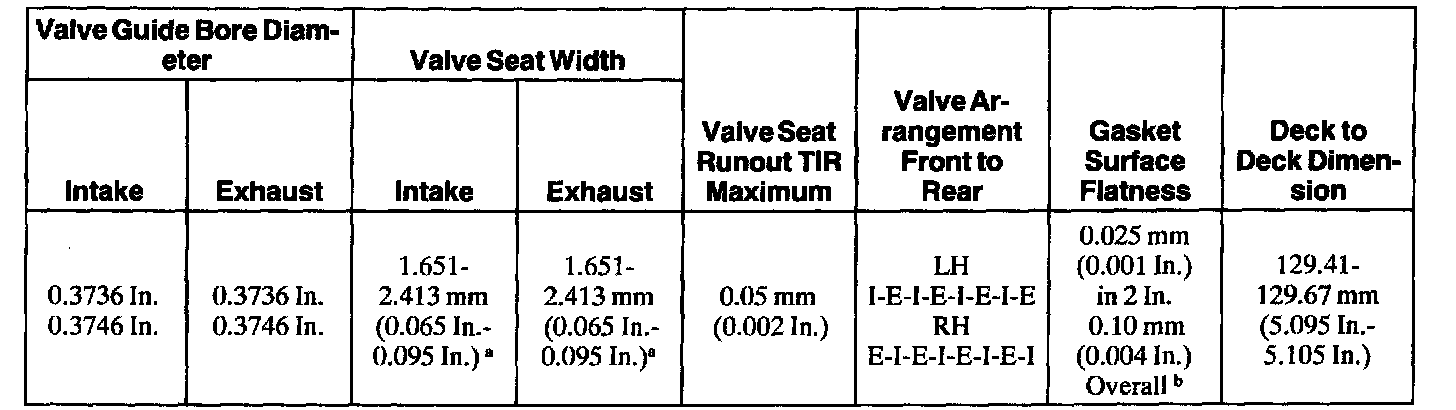
Cylinder Head
a Valve seat angle - intake 30° and exhaust 37.5°.
b Gasket surface finish - 63-125 in.
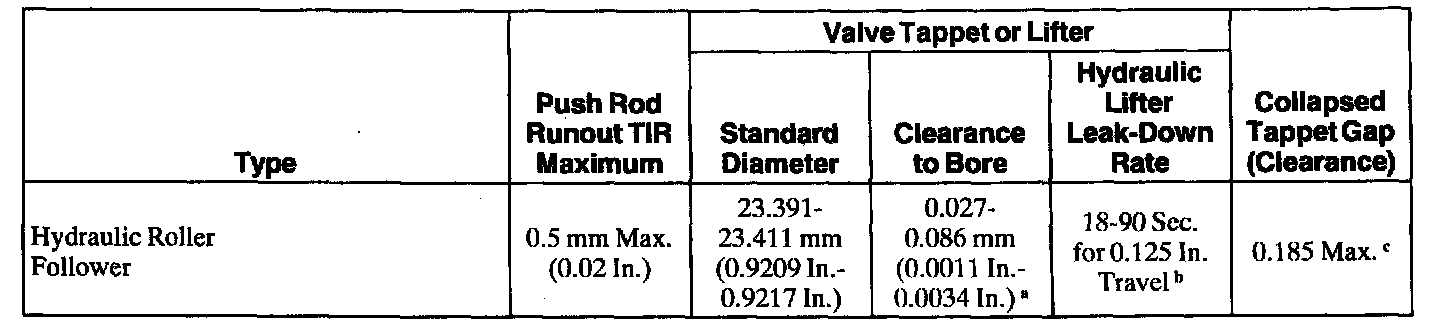
Rocker Arm Shaft, Push Rods and Valve Tappets
a Service limit - 0.005.
b Time required for plunger to move 0.125 in. under 50 lbs. with test fluid at room temperature.
c Measured at valve tip to rocker arm.
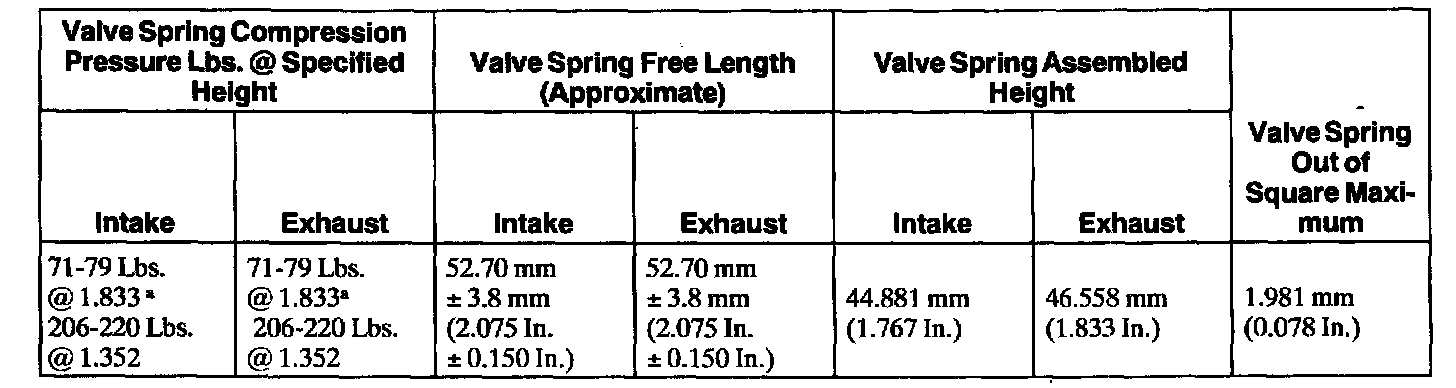
Valve Springs
a Service Limit - ±8lbs.

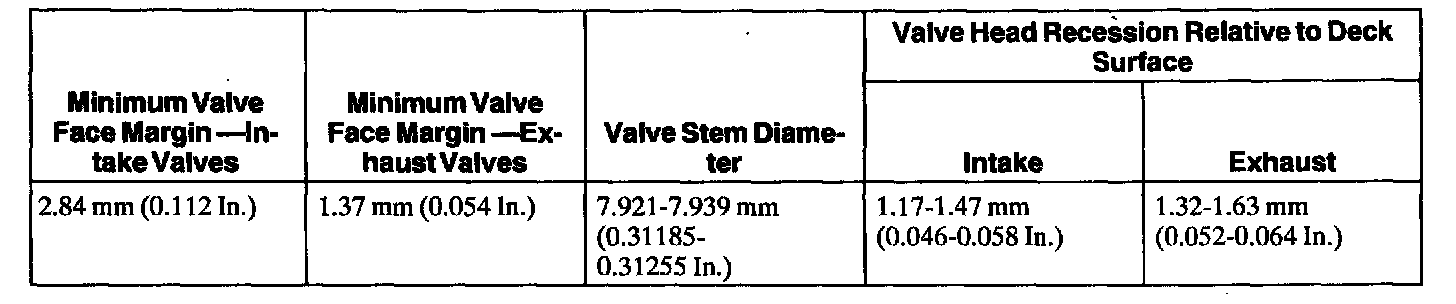
Valves
a Service clearance - 0.0055.

Camshaft
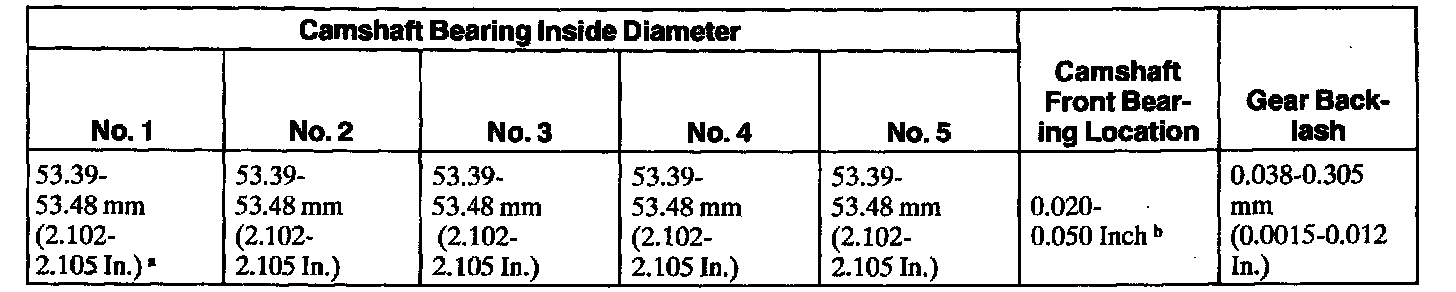
Camshaft Drive
a All camshaft journals are 53.31-53.34 mm (2.099-2.100 in.).
b Distance in inches that front edge of the bearing is installed below the front face of the cylinder block.
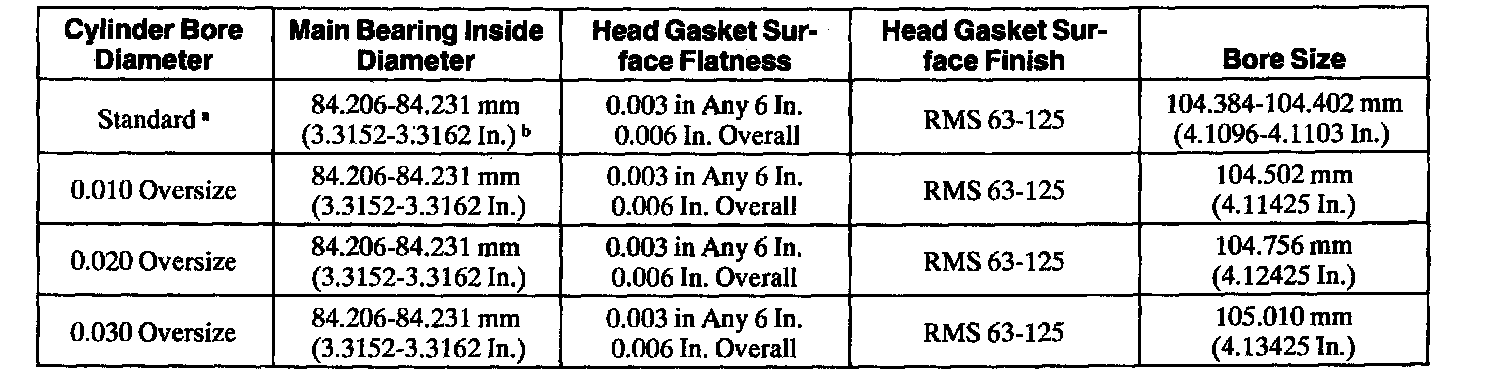
Cylinder Block
a Maximum out-of-round - 0.013 mm (0.0005 in.); maximum taper - 0.013 mm (0.0005 in.); cylinder bore surface finish - RMS 15-30.
b With bearing caps tightened in place.
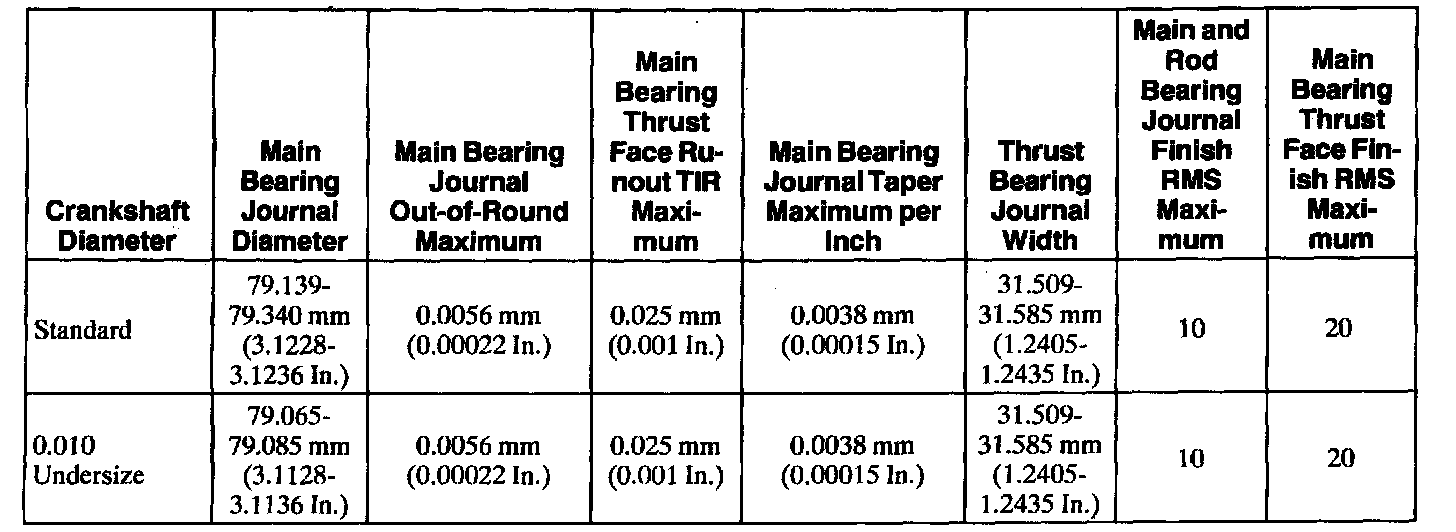
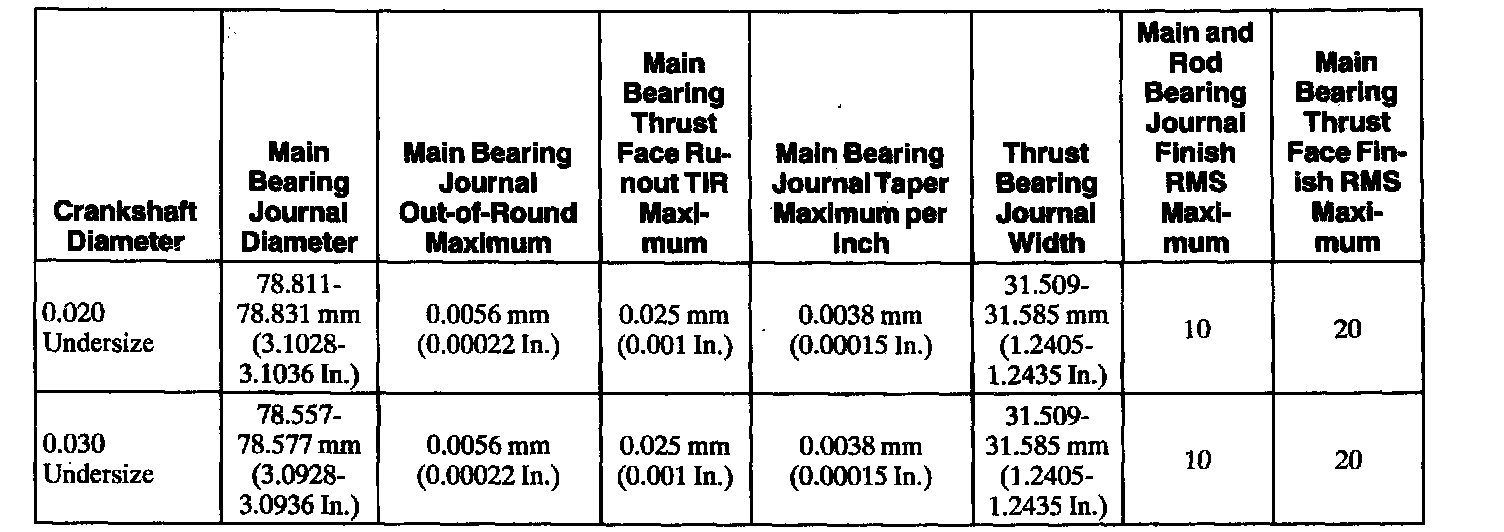
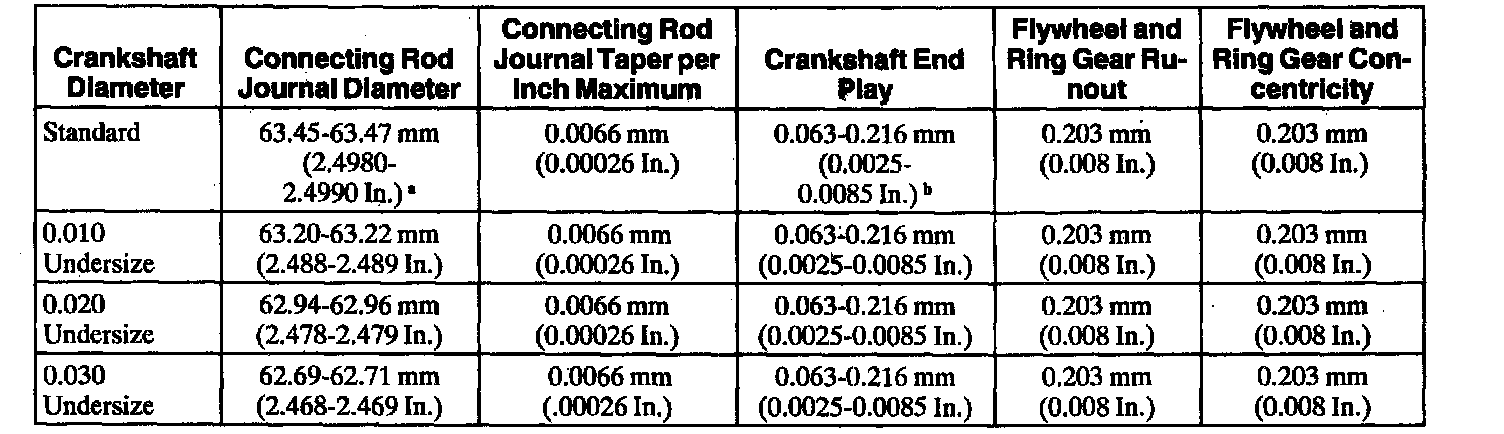
Crankshaft and Flywheel
a Maximum out-of-round - 0.0056 mm (0.00022 in.)
b Service limit - 0.51mm (0.020 in.)

Crankshaft Bearings
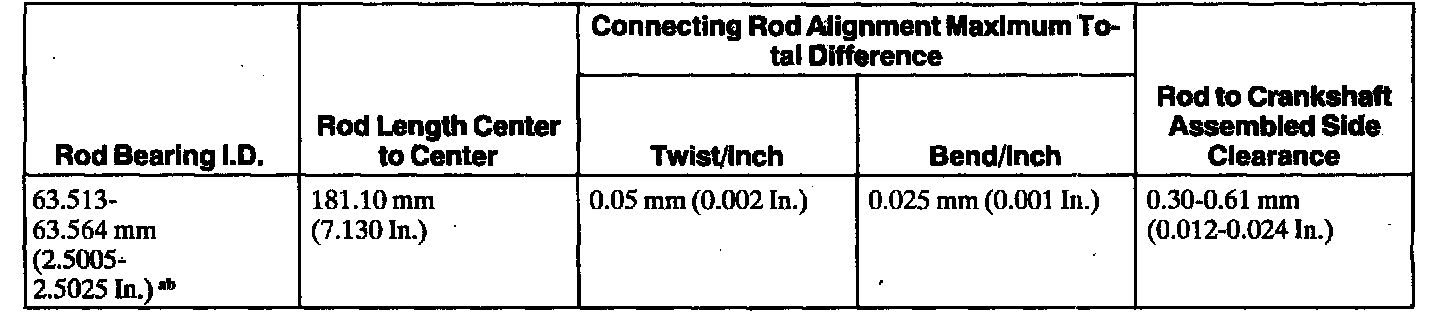
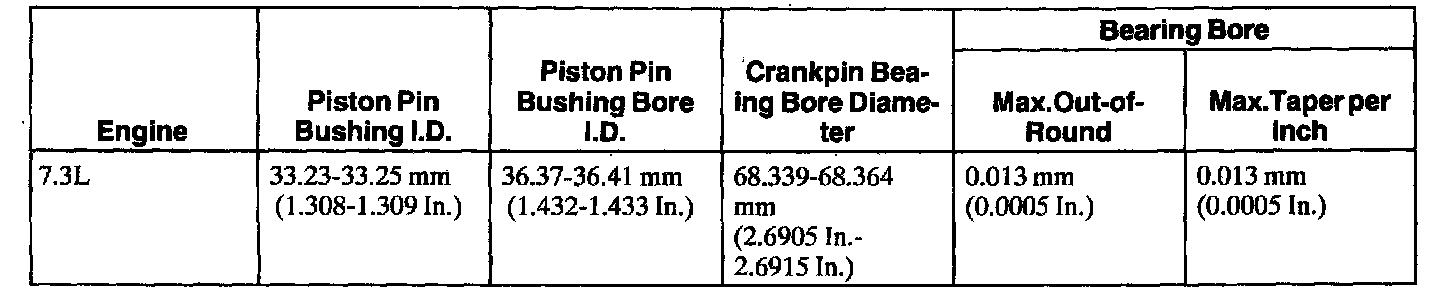
Connecting Rod
a Connecting rod bearing bore maximum out-of-round - 0.0005 and maximum bore taper - 0.0005.
b With beaing caps tightened in place.
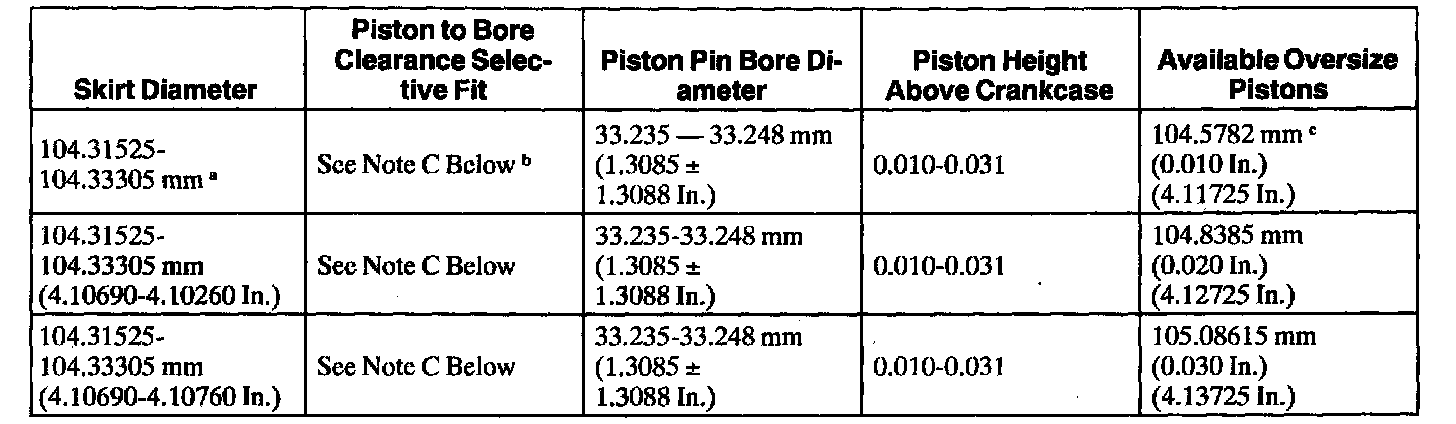
Piston
a Measured at 90° to the pin at 42.77 mm (1.684 in.) below oil ring groove at room temperature.
b Clearance in cylinder bores: 0.1118-0.1549 mm (0.0044-0.0061 in.).
c Oversize service piston specifications are all ± 0.13208 mm (0.0052 in.)

Piston Pin
a Selective fit.
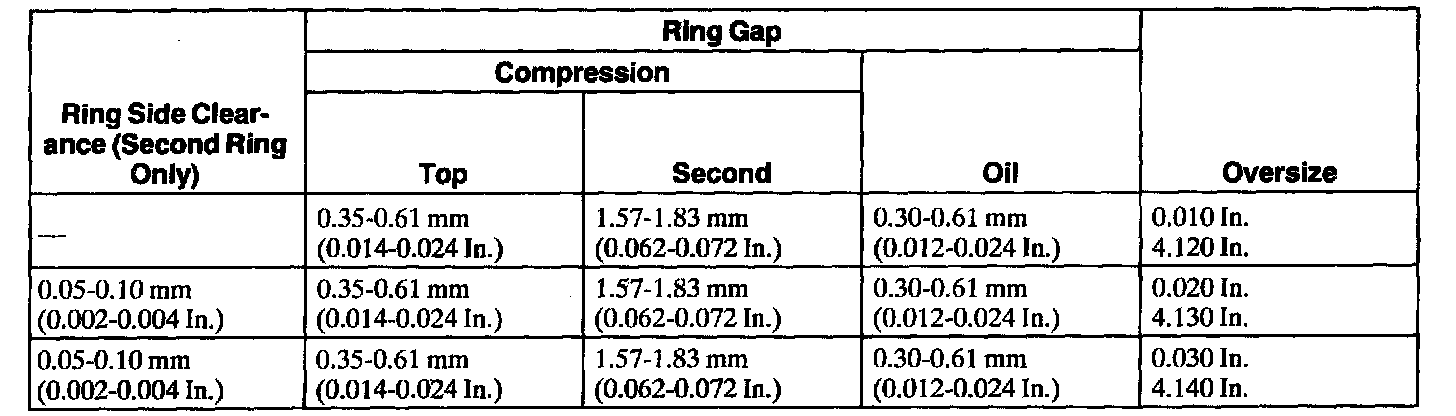
Piston Rings
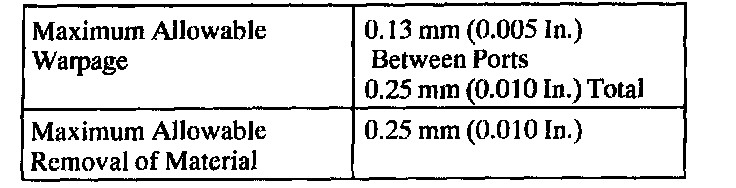
Exhaust Manifold

Drive Gear Backlash

Oil Pump, Oil Cooler and Oil Capacity
a Add 2 US quarts (1.66 imperial quarts or 1.9 liters) when replacing oil filter.
Factory Service Tools
Use the Manual With the Right Hardware
Pair factory procedures with proven DIY tools so the instructions are easier to execute.
Disclosure: Verified tool recommendations may earn an affiliate commission at no cost to you.
When to See a Mechanic
Stop DIY work and contact a certified mechanic immediately if any of the following apply:
- • You smell fuel, burning insulation, or see smoke.
- • Brakes feel soft, pull hard to one side, or make grinding noises.
- • The engine overheats, stalls repeatedly, or misfires under load.
- • You are missing required tools, torque specs, or safe lifting equipment.
- • You are not confident in the next step or safety outcome.