
Safety Warning
DIY auto repair can cause serious injury, fire, or vehicle damage. These guides are for informational purposes only. Always follow OEM torque specs, wear PPE, and consult a certified mechanic if you are unsure. You are solely responsible for your safety.
2007 Chrysler Sebring Sedan L4-2.4LFACTORY OEM SERVICE PROCEDURE
Sentry Key Remote Entry Module - Installation
INSTALLATION
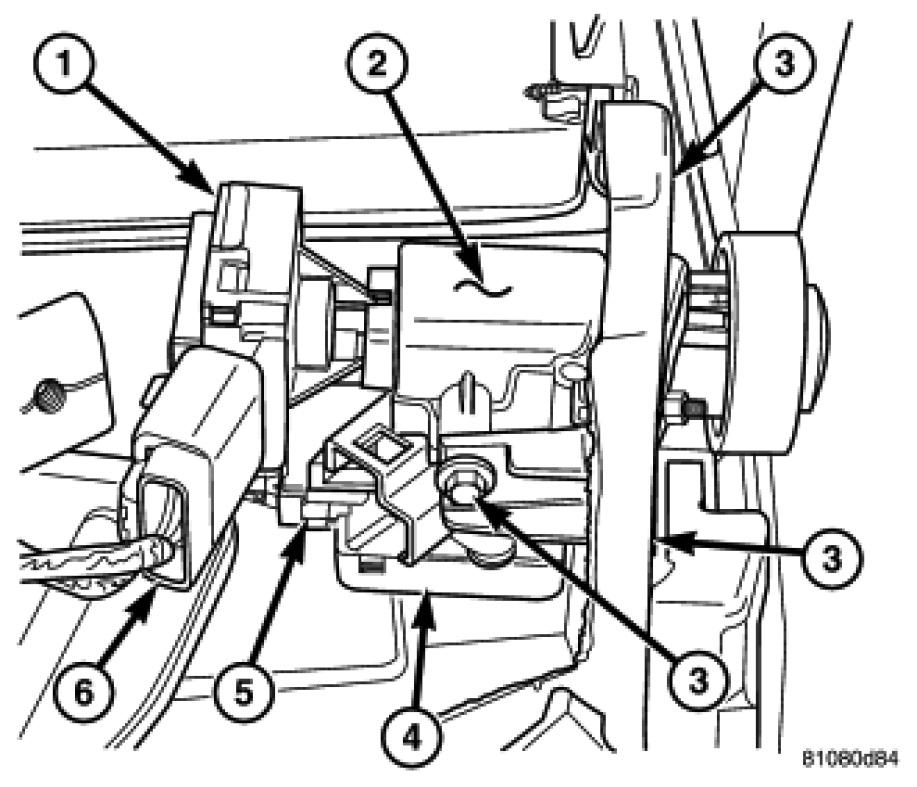
NOTE: After a SKREEM/WCM is replaced, the ignition/transponder keys need to be programmed to the new SKREEM/WCM. Follow the directions on the diagnostic scan tool. The transponder key for the SKREES/SKIM and the RKE will both be programmed during this operation. There is no need to program the fob of the key for RKE functionality once the transponder key is programmed to the new SKREEM/WCM.
NOTE: When a PCM and the SKREEM/WCM are replaced at the same time, perform the following steps in order:
- Program the new PCM.
- Program the new SKREEM/WCM.
- Program all ignition/transponder keys to the new SKREEM/WCM.
1. Position the SKREEM on the ignition lock housing and install the retaining screw (1).
2. Position the ignition switch/lock assembly (3) up in behind the instrument panel and push rearward.
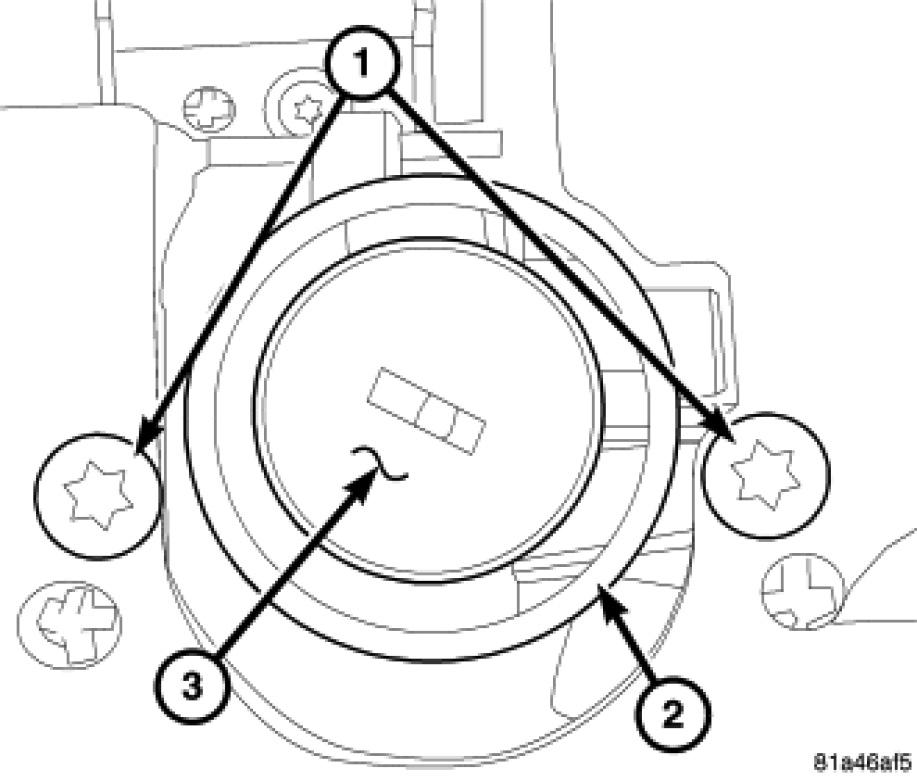
3. Install the two mounting screws (1) to the front of the instrument panel.
4. From underneath the ignition switch/lock assembly, tighten the lower retaining screw.
5. Reach up behind the left side of the center stack and connect the ignition switch and SKREEM electrical connectors.
6. Install the cluster bezel.
7. Install the instrument panel steering column cover.
8. Connect the battery negative cable.
Factory Service Tools
Use the Manual With the Right Hardware
Pair factory procedures with proven DIY tools so the instructions are easier to execute.
Disclosure: Verified tool recommendations may earn an affiliate commission at no cost to you.
When to See a Mechanic
Stop DIY work and contact a certified mechanic immediately if any of the following apply:
- • You smell fuel, burning insulation, or see smoke.
- • Brakes feel soft, pull hard to one side, or make grinding noises.
- • The engine overheats, stalls repeatedly, or misfires under load.
- • You are missing required tools, torque specs, or safe lifting equipment.
- • You are not confident in the next step or safety outcome.