
Safety Warning
DIY auto repair can cause serious injury, fire, or vehicle damage. These guides are for informational purposes only. Always follow OEM torque specs, wear PPE, and consult a certified mechanic if you are unsure. You are solely responsible for your safety.
2004 Chrysler Intrepid (CANADA) V6-2.7LFACTORY OEM SERVICE PROCEDURE
Procedures
HEATED SEAT ELEMENT
REMOVAL
Some LH models have heating elements that cannot be replaced without replacing the entire leather seat trim cover. Consult the Mopar parts catalog for specific part numbers.
Do not remove the original heating element from the seat or seat back cushion/trim covers. The original element is permanently attached and cannot be removed without permanent damage. Models with replaceable heating elements are designed to be applied directly over the original heating elements.
1. Disconnect and isolate the negative battery cable.
2. Remove the appropriate seat cushion or seat back trim cover.
3. Disconnect the inoperative heated seat cushion or seat back element electrical connectors.
4. Locate the wires leading from the inoperative heating element and cut them off flush with the edge of the original heating element.
INSTALLATION
1. Peel off the adhesive backing on the back of the replacement heating element and stick directly on the foam cushion or on top of original heating element.
CAUTION: During the installation of the replacement heating element, be careful not to fold or crease the element assembly. Folds or creases will cause premature failure.
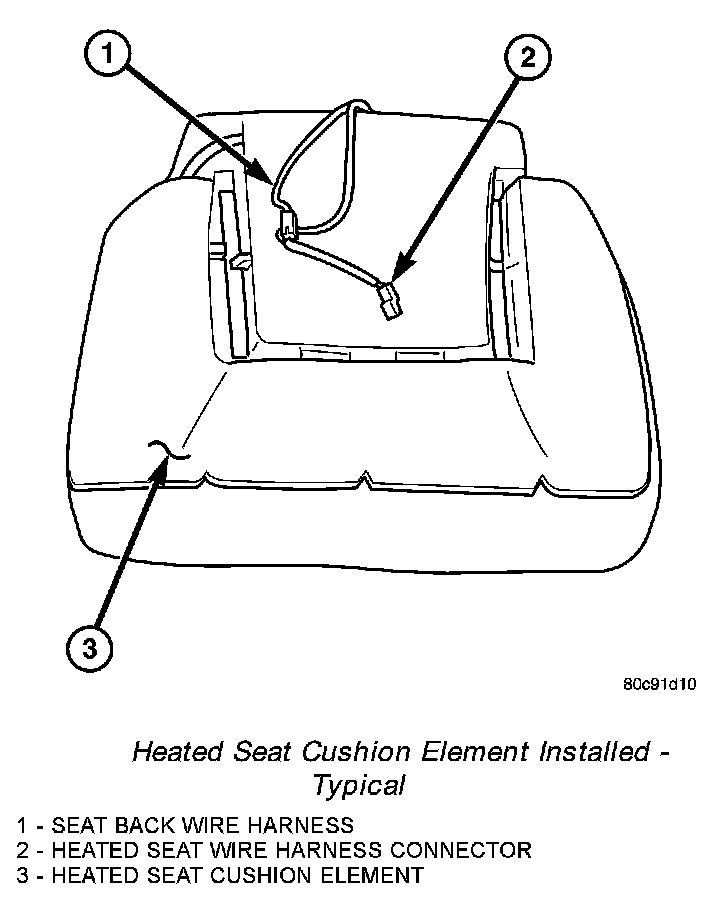
2. Connect the new heating element electrical connectors .
3. Connect the negative battery cable.
4. Verify heated seat system operation.
5. Install the appropriate seat cushion or seat back trim cover. Make certain the seat wire harness is correctly routed through the seat and seat back. The excess wire between the cushion and back elements should be securely tucked between the rear of the cushion foam and the trim cover.
REMOVAL
Some LH models have heating elements that cannot be replaced without replacing the entire leather seat trim cover. Consult the Mopar parts catalog for specific part numbers.
Do not remove the original heating element from the seat or seat back cushion/trim covers. The original element is permanently attached and cannot be removed without permanent damage. Models with replaceable heating elements are designed to be applied directly over the original heating elements.
1. Disconnect and isolate the negative battery cable.
2. Remove the appropriate seat cushion or seat back trim cover.
3. Disconnect the inoperative heated seat cushion or seat back element electrical connectors.
4. Locate the wires leading from the inoperative heating element and cut them off flush with the edge of the original heating element.
INSTALLATION
1. Peel off the adhesive backing on the back of the replacement heating element and stick directly on the foam cushion or on top of original heating element.
CAUTION: During the installation of the replacement heating element, be careful not to fold or crease the element assembly. Folds or creases will cause premature failure.
Heated Seat Cushion Element Installed - Typical:
2. Connect the new heating element electrical connectors .
3. Connect the negative battery cable.
4. Verify heated seat system operation.
5. Install the appropriate seat cushion or seat back trim cover. Make certain the seat wire harness is correctly routed through the seat and seat back. The excess wire between the cushion and back elements should be securely tucked between the rear of the cushion foam and the trim cover.
Factory Service Tools
Use the Manual With the Right Hardware
Pair factory procedures with proven DIY tools so the instructions are easier to execute.
Disclosure: Verified tool recommendations may earn an affiliate commission at no cost to you.
When to See a Mechanic
Stop DIY work and contact a certified mechanic immediately if any of the following apply:
- • You smell fuel, burning insulation, or see smoke.
- • Brakes feel soft, pull hard to one side, or make grinding noises.
- • The engine overheats, stalls repeatedly, or misfires under load.
- • You are missing required tools, torque specs, or safe lifting equipment.
- • You are not confident in the next step or safety outcome.