
Safety Warning
DIY auto repair can cause serious injury, fire, or vehicle damage. These guides are for informational purposes only. Always follow OEM torque specs, wear PPE, and consult a certified mechanic if you are unsure. You are solely responsible for your safety.
2003 Chrysler PT Cruiser L4-2.4L VIN BFACTORY OEM SERVICE PROCEDURE
DRB III Safety Information
DRB III (R) SAFETY INFORMATION
WARNING: EXCEEDING THE LIMITS OF THE DRB III (R) MULTIMETER IS DANGEROUS. IT CAN EXPOSE YOU TO SERIOUS OR POSSIBLE FATAL INJURY. CAREFULLY READ AND UNDERSTAND THE CAUTIONS AND THE SPECIFICATION LIMITS.
Follow the vehicle manufacture's service specifications at all times.
Do not use the DRB Ill(R) if it has been damaged.
Do not use the test leads if the insulation is damaged or if metal is exposed.
To avoid electrical shock, do not touch the test leads, tips, or other circuit being tested.
Choose the proper range and function for the measurement. Do not try voltage or current measurement that may exceed the rated capacity.
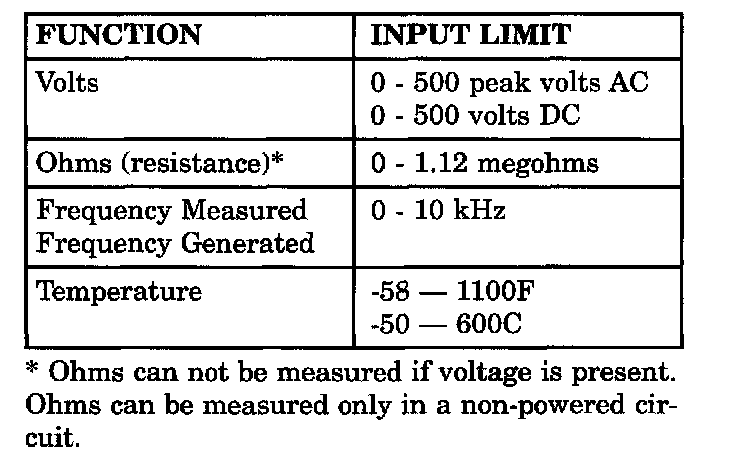
Do not exceed the limits shown in the table.
Voltage between any terminal and ground must not exceed 500v DC or 500v peak AC.
The circuit being tested must be protected by a 10A fuse or circuit breaker.
Use the low current shunt to measure circuits up to 10A. Use the higher current clamp to measure circuits exceeding 10A.
When testing for the presence of voltage or current, make sure the meter is functioning correctly. Take a reading of a known voltage or current before accepting a zero reading.
When measuring current, connect the meter in series with the load.
Disconnect the live test lead before disconnecting the common test lead.
When using the meter function, keep the DRB III (R) away from spark plug or coil wires to avoid measuring error from outside interference.
WARNING: EXCEEDING THE LIMITS OF THE DRB III (R) MULTIMETER IS DANGEROUS. IT CAN EXPOSE YOU TO SERIOUS OR POSSIBLE FATAL INJURY. CAREFULLY READ AND UNDERSTAND THE CAUTIONS AND THE SPECIFICATION LIMITS.
Follow the vehicle manufacture's service specifications at all times.
Do not use the DRB Ill(R) if it has been damaged.
Do not use the test leads if the insulation is damaged or if metal is exposed.
To avoid electrical shock, do not touch the test leads, tips, or other circuit being tested.
Choose the proper range and function for the measurement. Do not try voltage or current measurement that may exceed the rated capacity.
Do not exceed the limits shown in the table.
Voltage between any terminal and ground must not exceed 500v DC or 500v peak AC.
The circuit being tested must be protected by a 10A fuse or circuit breaker.
Use the low current shunt to measure circuits up to 10A. Use the higher current clamp to measure circuits exceeding 10A.
When testing for the presence of voltage or current, make sure the meter is functioning correctly. Take a reading of a known voltage or current before accepting a zero reading.
When measuring current, connect the meter in series with the load.
Disconnect the live test lead before disconnecting the common test lead.
When using the meter function, keep the DRB III (R) away from spark plug or coil wires to avoid measuring error from outside interference.
Factory Service Tools
Use the Manual With the Right Hardware
Pair factory procedures with proven DIY tools so the instructions are easier to execute.
Disclosure: Verified tool recommendations may earn an affiliate commission at no cost to you.
When to See a Mechanic
Stop DIY work and contact a certified mechanic immediately if any of the following apply:
- • You smell fuel, burning insulation, or see smoke.
- • Brakes feel soft, pull hard to one side, or make grinding noises.
- • The engine overheats, stalls repeatedly, or misfires under load.
- • You are missing required tools, torque specs, or safe lifting equipment.
- • You are not confident in the next step or safety outcome.