
Safety Warning
DIY auto repair can cause serious injury, fire, or vehicle damage. These guides are for informational purposes only. Always follow OEM torque specs, wear PPE, and consult a certified mechanic if you are unsure. You are solely responsible for your safety.
2002 Chrysler Intrepid (CANADA) V6-2.7LFACTORY OEM SERVICE PROCEDURE
Transmission Position Sensor/Switch: Description and Operation
42LE - Automatic Transmission
TRANSMISSION RANGE SENSOR
DESCRIPTION
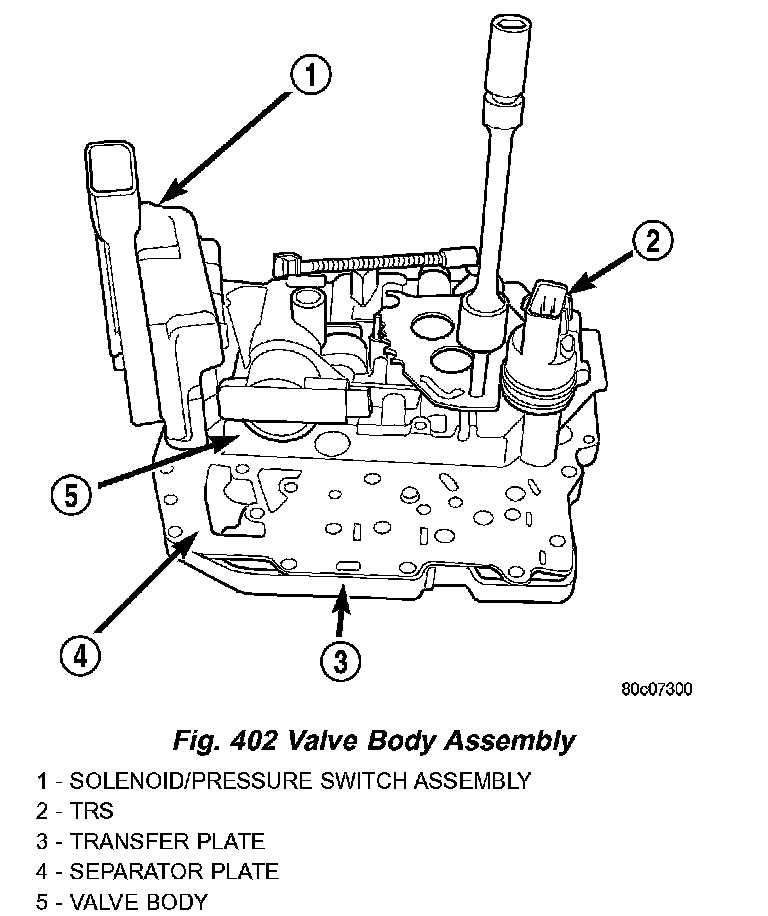
The Transmission Range Sensor (TRS) is mounted to the top of the valve body inside the transaxle and can only be serviced by removing the valve body assembly The electrical connector extends through the transaxle case (Fig. 402).
The Transmission Range Sensor (TRS) has four switch contacts that monitor shift lever position and send the information to the PCM.
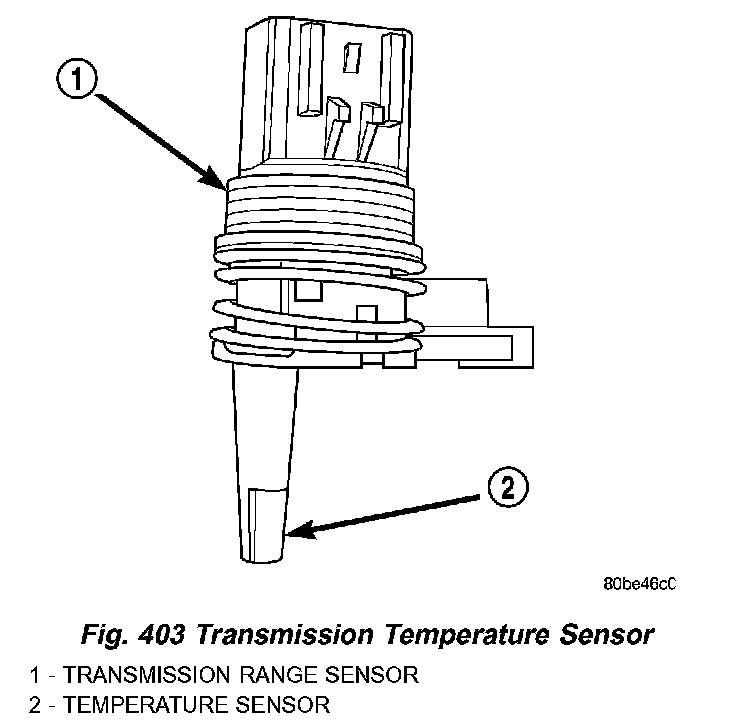
The TRS also has an integrated temperature sensor (thermistor) that communicates transaxle temperature to the PCM (Fig. 403).
OPERATION
The Transmission Range Sensor (TRS) (Fig. 402) communicates Shift Lever Position (SLP) to the PCM as a combination of open and closed switches. Each shift lever position has an assigned combination of switch states (open/closed) that the PCM receives from four sense circuits. The PCM interprets this information and determines the appropriate transaxle gear position and shift schedule.
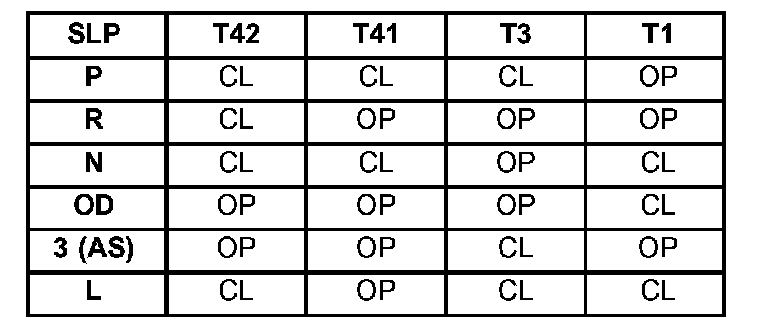
Since there are four switches, there are 16 possible combinations of open and closed switches (codes). Seven of these codes are related to gear position and three are recognized as "between gear" codes. This results in six codes which should never occur. These are called "invalid" codes. An invalid code will result in a DTC, and the PCM will then determine the shift lever position based on pressure switch data. This allows reasonably normal transmission operation with a TRS failure.
TRANSMISSION TEMPERATURE SENSOR
The TRS has an integrated thermistor (Fig. 403) that the PCM uses to monitor the transmission's sump temperature. Since fluid temperature can affect transmission shift quality and convertor lock up, the PCM requires this information to determine which shift schedule to operate in. The PCM also monitors this temperature data so it can energize the vehicle cooling fan(s) when a transmission "overheat" condition exists. If the thermistor circuit fails, the PCM will revert to calculated oil temperature usage.
CALCULATED TEMPERATURE
A failure in the temperature sensor or circuit will result in calculated temperature being substituted for actual temperature. Calculated temperature is a predicted fluid temperature which is calculated from a combination of inputs:
- Battery (ambient) temperature
- Engine coolant temperature
- In-gear run time since start-up
TRANSMISSION RANGE SENSOR
DESCRIPTION
The Transmission Range Sensor (TRS) is mounted to the top of the valve body inside the transaxle and can only be serviced by removing the valve body assembly The electrical connector extends through the transaxle case (Fig. 402).
The Transmission Range Sensor (TRS) has four switch contacts that monitor shift lever position and send the information to the PCM.
The TRS also has an integrated temperature sensor (thermistor) that communicates transaxle temperature to the PCM (Fig. 403).
OPERATION
The Transmission Range Sensor (TRS) (Fig. 402) communicates Shift Lever Position (SLP) to the PCM as a combination of open and closed switches. Each shift lever position has an assigned combination of switch states (open/closed) that the PCM receives from four sense circuits. The PCM interprets this information and determines the appropriate transaxle gear position and shift schedule.
TRANSMISSION RANGE SENSOR SWITCH STATES:
Since there are four switches, there are 16 possible combinations of open and closed switches (codes). Seven of these codes are related to gear position and three are recognized as "between gear" codes. This results in six codes which should never occur. These are called "invalid" codes. An invalid code will result in a DTC, and the PCM will then determine the shift lever position based on pressure switch data. This allows reasonably normal transmission operation with a TRS failure.
TRANSMISSION TEMPERATURE SENSOR
The TRS has an integrated thermistor (Fig. 403) that the PCM uses to monitor the transmission's sump temperature. Since fluid temperature can affect transmission shift quality and convertor lock up, the PCM requires this information to determine which shift schedule to operate in. The PCM also monitors this temperature data so it can energize the vehicle cooling fan(s) when a transmission "overheat" condition exists. If the thermistor circuit fails, the PCM will revert to calculated oil temperature usage.
CALCULATED TEMPERATURE
A failure in the temperature sensor or circuit will result in calculated temperature being substituted for actual temperature. Calculated temperature is a predicted fluid temperature which is calculated from a combination of inputs:
- Battery (ambient) temperature
- Engine coolant temperature
- In-gear run time since start-up
Factory Service Tools
Use the Manual With the Right Hardware
Pair factory procedures with proven DIY tools so the instructions are easier to execute.
Disclosure: Verified tool recommendations may earn an affiliate commission at no cost to you.
When to See a Mechanic
Stop DIY work and contact a certified mechanic immediately if any of the following apply:
- • You smell fuel, burning insulation, or see smoke.
- • Brakes feel soft, pull hard to one side, or make grinding noises.
- • The engine overheats, stalls repeatedly, or misfires under load.
- • You are missing required tools, torque specs, or safe lifting equipment.
- • You are not confident in the next step or safety outcome.
Rather have a pro handle this?
A certified mobile mechanic comes to your home or office. They bring the tools, you stay comfortable. No tow truck, no waiting room, no surprises.
Comes to youSame-day available12-month warranty
Get a Free QuoteNo obligation. See pricing before you book.