
Safety Warning
DIY auto repair can cause serious injury, fire, or vehicle damage. These guides are for informational purposes only. Always follow OEM torque specs, wear PPE, and consult a certified mechanic if you are unsure. You are solely responsible for your safety.
2000 Chrysler Sebring Convertible V6-2.5L VIN HFACTORY OEM SERVICE PROCEDURE
System Specifications
CYLINDER HEAD BOLT TORQUE/SEQUENCE
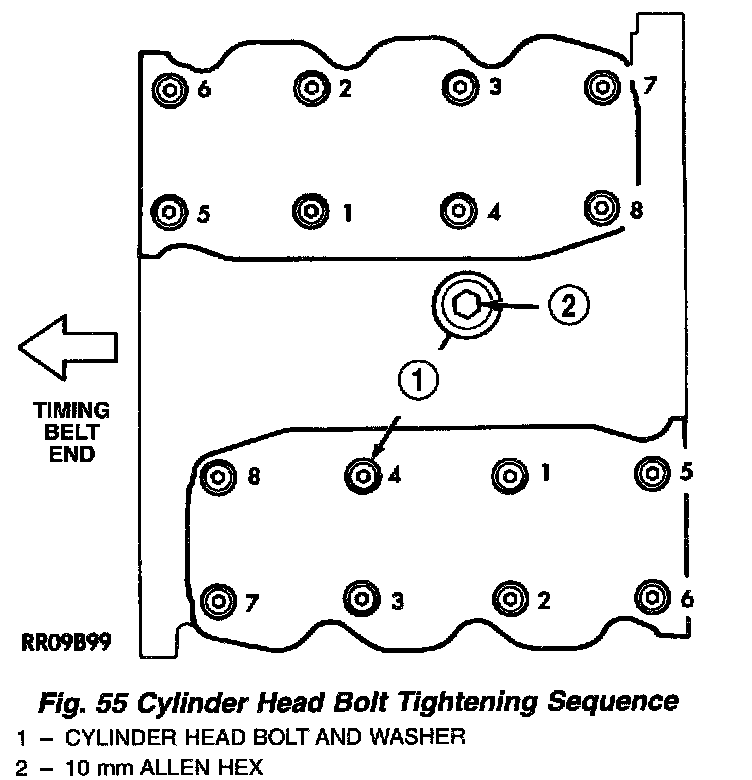
Tighten cylinder head bolts using the following procedure:
- Tighten cylinder head bolts in sequence to 108 Nm (80 ft. lbs.).
- Loosen all bolts fully.
- Retighten cylinder head bolts in sequence to 108 Nm (80 ft. lbs.).
CYLINDER HEAD SURFACE VARIATION
Check the cylinder head gasket surface for flatness by using a straight edge and a feeler gauge. If the service limit is exceeded, correct to meet specifications.
Standard value: 0.03 mm (0.0012 inches) or less
Limit: 0.2 mm (0.008 inches)
Grinding limit: 0.2 mm (0.008 inches)
Cylinder head height: 119.9 - 120.1 mm (4.72 - 4.73 inches)
Caution: The total thickness of the surface allowed to be removed from cylinder head and mating cylinder block is 0.2 mm (0.0079 inches) In thickness.
CYLINDER HEAD BOLT RE-USABILITY
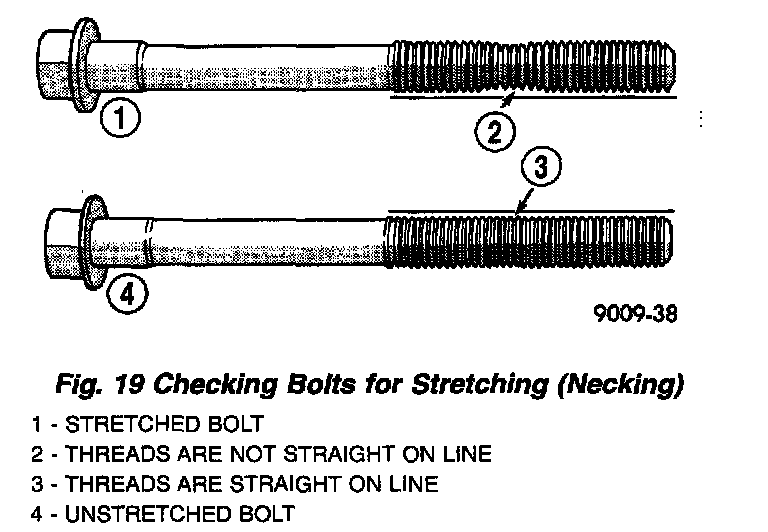
The cylinder head bolts are torqued using the torque yield method, they should be examined BEFORE reuse. If the threads are necked down, the bolts must be replaced. Necking can be checked by holding a scale or straight edge against the threads. If all the threads do not contact the scale the bolt should be replaced.
CAMSHAFT SPROCKET/GEAR SPECIFICATIONS
Camshaft Sprocket Bolts 65 ft. lbs.
EXHAUST MANIFOLD SPECIFICATIONS
Exhaust Manifold Mounting Bolts 33 ft. lbs.
Exhaust Manifold Heat Shield Bolts 115 in. lbs.
INTAKE MANIFOLD SPECIFICATIONS
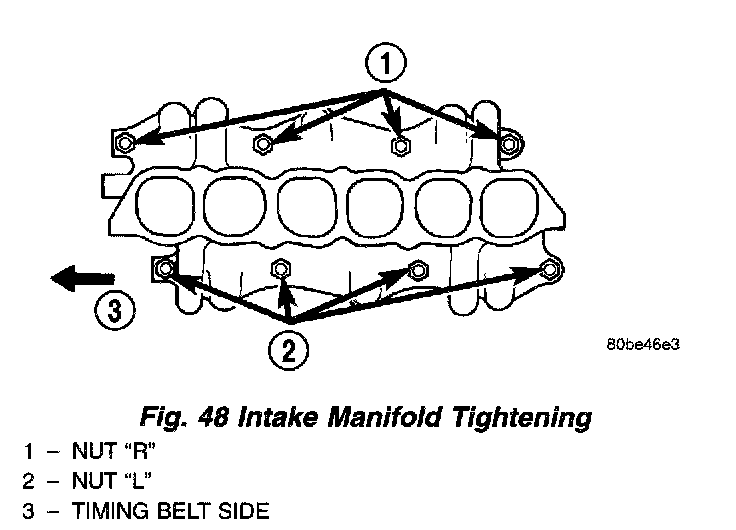
Lower Intake Manifold
Tighten the intake manifold mounting nuts one bank after the other by using the following procedures:
- Tighten nuts "R" to 6.4 Nm (56 in. lbs.)
- Tighten nuts "L" to 21 Nm (185 in. lbs.)
- Tighten nuts "R" to 21 Nm (185 in. lbs.)
- Tighten nuts "L" again to 21 Nm (185 in. lbs.)
- Tighten nuts "R" again to 21 Nm (185 in. lbs.)
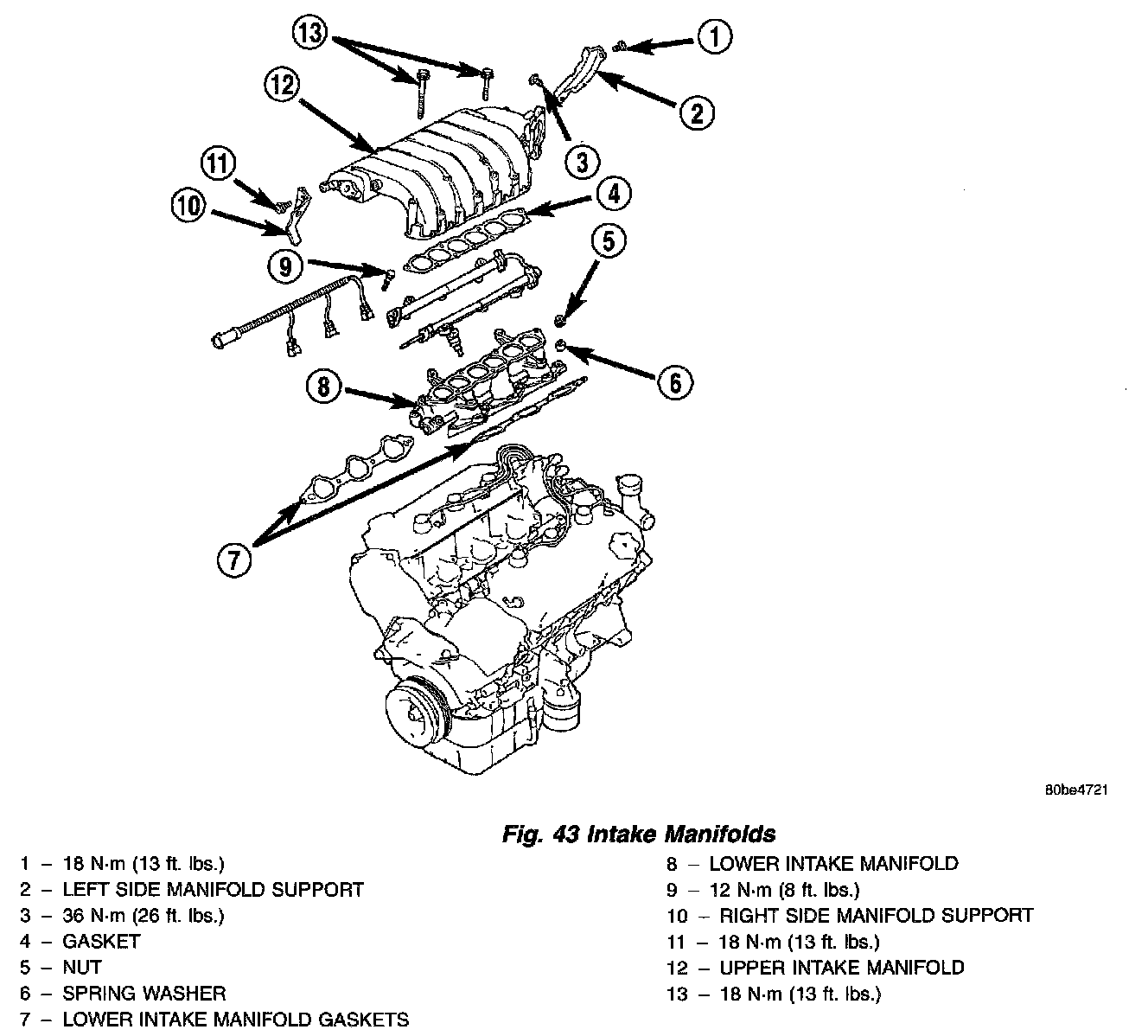
Upper Intake Manifold
Install manifold bolts and tighten to 18 Nm (160 in. lbs.).
Tighten cylinder head bolts using the following procedure:
- Tighten cylinder head bolts in sequence to 108 Nm (80 ft. lbs.).
- Loosen all bolts fully.
- Retighten cylinder head bolts in sequence to 108 Nm (80 ft. lbs.).
CYLINDER HEAD SURFACE VARIATION
Check the cylinder head gasket surface for flatness by using a straight edge and a feeler gauge. If the service limit is exceeded, correct to meet specifications.
Standard value: 0.03 mm (0.0012 inches) or less
Limit: 0.2 mm (0.008 inches)
Grinding limit: 0.2 mm (0.008 inches)
Cylinder head height: 119.9 - 120.1 mm (4.72 - 4.73 inches)
Caution: The total thickness of the surface allowed to be removed from cylinder head and mating cylinder block is 0.2 mm (0.0079 inches) In thickness.
CYLINDER HEAD BOLT RE-USABILITY
The cylinder head bolts are torqued using the torque yield method, they should be examined BEFORE reuse. If the threads are necked down, the bolts must be replaced. Necking can be checked by holding a scale or straight edge against the threads. If all the threads do not contact the scale the bolt should be replaced.
CAMSHAFT SPROCKET/GEAR SPECIFICATIONS
Camshaft Sprocket Bolts 65 ft. lbs.
EXHAUST MANIFOLD SPECIFICATIONS
Exhaust Manifold Mounting Bolts 33 ft. lbs.
Exhaust Manifold Heat Shield Bolts 115 in. lbs.
INTAKE MANIFOLD SPECIFICATIONS
Lower Intake Manifold
Tighten the intake manifold mounting nuts one bank after the other by using the following procedures:
- Tighten nuts "R" to 6.4 Nm (56 in. lbs.)
- Tighten nuts "L" to 21 Nm (185 in. lbs.)
- Tighten nuts "R" to 21 Nm (185 in. lbs.)
- Tighten nuts "L" again to 21 Nm (185 in. lbs.)
- Tighten nuts "R" again to 21 Nm (185 in. lbs.)
Upper Intake Manifold
Install manifold bolts and tighten to 18 Nm (160 in. lbs.).
Factory Service Tools
Use the Manual With the Right Hardware
Pair factory procedures with proven DIY tools so the instructions are easier to execute.
Disclosure: Verified tool recommendations may earn an affiliate commission at no cost to you.
When to See a Mechanic
Stop DIY work and contact a certified mechanic immediately if any of the following apply:
- • You smell fuel, burning insulation, or see smoke.
- • Brakes feel soft, pull hard to one side, or make grinding noises.
- • The engine overheats, stalls repeatedly, or misfires under load.
- • You are missing required tools, torque specs, or safe lifting equipment.
- • You are not confident in the next step or safety outcome.