
Safety Warning
DIY auto repair can cause serious injury, fire, or vehicle damage. These guides are for informational purposes only. Always follow OEM torque specs, wear PPE, and consult a certified mechanic if you are unsure. You are solely responsible for your safety.
2000 Chrysler Neon (CANADA) L4-2.0LFACTORY OEM SERVICE PROCEDURE
Vehicle Speed Sensor: Description and Operation
VEHICLE SPEED SIGNAL (VSS) - PCM INPUT
The PCM requires the VSS to be able to control the following programs:
- Speed Control
- IAC motor (during deceleration)
- Injection pulse width (during deceleration)
- OBD II diagnostics
- PCM mileage EEPROM
- Road speed shutdown
- Speedometer/Odometer (bused message)
NOTE: Road Speed Shutdown is the PCM shutting oft fuel injectors above a preset vehicle speed.
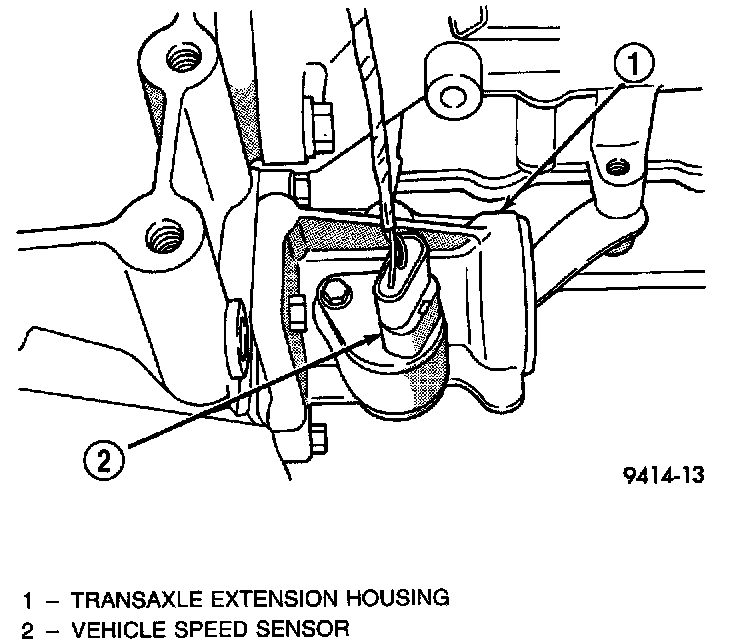
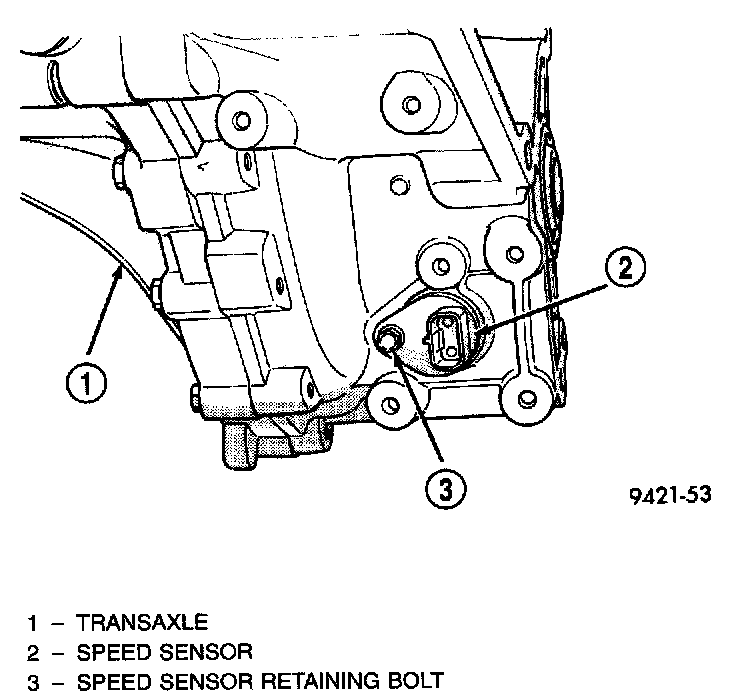
The vehicle speed sensor is located in the transmission extension housing.
The vehicle speed sensor on 3 speed automatic and manual transaxle vehicles is a Hall-effect sensor. This sensor is mechanically driven by a pinion gear that is in mesh with the right axle drive shaft. The hall-effect sensor switches a 5 volt signal sent from the PCM from a ground to an open circuit.
Like all Hall-effect sensors, the electronics of the sensor needs a power source. This power source is provided by the PCM. It is the same 8 volt power supply that is used by the CKP and CMP sensors.
The vehicle speed sensor generates 8 pulses per sensor revolution. This signal, in conjunction with a closed throttle signal from the throttle position sensor, indicates a closed throttle deceleration to the PCM. Under deceleration conditions, the PCM adjusts the Idle Air Control (IAC) motor to maintain a desired MAP value.
When the vehicle is stopped at idle, a closed throttle signal is received by the PCM (but a speed sensor signal is not received). Under idle conditions, the PCM adjusts the IAC motor to maintain a desired engine speed.
The PCM requires the VSS to be able to control the following programs:
- Speed Control
- IAC motor (during deceleration)
- Injection pulse width (during deceleration)
- OBD II diagnostics
- PCM mileage EEPROM
- Road speed shutdown
- Speedometer/Odometer (bused message)
NOTE: Road Speed Shutdown is the PCM shutting oft fuel injectors above a preset vehicle speed.
Vehicle Speed Sensor - Automatic Transmission:
Vehicle Speed Sensor - Manual Transmission:
The vehicle speed sensor is located in the transmission extension housing.
The vehicle speed sensor on 3 speed automatic and manual transaxle vehicles is a Hall-effect sensor. This sensor is mechanically driven by a pinion gear that is in mesh with the right axle drive shaft. The hall-effect sensor switches a 5 volt signal sent from the PCM from a ground to an open circuit.
Like all Hall-effect sensors, the electronics of the sensor needs a power source. This power source is provided by the PCM. It is the same 8 volt power supply that is used by the CKP and CMP sensors.
The vehicle speed sensor generates 8 pulses per sensor revolution. This signal, in conjunction with a closed throttle signal from the throttle position sensor, indicates a closed throttle deceleration to the PCM. Under deceleration conditions, the PCM adjusts the Idle Air Control (IAC) motor to maintain a desired MAP value.
When the vehicle is stopped at idle, a closed throttle signal is received by the PCM (but a speed sensor signal is not received). Under idle conditions, the PCM adjusts the IAC motor to maintain a desired engine speed.
Factory Service Tools
Use the Manual With the Right Hardware
Pair factory procedures with proven DIY tools so the instructions are easier to execute.
Disclosure: Verified tool recommendations may earn an affiliate commission at no cost to you.
When to See a Mechanic
Stop DIY work and contact a certified mechanic immediately if any of the following apply:
- • You smell fuel, burning insulation, or see smoke.
- • Brakes feel soft, pull hard to one side, or make grinding noises.
- • The engine overheats, stalls repeatedly, or misfires under load.
- • You are missing required tools, torque specs, or safe lifting equipment.
- • You are not confident in the next step or safety outcome.