
Safety Warning
DIY auto repair can cause serious injury, fire, or vehicle damage. These guides are for informational purposes only. Always follow OEM torque specs, wear PPE, and consult a certified mechanic if you are unsure. You are solely responsible for your safety.
2000 Chrysler Intrepid (CANADA) V6-3.2LFACTORY OEM SERVICE PROCEDURE
Battery Load Test
A fully charged battery must have cranking capacity, to provide the starter motor and ignition system enough power to start the engine over a broad range of ambient temperatures. A battery load test will verify the actual cranking capability of the battery.
WARNING: IF BATTERY SHOWS SIGNS OF FREEZING, LEAKING, LOOSE POSTS, OR EXCESSIVELY LOW ELECTROLYTE LEVEL, DO NOT TEST. ACID BURNS OR AN EXPLOSIVE CONDITION MAY RESULT.
1. Remove battery from vehicle. The battery top, cables and posts should be clean. If green dot is not visible in indicator, charge the battery. Refer to Battery Charging Procedures.
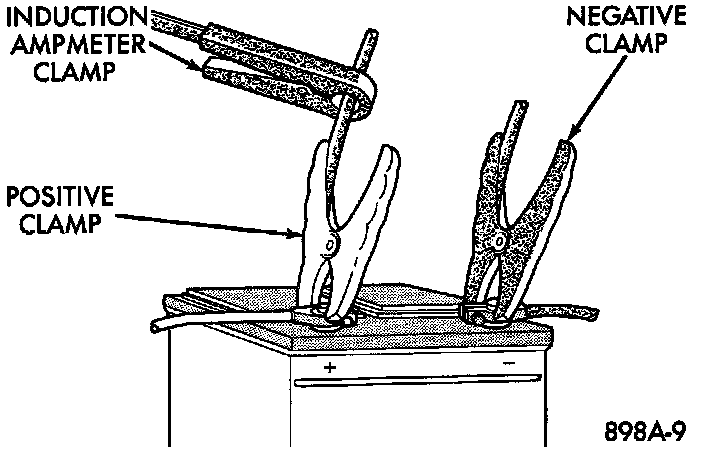
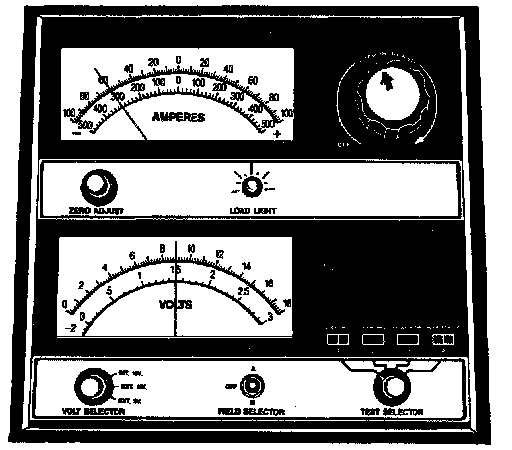
2. Connect a Volt/Ammeter/Load tester to the battery posts. Rotate the load control knob of the Carbon pile rheostat to apply a 300 amp load. Apply this load for 15 seconds to remove the surface charge from the battery, and return the control knob to off.
3. Allow the battery to stabilize for 2 minutes, and then verify open circuit voltage.
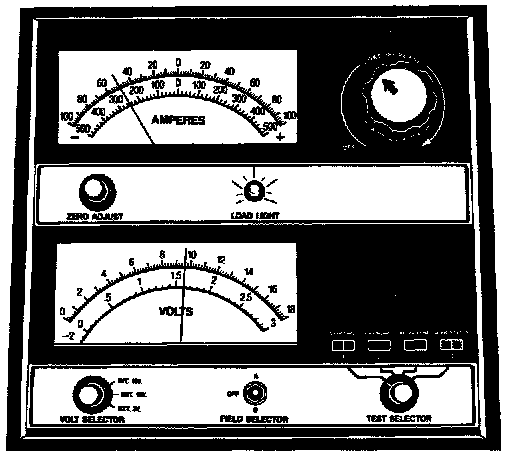
4. Rotate the load control knob on the tester to maintain 50% of the battery cold crank rating for 15 seconds. Record the loaded voltage reading and return the load control to off. Refer to the Battery Specifications.
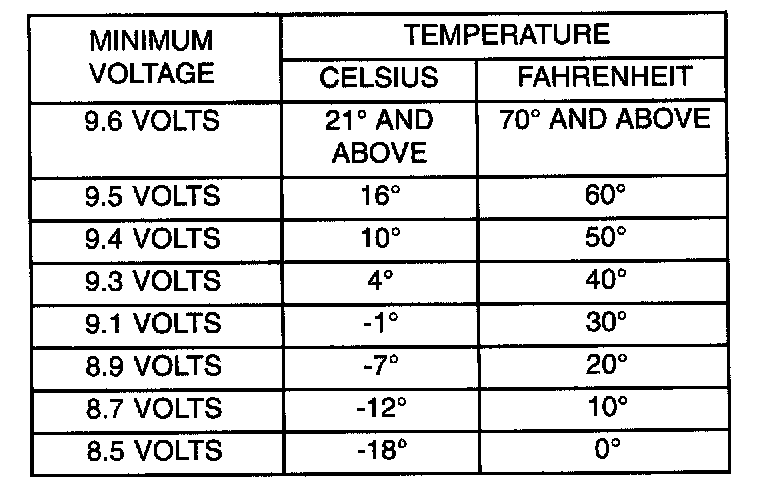
5. Voltage drop will vary according to battery temperature at the time of the load test. Battery temperature can be estimated by the temperature of exposure over the preceding several hours. If the battery has been charged or boosted a few minutes prior to the test, the battery would be slightly warmer. Refer to Load Test Temperature Chart for proper loaded voltage reading.
6. If battery passes load test, it is in good condition and further tests are not necessary. If it fails load test, it should be replaced.
WARNING: IF BATTERY SHOWS SIGNS OF FREEZING, LEAKING, LOOSE POSTS, OR EXCESSIVELY LOW ELECTROLYTE LEVEL, DO NOT TEST. ACID BURNS OR AN EXPLOSIVE CONDITION MAY RESULT.
1. Remove battery from vehicle. The battery top, cables and posts should be clean. If green dot is not visible in indicator, charge the battery. Refer to Battery Charging Procedures.
Volt - Ammeter Load Tester Connections:
Remove Surface Charge From Battery:
2. Connect a Volt/Ammeter/Load tester to the battery posts. Rotate the load control knob of the Carbon pile rheostat to apply a 300 amp load. Apply this load for 15 seconds to remove the surface charge from the battery, and return the control knob to off.
3. Allow the battery to stabilize for 2 minutes, and then verify open circuit voltage.
Load 50% Cold Crank Rating:
4. Rotate the load control knob on the tester to maintain 50% of the battery cold crank rating for 15 seconds. Record the loaded voltage reading and return the load control to off. Refer to the Battery Specifications.
Load Test Temperature:
5. Voltage drop will vary according to battery temperature at the time of the load test. Battery temperature can be estimated by the temperature of exposure over the preceding several hours. If the battery has been charged or boosted a few minutes prior to the test, the battery would be slightly warmer. Refer to Load Test Temperature Chart for proper loaded voltage reading.
6. If battery passes load test, it is in good condition and further tests are not necessary. If it fails load test, it should be replaced.
Factory Service Tools
Use the Manual With the Right Hardware
Pair factory procedures with proven DIY tools so the instructions are easier to execute.
Disclosure: Verified tool recommendations may earn an affiliate commission at no cost to you.
When to See a Mechanic
Stop DIY work and contact a certified mechanic immediately if any of the following apply:
- • You smell fuel, burning insulation, or see smoke.
- • Brakes feel soft, pull hard to one side, or make grinding noises.
- • The engine overheats, stalls repeatedly, or misfires under load.
- • You are missing required tools, torque specs, or safe lifting equipment.
- • You are not confident in the next step or safety outcome.