
Safety Warning
DIY auto repair can cause serious injury, fire, or vehicle damage. These guides are for informational purposes only. Always follow OEM torque specs, wear PPE, and consult a certified mechanic if you are unsure. You are solely responsible for your safety.
2000 Chrysler Intrepid (CANADA) V6-3.2LFACTORY OEM SERVICE PROCEDURE
Refrigerant System Capacity
TO CHECK OR FILL SYSTEM
The procedure below should be used to check and/or fill the refrigerant charge in the air conditioning system.
NOTE: The air conditioning system in this vehicle holds 0.71 Kg. (25 oz. or 1.56 lbs.) of R-134a refrigerant.
This procedure can be performed two different ways:
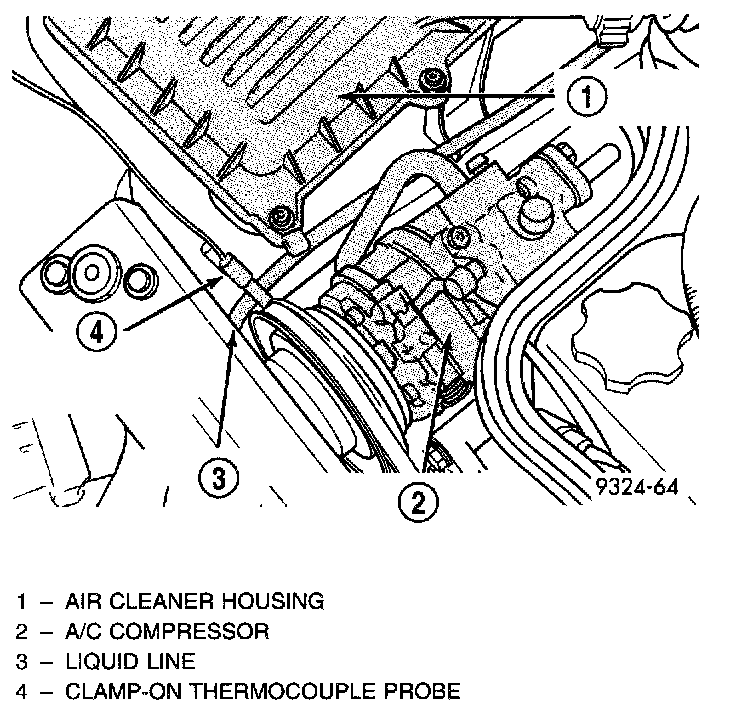
- With a scan tool (DRBIII (R)) and a thermocouple.
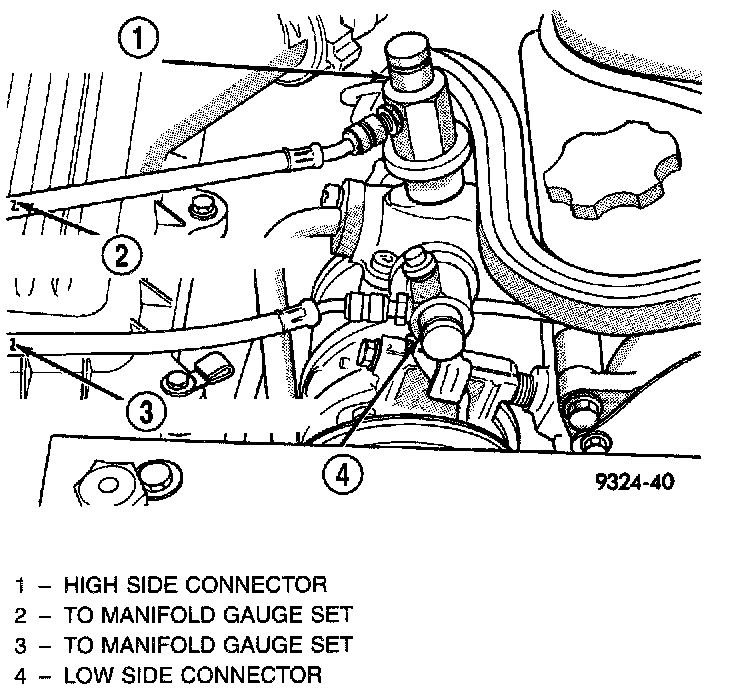
- Using a manifold gauge set, a thermocouple and the Charge Determination Graph. It is recommended to use the gauges or reclaim/recycle equipment.
WARNING:
- AVOID BREATHING A/C REFRIGERANT AND LUBRICANT VAPOR OR MIST. EXPOSURE MAY IRRITATE EYES, NOSE AND THROAT. USE ONLY APPROVED SERVICE EQUIPMENT MEETING SAE REQUIREMENTS TO DISCHARGE R-134a SYSTEM. IF ACCIDENTAL SYSTEM DISCHARGE OCCURS, VENTILATE WORK AREA BEFORE RESUMING SERVICE.
- R-134a SERVICE EQUIPMENT OR VEHICLE A/C SYSTEM SHOULD NOT BE PRESSURE TESTED OR LEAK TESTED WITH COMPRESSED AIR. SOME MIXTURES OF AIR and R-134a HAVE BEEN SHOWN TO BE COMBUSTIBLE AT ELEVATED PRESSURES. THESE MIXTURES ARE POTENTIALLY DANGEROUS AND MAY RESULT IN FIRE OR EXPLOSION CAUSING INJURY OR PROPERTY DAMAGE.
1. Establish your preferred method of measuring compressor discharge pressure. Use a manifold gauge set or a scan tool.
2. Attach a clamp-on thermocouple (P. S. E. 66-324-0014 or 80PK-1A) or equivalent to the liquid line. It must be placed as close to the condenser outlet as possible to observe liquid line tubing temperature. Refer to "Thermocouple Probe" for more information on probe.
3. The vehicle must be in the following modes:
- Transaxle in Park
- Engine Idling
- A/C Controls Set to Outside Air
- Panel Mode
- Full Cool
- High Blower
- A/C Button in the ON position
- Vehicle Windows Open.
- Recirc button turned OFF on ATC equipped vehicles
4. Operate system for a couple of minutes to allow the system to stabilize.
5. Set system pressure to about 1793 kPa (260 psi) by blocking off the airflow to the front grill area. This will maintain a constant pressure and stop the cooling fans from alternating between high and low speeds.
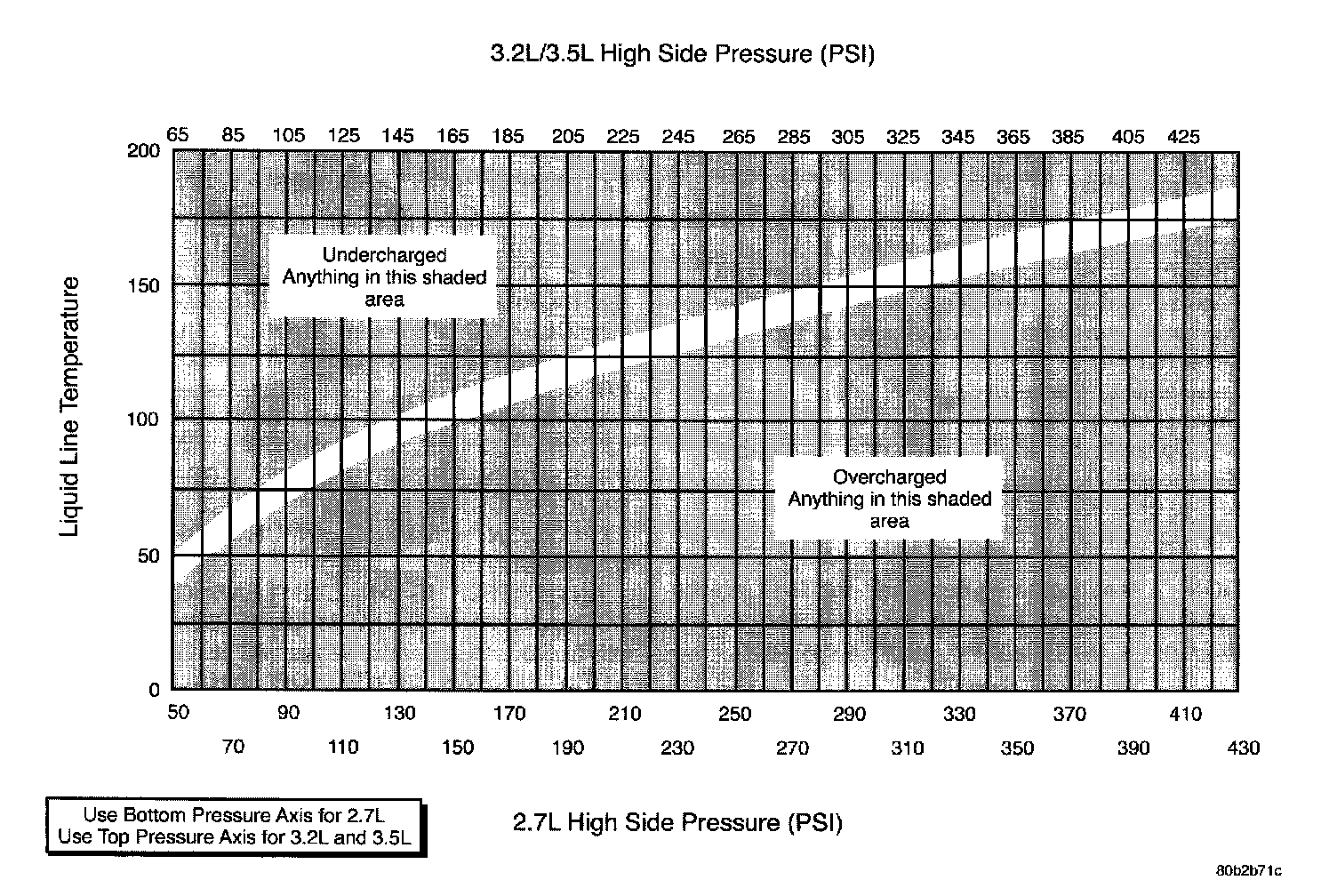
6. Observe Discharge pressure and Liquid line temperature. Using the Charge Determination Graph determine where the system is currently operating. If the system is in the undercharged region, ADD 0.057 Kg. (2 oz.) to the system and recheck readings. If the system is in the overcharged region, RECLAIM 0.057 Kg.(2 oz.) from the system and recheck readings. Continue this process until the system readings are in the proper charge area on the Charge Determination Chart.
The procedure below should be used to check and/or fill the refrigerant charge in the air conditioning system.
NOTE: The air conditioning system in this vehicle holds 0.71 Kg. (25 oz. or 1.56 lbs.) of R-134a refrigerant.
This procedure can be performed two different ways:
Thermocouple Attachment Point:
- With a scan tool (DRBIII (R)) and a thermocouple.
Manifold Gauge Hook-up:
- Using a manifold gauge set, a thermocouple and the Charge Determination Graph. It is recommended to use the gauges or reclaim/recycle equipment.
WARNING:
- AVOID BREATHING A/C REFRIGERANT AND LUBRICANT VAPOR OR MIST. EXPOSURE MAY IRRITATE EYES, NOSE AND THROAT. USE ONLY APPROVED SERVICE EQUIPMENT MEETING SAE REQUIREMENTS TO DISCHARGE R-134a SYSTEM. IF ACCIDENTAL SYSTEM DISCHARGE OCCURS, VENTILATE WORK AREA BEFORE RESUMING SERVICE.
- R-134a SERVICE EQUIPMENT OR VEHICLE A/C SYSTEM SHOULD NOT BE PRESSURE TESTED OR LEAK TESTED WITH COMPRESSED AIR. SOME MIXTURES OF AIR and R-134a HAVE BEEN SHOWN TO BE COMBUSTIBLE AT ELEVATED PRESSURES. THESE MIXTURES ARE POTENTIALLY DANGEROUS AND MAY RESULT IN FIRE OR EXPLOSION CAUSING INJURY OR PROPERTY DAMAGE.
1. Establish your preferred method of measuring compressor discharge pressure. Use a manifold gauge set or a scan tool.
2. Attach a clamp-on thermocouple (P. S. E. 66-324-0014 or 80PK-1A) or equivalent to the liquid line. It must be placed as close to the condenser outlet as possible to observe liquid line tubing temperature. Refer to "Thermocouple Probe" for more information on probe.
3. The vehicle must be in the following modes:
- Transaxle in Park
- Engine Idling
- A/C Controls Set to Outside Air
- Panel Mode
- Full Cool
- High Blower
- A/C Button in the ON position
- Vehicle Windows Open.
- Recirc button turned OFF on ATC equipped vehicles
4. Operate system for a couple of minutes to allow the system to stabilize.
5. Set system pressure to about 1793 kPa (260 psi) by blocking off the airflow to the front grill area. This will maintain a constant pressure and stop the cooling fans from alternating between high and low speeds.
Charge Determination Graph:
6. Observe Discharge pressure and Liquid line temperature. Using the Charge Determination Graph determine where the system is currently operating. If the system is in the undercharged region, ADD 0.057 Kg. (2 oz.) to the system and recheck readings. If the system is in the overcharged region, RECLAIM 0.057 Kg.(2 oz.) from the system and recheck readings. Continue this process until the system readings are in the proper charge area on the Charge Determination Chart.
Factory Service Tools
Use the Manual With the Right Hardware
Pair factory procedures with proven DIY tools so the instructions are easier to execute.
Disclosure: Verified tool recommendations may earn an affiliate commission at no cost to you.
When to See a Mechanic
Stop DIY work and contact a certified mechanic immediately if any of the following apply:
- • You smell fuel, burning insulation, or see smoke.
- • Brakes feel soft, pull hard to one side, or make grinding noises.
- • The engine overheats, stalls repeatedly, or misfires under load.
- • You are missing required tools, torque specs, or safe lifting equipment.
- • You are not confident in the next step or safety outcome.