
Safety Warning
DIY auto repair can cause serious injury, fire, or vehicle damage. These guides are for informational purposes only. Always follow OEM torque specs, wear PPE, and consult a certified mechanic if you are unsure. You are solely responsible for your safety.
2012 Chevrolet Cruze L4-1.8LFACTORY OEM SERVICE PROCEDURE
Engine Oil: Service and Repair
Engine Oil and Oil Filter Replacement (1.6L LDE, LXV, 1.8L 2H0, LUW and LFH)
Removal Procedure
1. Open the hood.
2. Place a collecting basin underneath.
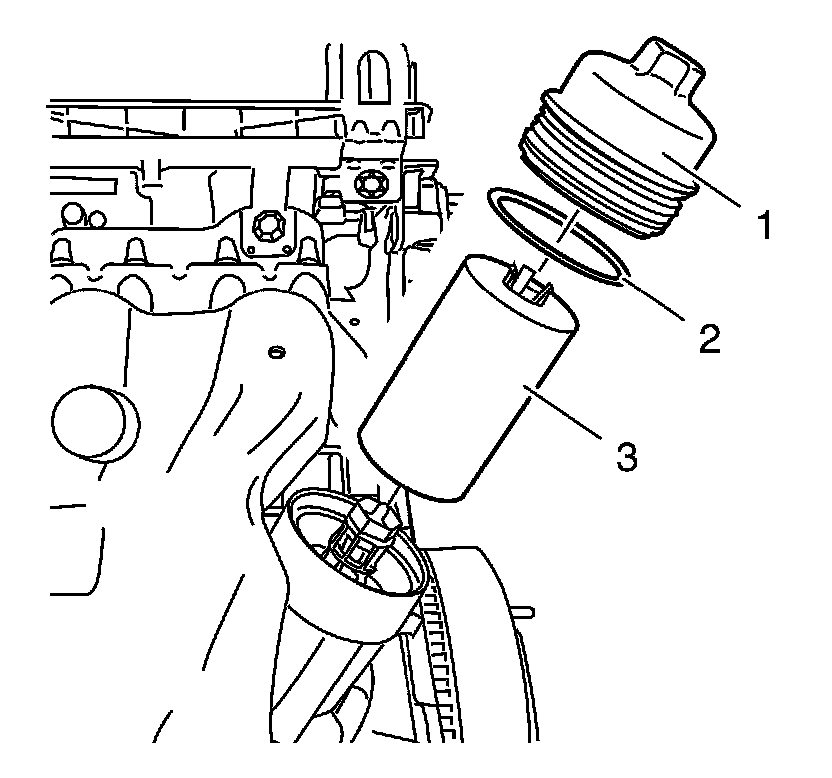
3. Remove the oil filter cap (1).
4. Remove the oil filter cap seal (2)
Caution: This engine uses a special high performance oil filter. Use of any other filter may lead to filter failure and/or severe engine damage.
5. Remove and properly dispose of the oil filter insert (3).
6. Raise and support the vehicle. Refer to Lifting and Jacking the Vehicle Service and Repair.
7. Remove the oil drain bolt.
8. Drain the engine oil into collecting basin.
Installation Procedure
1. Clean the oil drain bolt thread and the thread in the oil pan.
2. Install a NEW seal to the oil drain bolt.
Caution: Refer to Fastener Caution Fastener Caution.
3. Install the oil drain bolt to the oil pan and tighten to 14 Nm (124 lb in).
4. Lower the vehicle.
5. Install the NEW oil filter insert (3).
Note: Coat the seal ring with NEW engine oil.
6. Install the NEW oil filter cap seal (2)
Caution: Over torquing the oil filter cap may cause damage to the oil filter cap resulting in an oil leak.
7. Install the oil filter cap (1) and tighten to 25 Nm (18 lb ft).
Caution: Using engine oils of any viscosity other than those viscosities recommended could result in engine damage.
Note: Use specified volume of engine oil with the specified viscosity class.
Note: Start the engine and allow it to run until the oil pressure control indicator goes off.
Note: Inspect the engine oil level.
8. Fill in NEW engine oil. Refer to Engine Mechanical Specifications Service Limits & General Specifications.
9. Close the hood
10. Reset the service interval indicator.
Factory Service Tools
Use the Manual With the Right Hardware
Pair factory procedures with proven DIY tools so the instructions are easier to execute.
Disclosure: Verified tool recommendations may earn an affiliate commission at no cost to you.
When to See a Mechanic
Stop DIY work and contact a certified mechanic immediately if any of the following apply:
- • You smell fuel, burning insulation, or see smoke.
- • Brakes feel soft, pull hard to one side, or make grinding noises.
- • The engine overheats, stalls repeatedly, or misfires under load.
- • You are missing required tools, torque specs, or safe lifting equipment.
- • You are not confident in the next step or safety outcome.