
Safety Warning
DIY auto repair can cause serious injury, fire, or vehicle damage. These guides are for informational purposes only. Always follow OEM torque specs, wear PPE, and consult a certified mechanic if you are unsure. You are solely responsible for your safety.
2012 Chevrolet Corvette V8-6.2L SCFACTORY OEM SERVICE PROCEDURE
Rear Subframe: Service and Repair
Rear Suspension Support Crossmember Replacement
Special Tools
J 42055 Drivetrain Support Fixture
Removal Procedure
1.Raise and support the vehicle. Refer to Lifting and Jacking the Vehicle .
2.Remove the tire and wheel assemblies. Refer to Tire and Wheel Removal and Installation .
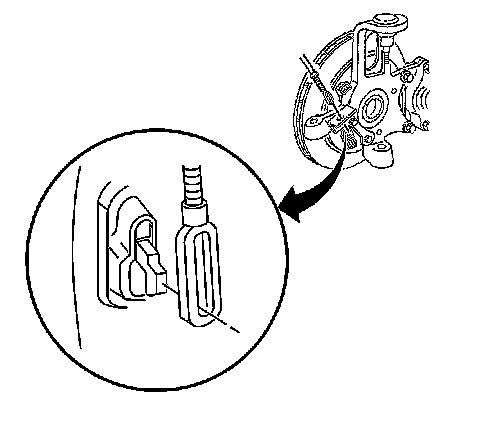
3.Disconnect the wheel speed sensor harness connectors.
4.Disconnect the park brake cables from the actuator levers.
5.Disconnect the electrical connectors from the electronic suspension control (ESC) shock absorbers harnesses, if equipped.
6.Remove the rear suspension position sensors. Refer to Electronic Suspension Rear Position Sensor Replacement .
7.Disconnect the inner tie rod end studs from the rear crossmember. Refer to Tie Rod Replacement .
8.Disconnect the lower control arms from the crossmember. Refer to Rear Axle Lower Control Arm Replacement .
9.Support the lower control arms, tie rods, and rear suspension knuckles.
10.Remove the transverse spring. Refer to Rear Transverse Spring Replacement .
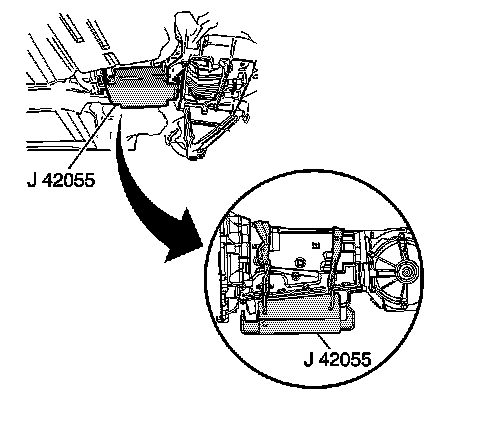
11.Assemble the
J 42055 drivetrain support fixture and install it to a transmission jack.
12.Position and firmly secure the
J 42055 drivetrain support fixture with the transmission jack to the transmission. Support the transmission.
13.Remove the transaxle mount lower nuts. Refer to Transmission Mount Replacement .
14.Disconnect all the electrical harness retainers from the crossmember.
15.Disconnect the brake pipe retainers from the crossmember.
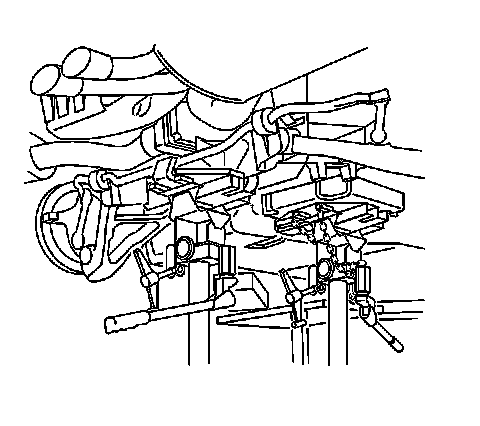
16.Position a transmission jack under the rear crossmember and firmly secure the crossmember to the jack. Support the crossmember.
17.Using HAND TOOLS ONLY, remove the rear crossmember mounting nuts.
18.Remove the crossmember from the vehicle.
19.Discard the rear crossmember mounting nuts.
Installation Procedure
1.Install the crossmember to the vehicle.
-Align the crossmember dowel pins to the holes in the frame rails.
-Align the transaxle mount studs to the crossmember.
Caution:Refer to Fastener Caution .
Note:Only use NEW crossmember mounting nuts.
2.Using HAND TOOLS ONLY, install NEW rear suspension crossmember mounting nuts and tighten to110 N �m (81 lb ft).
3.Remove the
J 42055 drivetrain support fixture transmission jack from the transmission.
4.Remove the transmission jack from the crossmember.
5.Connect all electrical harness retainers to the crossmember.
6.Connect the brake pipes retainers to the crossmember.
7.Install the transaxle mount lower nuts. Refer to Transmission Mount Replacement .
8.Install the transverse spring to the crossmember. Refer to Rear Transverse Spring Replacement .
9.Install the lower control arms to the crossmember. Refer to Rear Axle Lower Control Arm Replacement .
10.Install the inner tie rod end studs to the crossmember. Refer to Tie Rod Replacement .
11.Install the rear suspension position sensors. Refer to Electronic Suspension Rear Position Sensor Replacement .
12.Connect the electrical connectors to the ESC shock absorber harnesses, if equipped.
13.Connect the park brake cables to the actuator levers.
14.Connect the wheel speed sensor harness connector.
15.Install the tire and wheel assemblies. Refer to Tire and Wheel Removal and Installation .
16.Lower the vehicle.
17.Measure and adjust the rear trim height as necessary. Refer to Trim Height Inspection .
18.Perform a rear wheel alignment. Refer to Wheel Alignment Measurement .
Factory Service Tools
Use the Manual With the Right Hardware
Pair factory procedures with proven DIY tools so the instructions are easier to execute.
Disclosure: Verified tool recommendations may earn an affiliate commission at no cost to you.
When to See a Mechanic
Stop DIY work and contact a certified mechanic immediately if any of the following apply:
- • You smell fuel, burning insulation, or see smoke.
- • Brakes feel soft, pull hard to one side, or make grinding noises.
- • The engine overheats, stalls repeatedly, or misfires under load.
- • You are missing required tools, torque specs, or safe lifting equipment.
- • You are not confident in the next step or safety outcome.