
Safety Warning
DIY auto repair can cause serious injury, fire, or vehicle damage. These guides are for informational purposes only. Always follow OEM torque specs, wear PPE, and consult a certified mechanic if you are unsure. You are solely responsible for your safety.
2012 Chevrolet Caprice PPV V6-3.6LFACTORY OEM SERVICE PROCEDURE
Keyless Entry Transmitter Battery: Service and Repair
Transmitter Battery Replacement
Removal Procedure
Important:
Replacement of the transmitter battery should only be carried out by your authorized dealer.
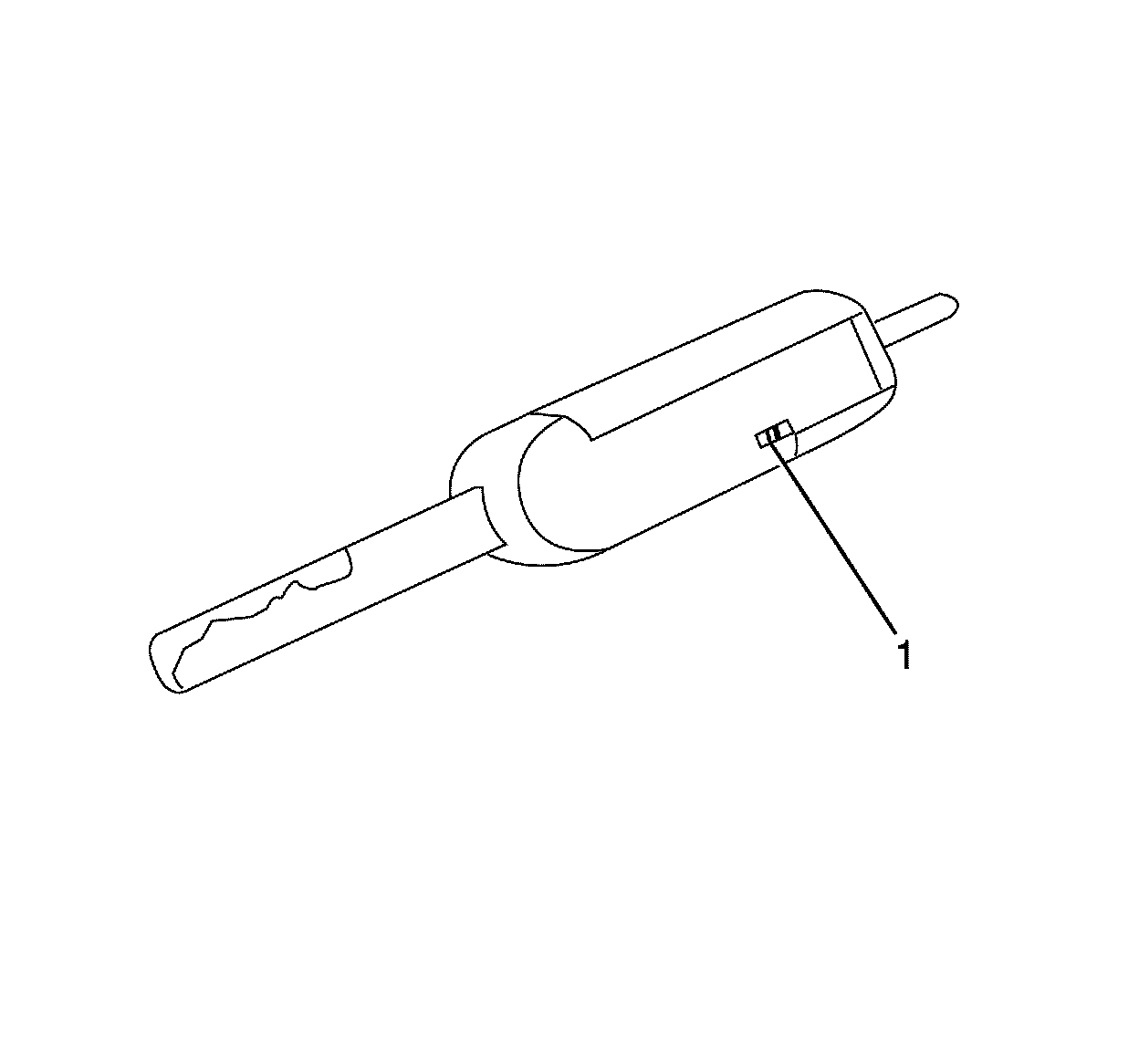
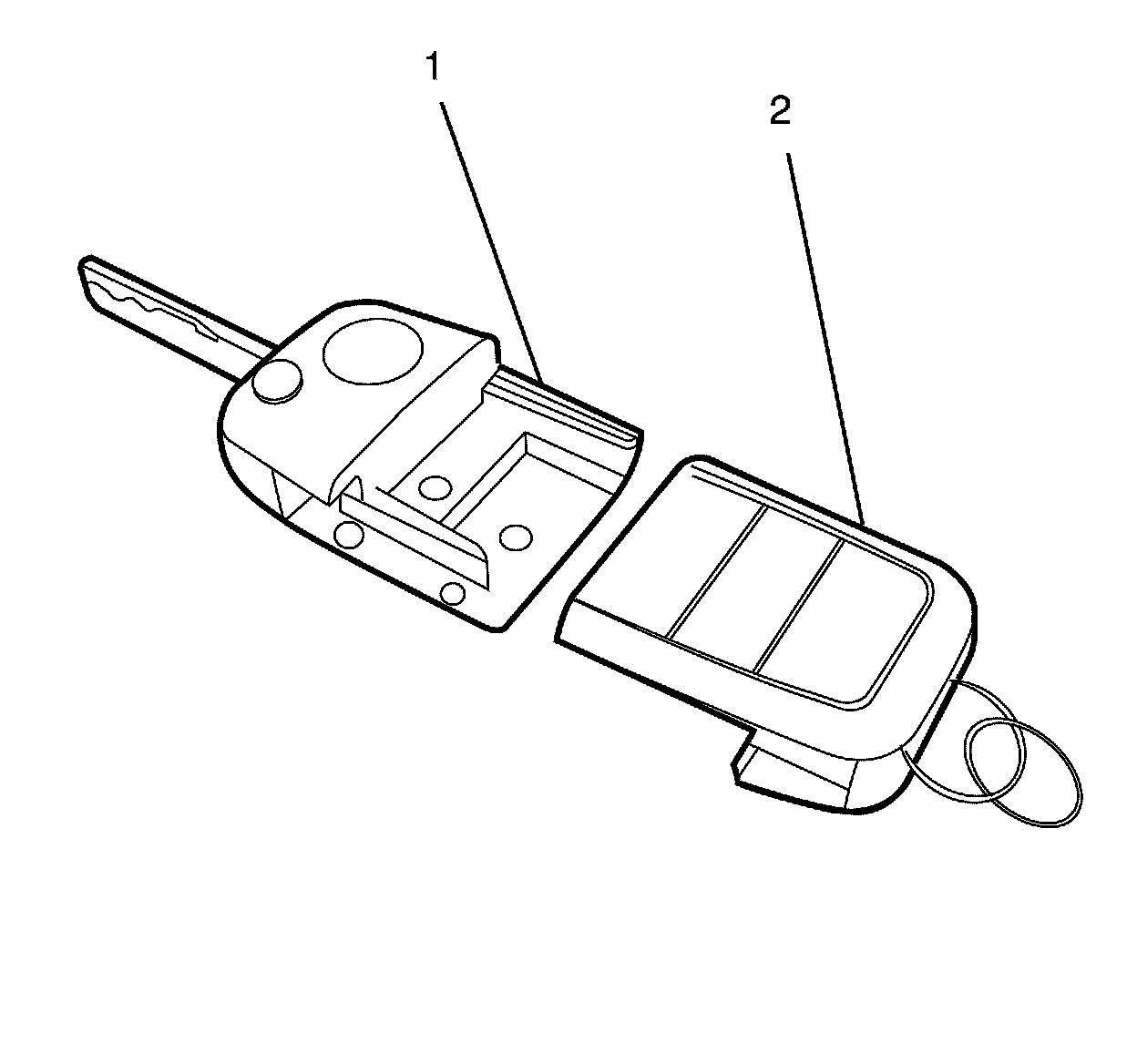
1. Insert a suitable tool between the two key halves (1).
Important:
Do NOT twist the tool as damage to the key retaining tang will occur.
Important:
While inserting the tool, push the remote half (2) away from the key half (1).
2. Separate the two key halves (1, 2).
Important:
Replace the battery when the range of the transmitter decreases to less than 7 m (23 ft).
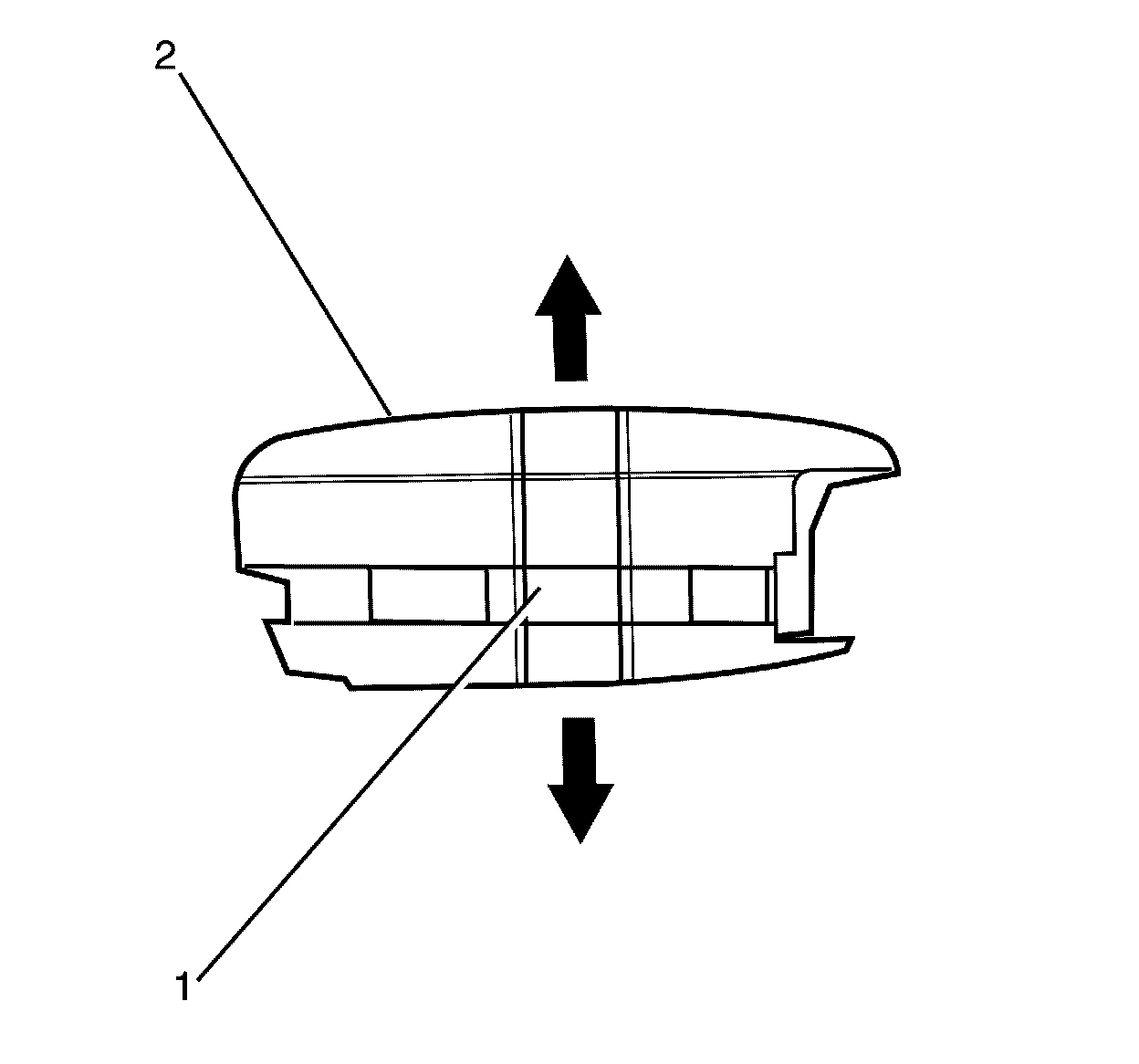
3. Insert a suitable tool between the two halves (1) of the transmitter case (2), as shown in illustration.
4. Separate the two halves of the transmitter case (2).
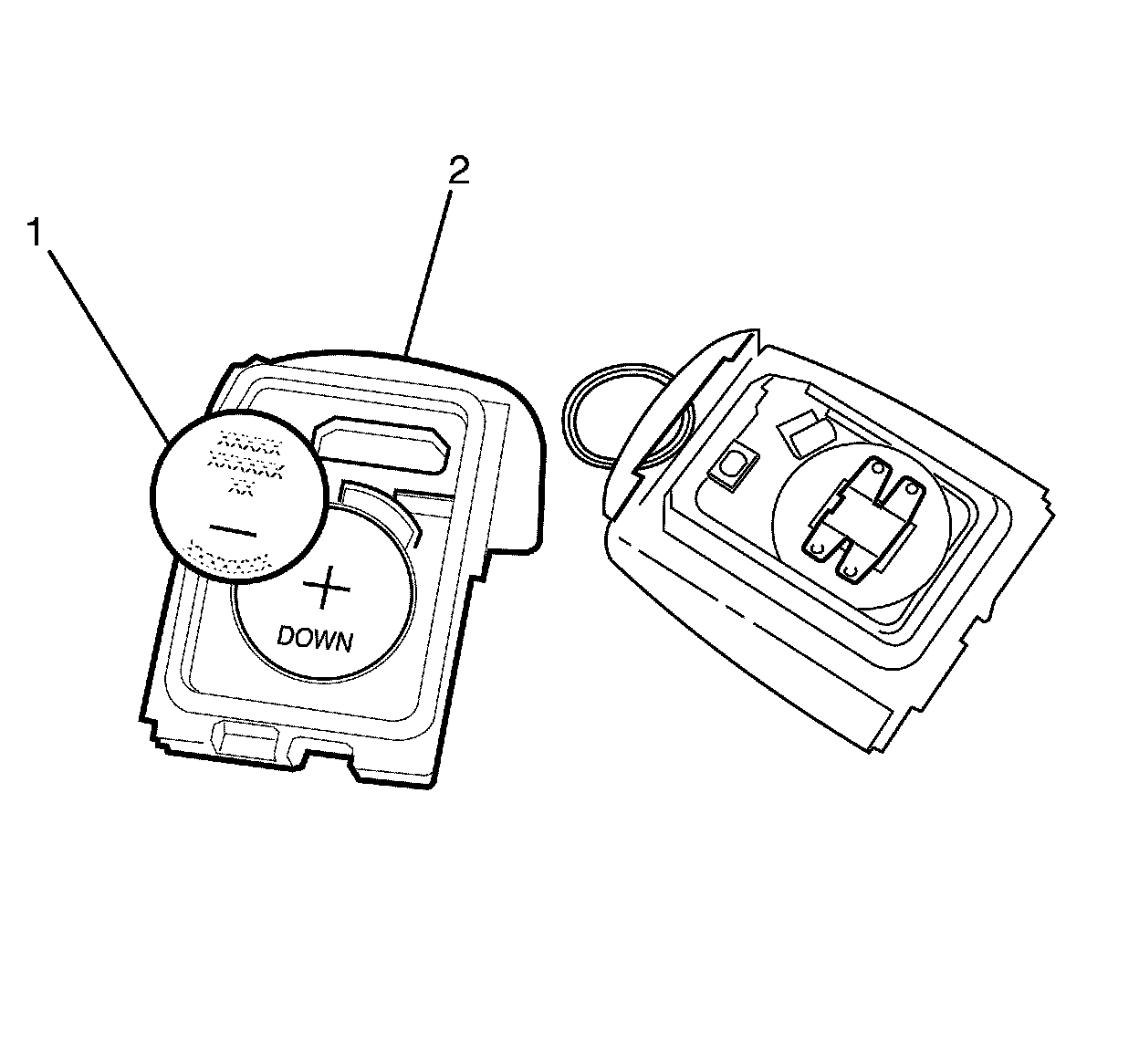
5. Remove the battery (1) from the transmitter case (2).
Installation Procedure
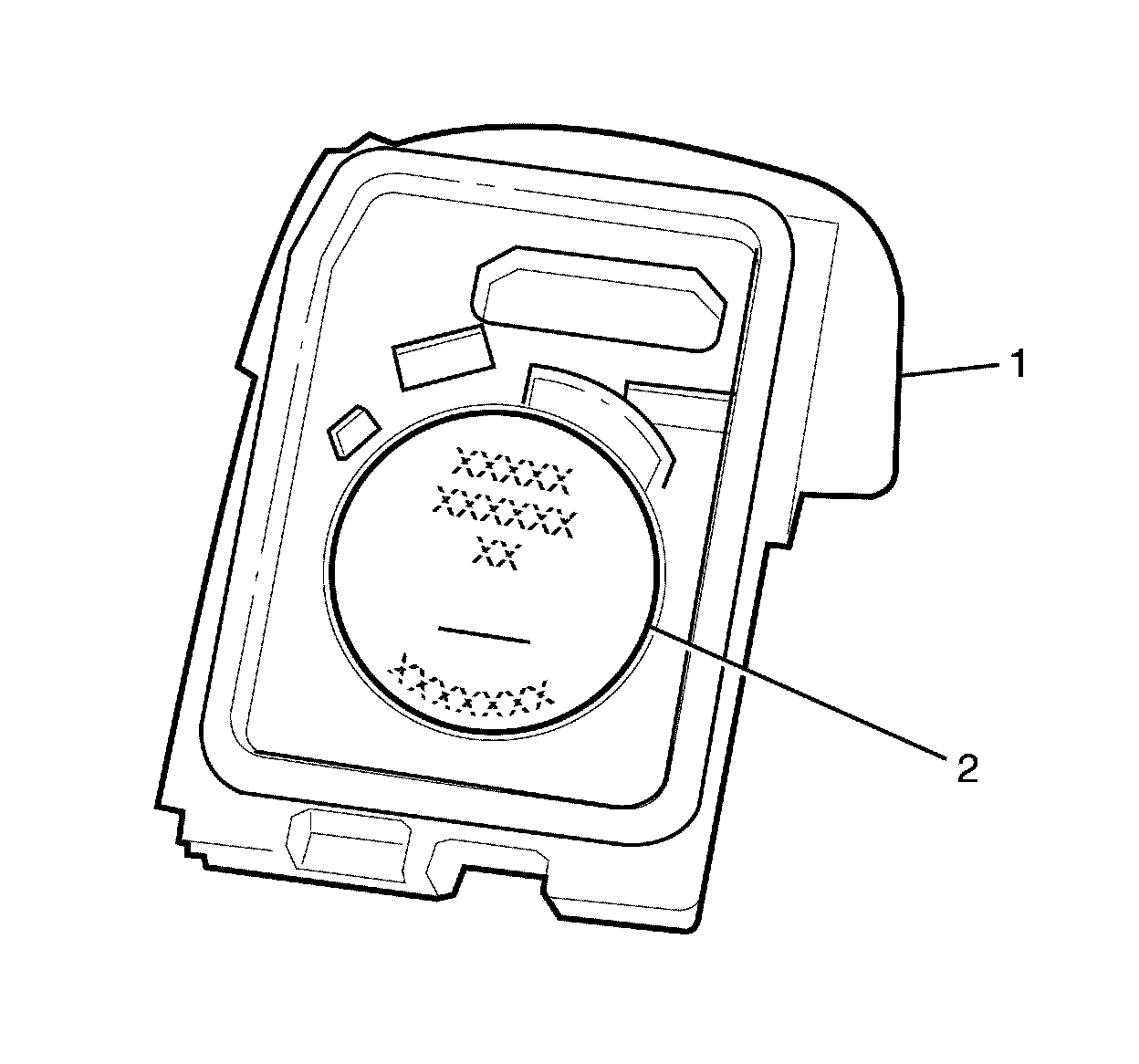
Important:
Transfer the battery directly from the blister pack to the fob. Avoid finger contact with battery.
1. Install the transmitter battery (2) inside of the transmitter case (1) with the positive (+) side down.
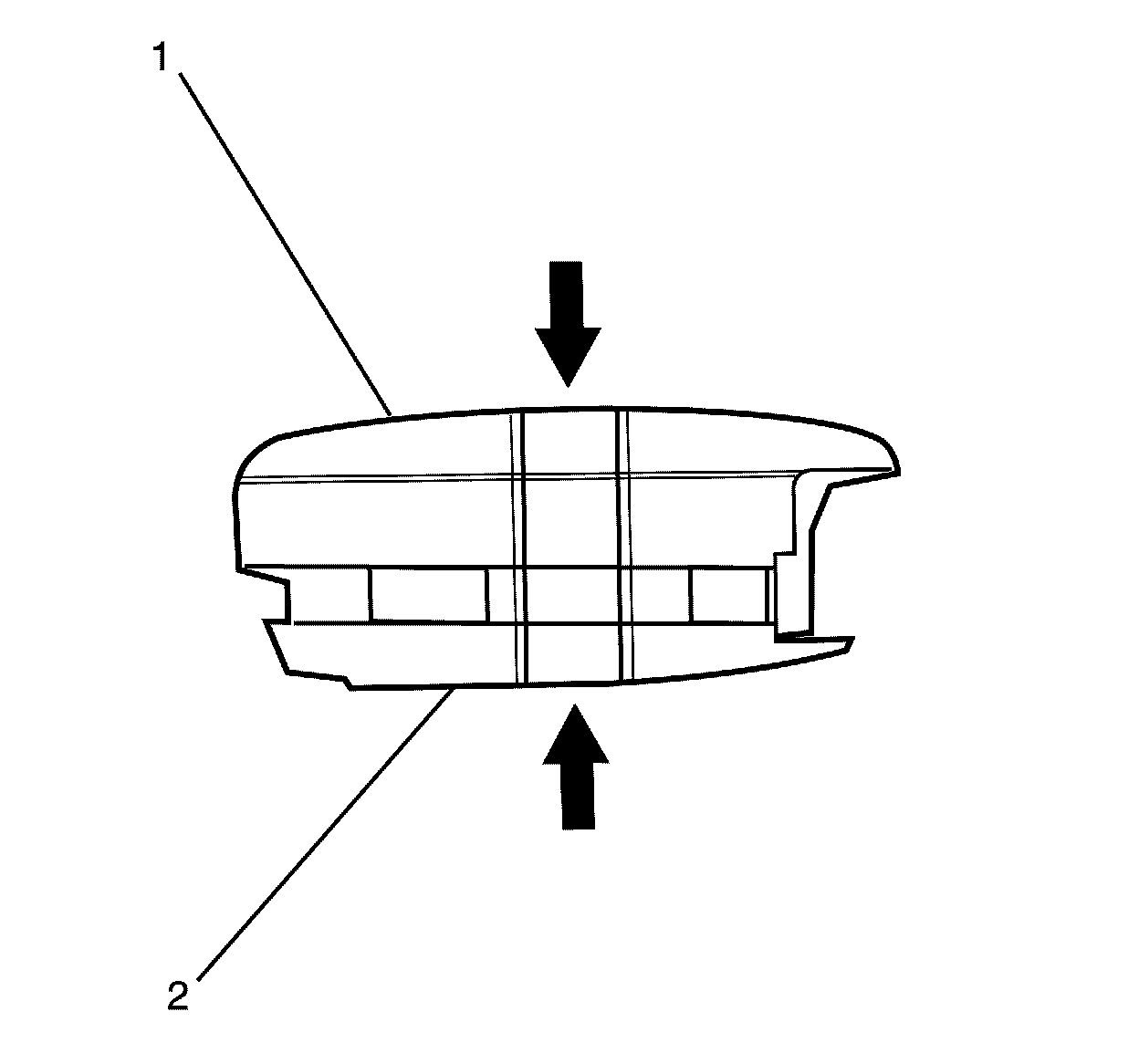
2. Marry both halves of the transmitter case (1, 2).
3. Close the transmitter case, listen for an audible click to confirm fitting.
4. Marry the two halves (1 and 2) of the key by firmly pushing the two together, listen for an audible click to confirm fitting
5. For programming and set up, refer to Control Module References Control Module References.
Factory Service Tools
Use the Manual With the Right Hardware
Pair factory procedures with proven DIY tools so the instructions are easier to execute.
Disclosure: Verified tool recommendations may earn an affiliate commission at no cost to you.
When to See a Mechanic
Stop DIY work and contact a certified mechanic immediately if any of the following apply:
- • You smell fuel, burning insulation, or see smoke.
- • Brakes feel soft, pull hard to one side, or make grinding noises.
- • The engine overheats, stalls repeatedly, or misfires under load.
- • You are missing required tools, torque specs, or safe lifting equipment.
- • You are not confident in the next step or safety outcome.