
Safety Warning
DIY auto repair can cause serious injury, fire, or vehicle damage. These guides are for informational purposes only. Always follow OEM torque specs, wear PPE, and consult a certified mechanic if you are unsure. You are solely responsible for your safety.
2010 Cadillac DTS V8-4.6LFACTORY OEM SERVICE PROCEDURE
Terminal Wiring Repair
Terminal Wiring Repair
Special Tools
* EL-38125-10 - Splice Sleeve Crimp Tool
* EL-38125-580 - Terminal Release Tool Kit
* J-38125-5 - Ultra Torch
* EL-35616 - Connector Test Adapter Kit
For equivalent regional tools, refer to Special Tools (Tools and Equipment).
Note: All repairs near the engine manifold, turbo engine and all exhaust pipes should follow the High Temperature Wiring Repair procedures.
1. Find the appropriate connector end view within the connector end view section. The connector end view has the following information:
* Diagnostic probe tool
* Terminal release tool
* Terminal/terminated lead part numbers
2. Determine if a terminal is damaged.
Note: Not using the proper test kit probe may cause damage to the terminal(s) that are probed.
* Locate the diagnostic probe tool from the connector end view. The connector end view describes the color and part number to help the technician find and use the correct tool.
* Connect the probe tool to the Digital Multimeter.
* Insert the probe tool into the cavity and follow the procedures from the Troubleshooting with a Digital Multimeter ().
3. Disconnect the connector body to perform the repair.
Note: Several procedures for specific connector bodies are called out in Wiring Repairs ().
Use the following repair procedures to repair the following terminals:
Delphi Connectors (Push To Seat) ()Delphi Connectors (Pull To Seat) ()Delphi Connectors (Weather Pack) ()Delphi Connectors (Micro-Pack 100W) ()Delphi Connectors (Micro.64) ()Delphi Connectors (12-Way) ()
* The TPA and CPA should be removed before releasing the terminal for the connector body.
* Look at the connector end view to locate the cavity of the damaged terminal and find the proper terminal release tool from the terminal release tool kit.
Note: Using the incorrect terminal release tool can damage the connector body.
* Insert the terminal release tool into the cavity.
Note: Some terminals have a lever that must be disengaged before the terminal can be released.
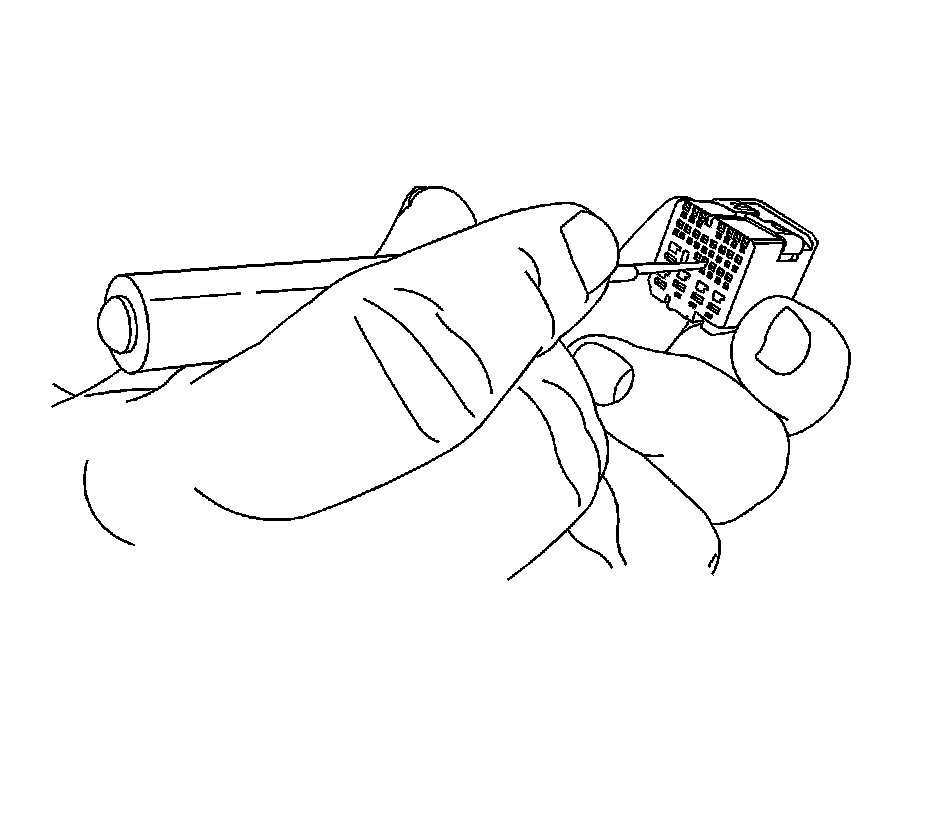
Gently pull the wire out of the back of the connector.
Factory Service Tools
Use the Manual With the Right Hardware
Pair factory procedures with proven DIY tools so the instructions are easier to execute.
Disclosure: Verified tool recommendations may earn an affiliate commission at no cost to you.
When to See a Mechanic
Stop DIY work and contact a certified mechanic immediately if any of the following apply:
- • You smell fuel, burning insulation, or see smoke.
- • Brakes feel soft, pull hard to one side, or make grinding noises.
- • The engine overheats, stalls repeatedly, or misfires under load.
- • You are missing required tools, torque specs, or safe lifting equipment.
- • You are not confident in the next step or safety outcome.