
Safety Warning
DIY auto repair can cause serious injury, fire, or vehicle damage. These guides are for informational purposes only. Always follow OEM torque specs, wear PPE, and consult a certified mechanic if you are unsure. You are solely responsible for your safety.
1982 Cadillac Seville V8-252 4.1LFACTORY OEM SERVICE PROCEDURE
Units With Remote Coil
Fig. 11 Testing remote ignition coil:
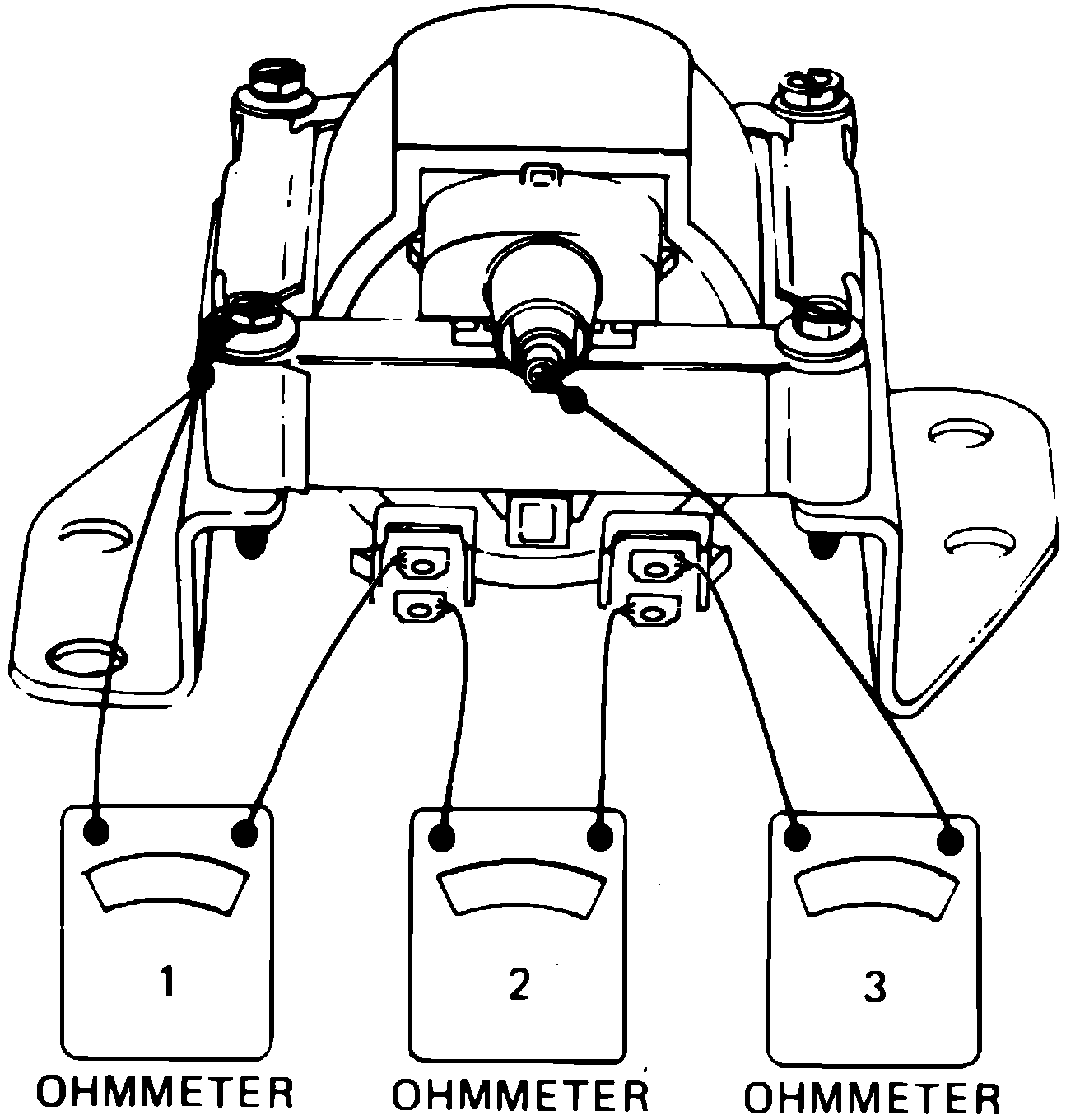
Ignition Coil Testing
1. Connect a suitable ohmmeter as shown in Fig. 11, step 1. Using the high scale, read ohmmeter. Should read very high or infinite. If not, replace coil.
2. Connect ohmmeter as shown in Fig. 11, step 2. Using the low scale, read ohmmeter. Should read very low or zero. If not, replace coil.
3. Connect ohmmeter as shown in Fig. 11, step 3. Using the high scale, read ohmmeter. Should not read infinite. If it does, replace coil.
Fig. 12 Testing remote coil distributor pickup coil less Hall Effect switch:
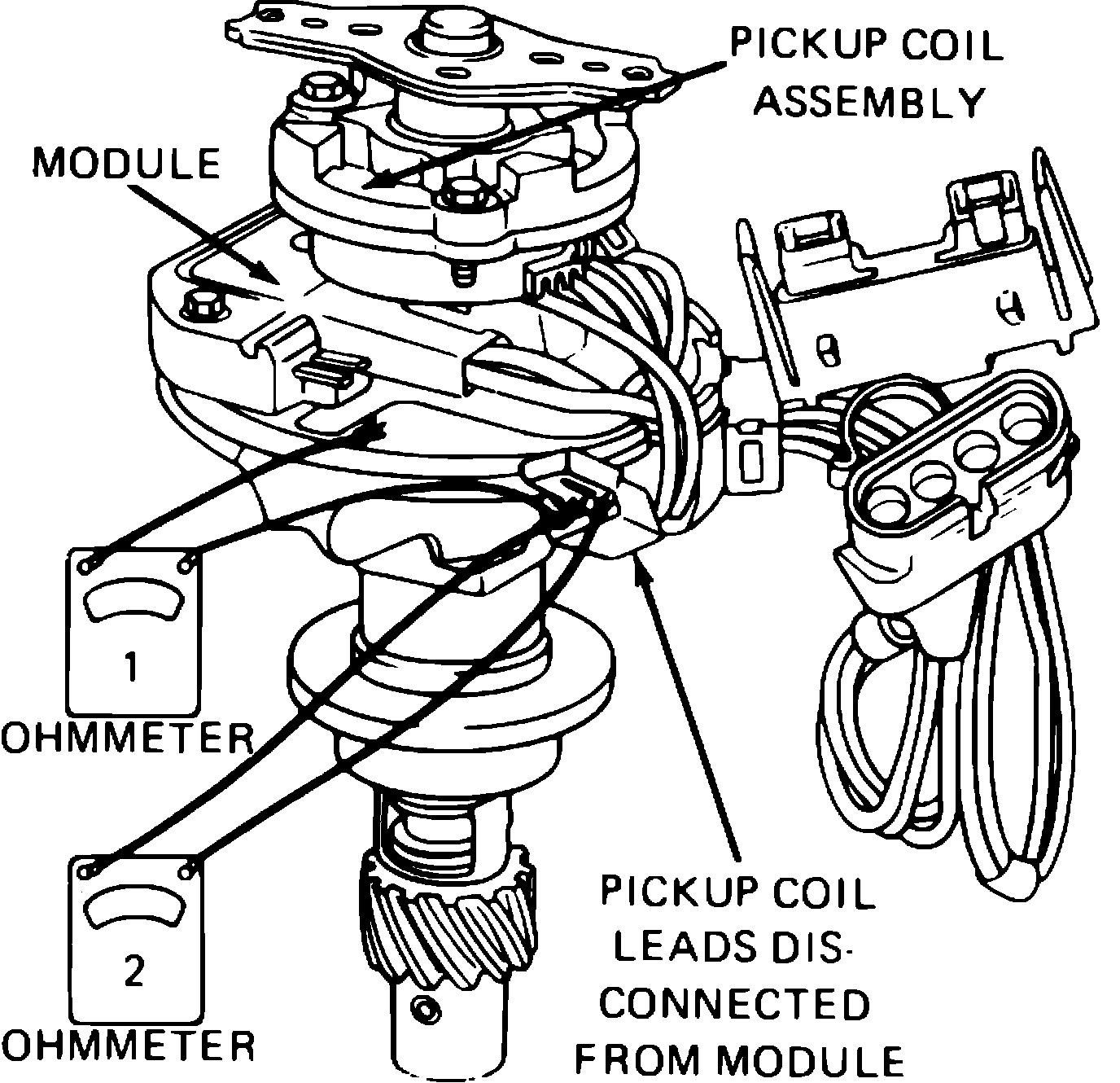
Fig. 13 Testing remote coil distributor pickup coil w/Hall Effect switch:
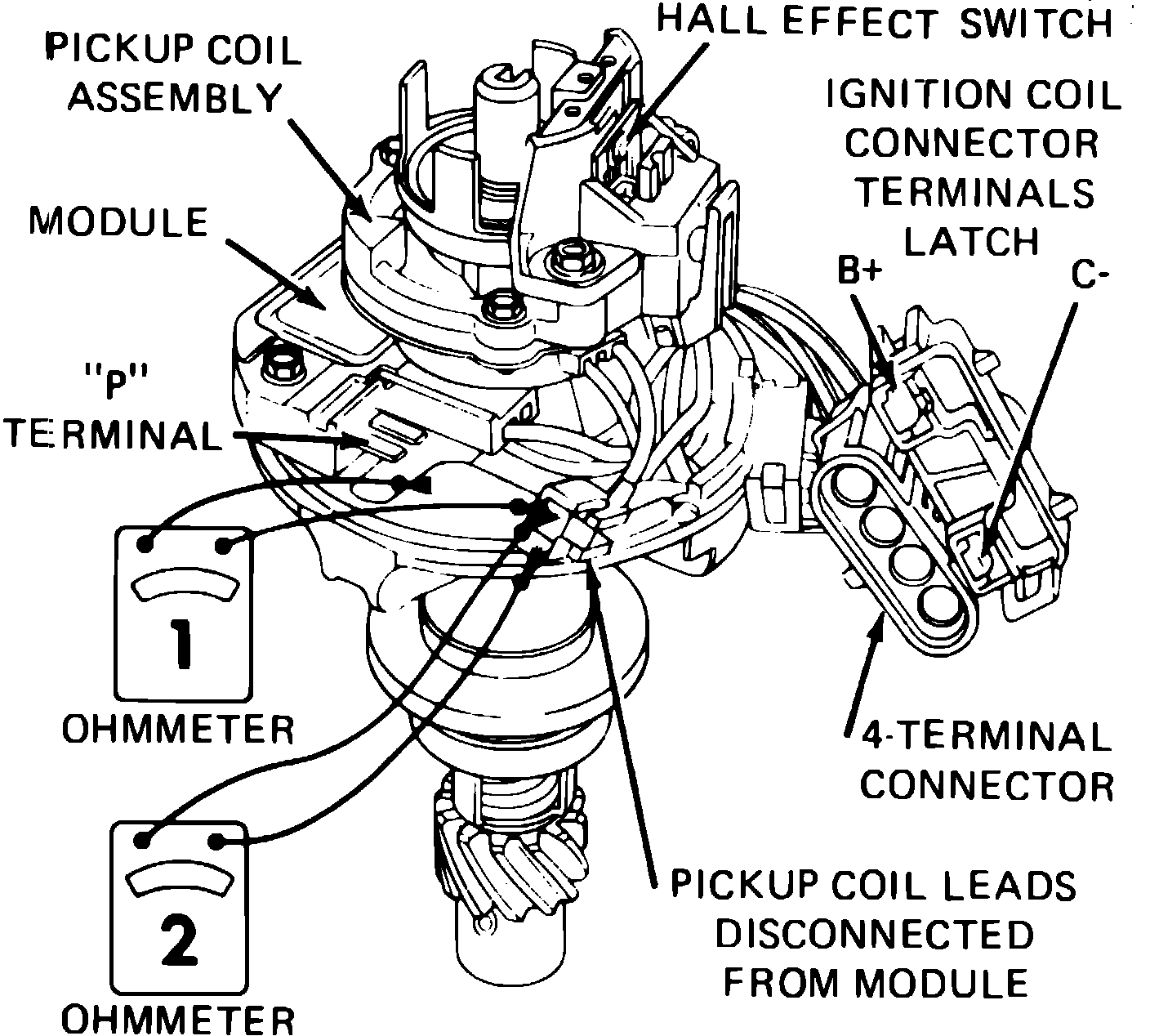
Pickup Coil Testing
1. Remove distributor rotor, then disconnect pickup coil leads from module.
2. Connect ohmmeter as shown in Figs. 12 and 13, step 1. Connect a suitable vacuum source to vacuum advance chamber (if equipped) and note ohmmeter reading throughout entire vacuum advance range. If no vacuum advance is used, flex leads by hand to check for opens. Ohmmeter should read infinite at all times. If not, pickup coil is defective and must be replaced.
3. Connect ohmmeter as shown in Figs. 12 and 13, step 2. Repeat step 2. Ohmmeter should read one steady value between 500-1500 ohms. If not, pickup coil is defective and must be replaced.
NOTE: Ohmmeter may deflect if vacuum advance range causes timing core teeth to align. This is not to be considered a defect.
Fig. 14 Testing Hall Effect switch:
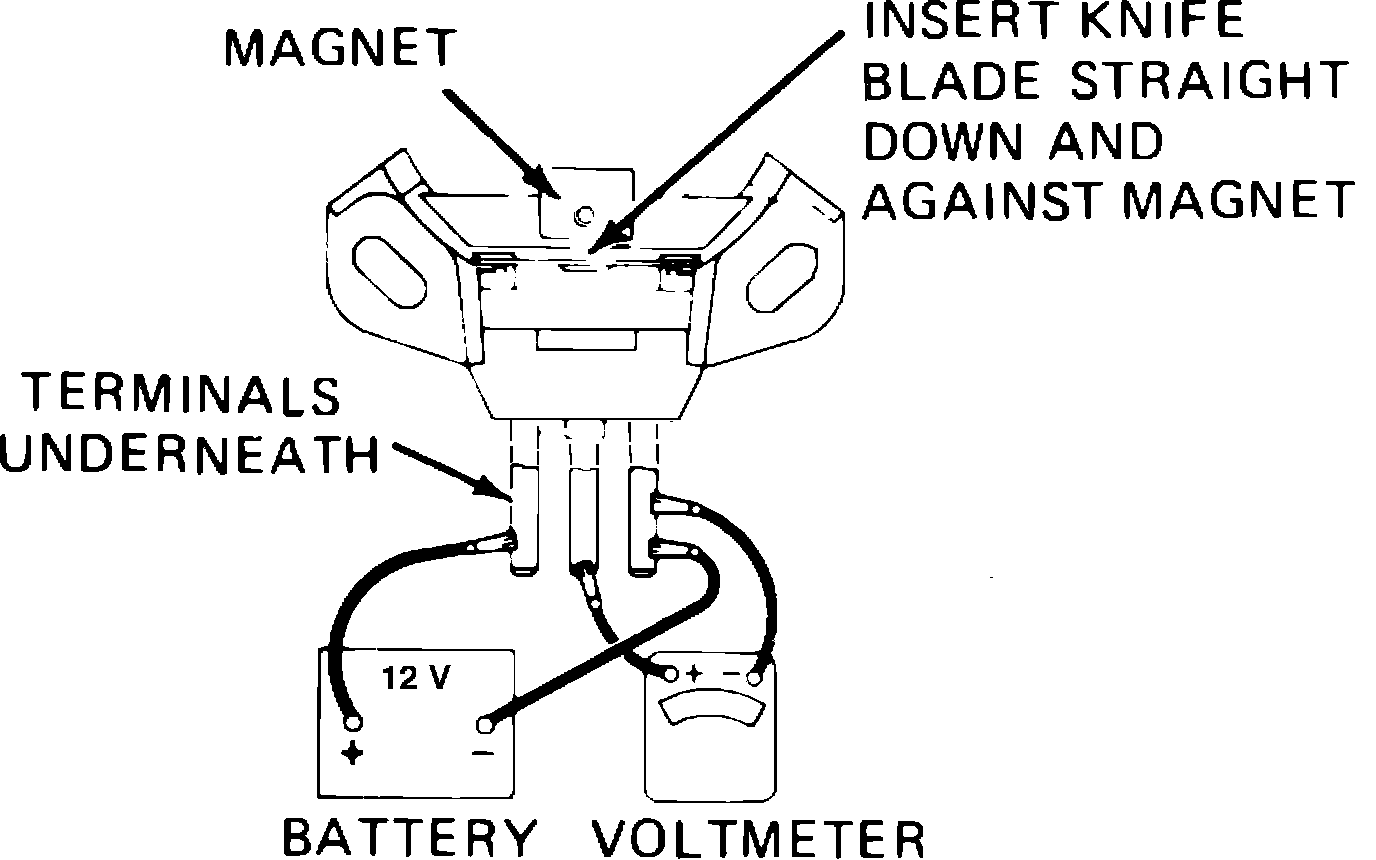
Hall Effect Switch Testing (If Equipped)
1. Noting polarity, connect battery and suitable voltmeter as shown in Fig. 14.
2. Voltmeter should read less than 0.5 volts. If not, replace Hall Effect switch.
3. Insert knife blade as shown in Fig. 14. Voltmeter should read within 0.5 volts of battery voltage. If not, replace Hall Effect switch.
Factory Service Tools
Use the Manual With the Right Hardware
Pair factory procedures with proven DIY tools so the instructions are easier to execute.
Disclosure: Verified tool recommendations may earn an affiliate commission at no cost to you.
When to See a Mechanic
Stop DIY work and contact a certified mechanic immediately if any of the following apply:
- • You smell fuel, burning insulation, or see smoke.
- • Brakes feel soft, pull hard to one side, or make grinding noises.
- • The engine overheats, stalls repeatedly, or misfires under load.
- • You are missing required tools, torque specs, or safe lifting equipment.
- • You are not confident in the next step or safety outcome.