
Safety Warning
DIY auto repair can cause serious injury, fire, or vehicle damage. These guides are for informational purposes only. Always follow OEM torque specs, wear PPE, and consult a certified mechanic if you are unsure. You are solely responsible for your safety.
2007 Buick Allure (CANADA) V6-3.8LFACTORY OEM SERVICE PROCEDURE
Electronic Compass Calibration
Electronic Compass Calibration
Compass Magnetic Variation Adjustment
Magnetic variation adjustments are required when the compass displays a constant error in heading. Variation is the difference between magnetic north and true north due to geographical location.
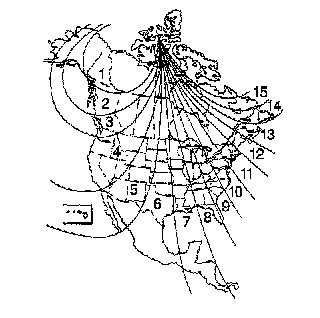
1. Turn ON the ignition, with the engine OFF.
2. Press the option button until - PRESS SET/RESET TO CHANGE COMPASS ZONE - is displayed on the DIC.
3. Locate your vehicle's current location and variance zone number on the map. Zones 1 through 15 are available.
4. Scroll through and select the appropriate variance zone using the set/reset botton. To view the direction the vehicle is moving, navigate to one of the trip/fuel menu screens using the DIC fuel information button and the direction will be shown at the right top corner of the DIC display.
If the compass needs to be calibrated, use the compass calibration procedure below.
Compass Calibration
Before calibrating the compass, drive the vehicle to an area that is magnetically clean (free of large metallic objects). Only calibrate the compass in a safe location where driving the vehicle in circles is not a problem.
1. With the ignition ON, press the option button until - PRESS SET/RESET TO CALIBRATE COMPASS - is displayed in the DIC
2. Press the set/reset button in order to start compass calibration.
3. The DIC should display - CALIBRATING BEGUN DRIVE IN CIRCLES.
4. Drive the vehicle in circles at a speed of less than mph 8 km/h (5 mph) until calibration is complete. The DIC will display - CALIBRATION COMPLETE - when the calibration is complete.
Factory Service Tools
Use the Manual With the Right Hardware
Pair factory procedures with proven DIY tools so the instructions are easier to execute.
Disclosure: Verified tool recommendations may earn an affiliate commission at no cost to you.
When to See a Mechanic
Stop DIY work and contact a certified mechanic immediately if any of the following apply:
- • You smell fuel, burning insulation, or see smoke.
- • Brakes feel soft, pull hard to one side, or make grinding noises.
- • The engine overheats, stalls repeatedly, or misfires under load.
- • You are missing required tools, torque specs, or safe lifting equipment.
- • You are not confident in the next step or safety outcome.