
Safety Warning
DIY auto repair can cause serious injury, fire, or vehicle damage. These guides are for informational purposes only. Always follow OEM torque specs, wear PPE, and consult a certified mechanic if you are unsure. You are solely responsible for your safety.
2004 BMW 320i (E46) (CANADA) L6-2.2L M54FACTORY OEM SERVICE PROCEDURE
Compressor HVAC: Description and Operation
COMPRESSOR
The compressor in an automotive A/C system serves two important functions:
- It creates a low-pressure zone at the compressor inlet, to draw refrigerant vapor from the evaporator.
- It compresses the low-pressure refrigerant vapor into a high-pressure vapor and sends it toward the condenser.
BMW A/C systems use various types of compressors. These include:
- Seiko-Seiki rotary vane compressor
- Nippondenso swash-plate design
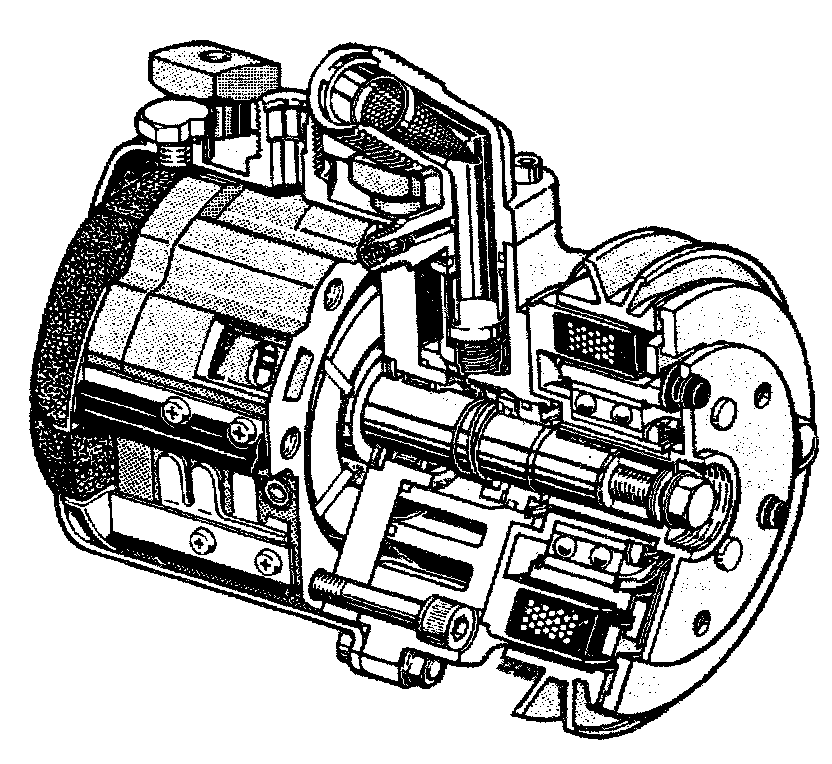
The Seiko-Seiki type is a five-vane rotary compressor. It consists of a shaft with vanes, that maintain contact with the inner wall of a cavity. The cavity is shaped like an ellipse. As the shaft rotates, oil pressure and centrifugal force push out on the vanes, so that their outer edges stay in contact with the cavity. This creates spaces where the volume is expanded and contracted, to draw refrigerant vapor in, compress it, and force it out.
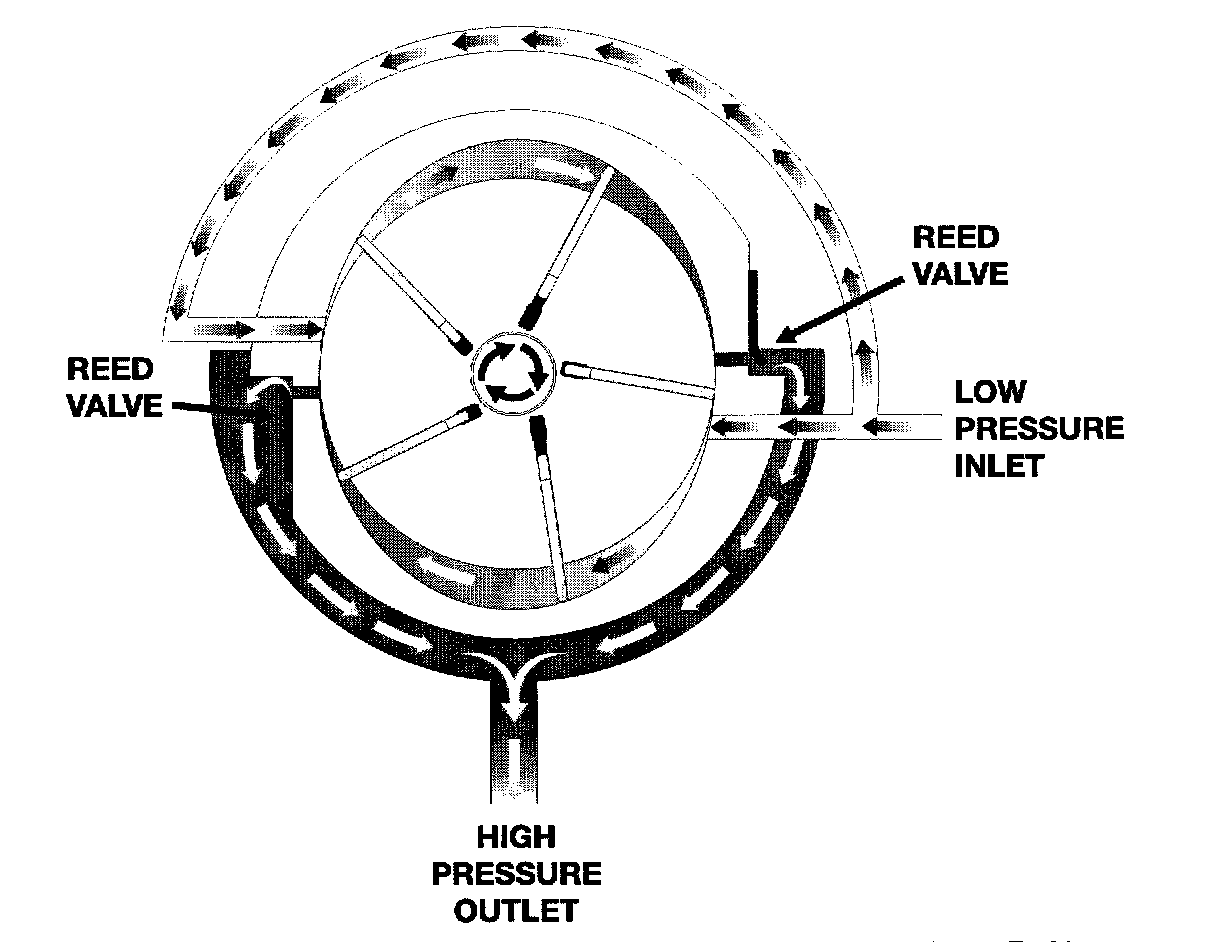
When the space between the shaft and the cavity is large, the pressure is low. Refrigerant vapor is drawn into the space. When the vane passes the inlet port, the space is sealed off; no more refrigerant vapor can be drawn in. As the vane sweeps through 180°, the space shrinks, compressing the refrigerant. The refrigerant is then forced out through reed valves, to the discharge ports.
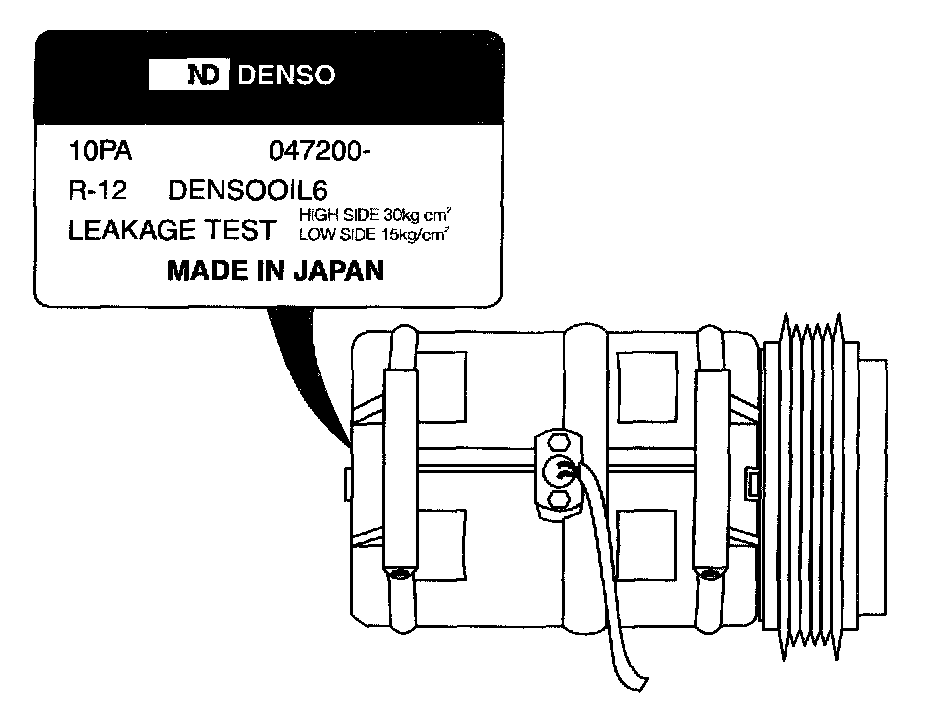
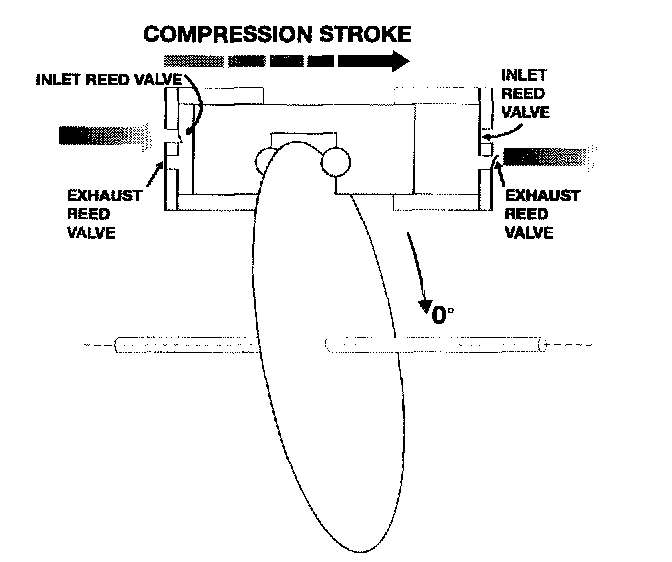
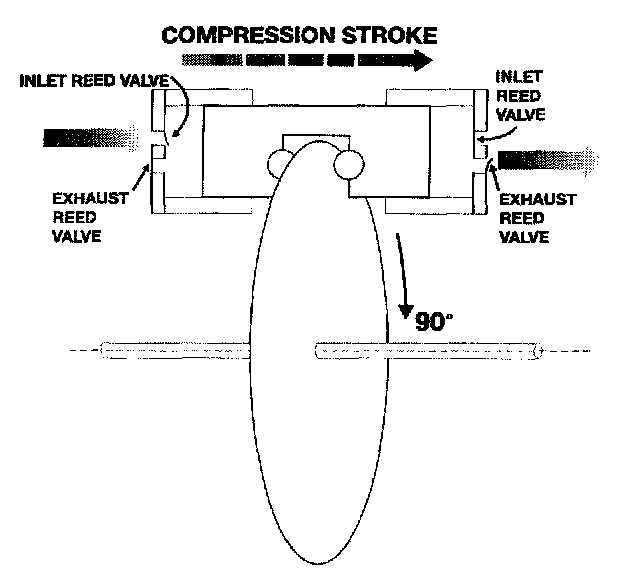
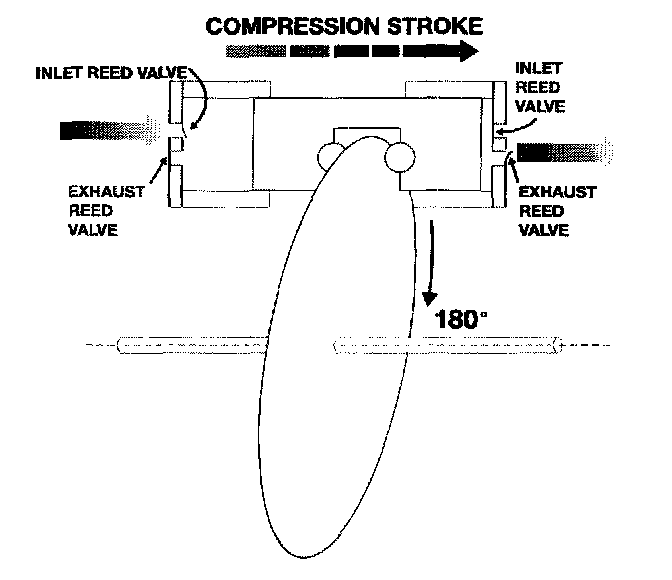
The Nippondenso compressor is a five-cylinder swash-plate compressor. The swash plate is set on an angle, and it rotates with the shaft. As it goes through one complete revolution, it drives pistons from one end of their travel to the other and back again. As it drives a piston forward in its cylinder, the piston compresses the refrigerant in the cylinder. The compressed refrigerant is then discharged. As the swash plate pulls a piston back, the piston draws refrigerant into the cylinder.
COMPRESSOR REGULATION - COOLING
The E39, 9/97 E38 750iL, E46 - IHKA uses a new variable displacement A/C compressor.
The swash plate of the compressor is hinged so that it can vary the piston travel based on the output requirements of the system. The swash plate position is controlled by the control valve located in the compressor.
The control valve regulation is based on the low and high side pressures of the system. A "high" low side pressure (high load) will cause the control valve to close and block discharge pressure from entering into the crankcase of the compressor.
When the low side pressure decreases, the control valve opens. The swash plate moves to a position of minimum travel and consequently reduces the compressor output.
The compressor output varies continually based on the constant change in the contributing pressures.
At low engine RPMs and/or high temperature loads, the piston travel (displacement) of the compressor pistons are at the maximum point. This allows the compressor to provide maximum cooling efficiency at idle speeds and when high output is required (heavy demand for cooling).
At higher engine RPMs and when the load on the system is low, the swash plate moves so that the piston travel is shortened.
This reduces the constant high load output of the compressor any time the A/C system is on. It also reduces the cycling of the compressor due to the low temperature of the evaporator (evaporator temperature sensor causing the system to cycle at 3°C). An overall effect of this is improved fuel economy.
NOTE: Refer to repair procedures for proper compressor replacement and correcting oil level.
Factory Service Tools
Use the Manual With the Right Hardware
Pair factory procedures with proven DIY tools so the instructions are easier to execute.
Disclosure: Verified tool recommendations may earn an affiliate commission at no cost to you.
When to See a Mechanic
Stop DIY work and contact a certified mechanic immediately if any of the following apply:
- • You smell fuel, burning insulation, or see smoke.
- • Brakes feel soft, pull hard to one side, or make grinding noises.
- • The engine overheats, stalls repeatedly, or misfires under load.
- • You are missing required tools, torque specs, or safe lifting equipment.
- • You are not confident in the next step or safety outcome.
Rather have a pro handle this?
A certified mobile mechanic comes to your home or office. They bring the tools, you stay comfortable. No tow truck, no waiting room, no surprises.
Comes to youSame-day available12-month warranty
Get a Free QuoteNo obligation. See pricing before you book.