
Safety Warning
DIY auto repair can cause serious injury, fire, or vehicle damage. These guides are for informational purposes only. Always follow OEM torque specs, wear PPE, and consult a certified mechanic if you are unsure. You are solely responsible for your safety.
2012 Acura ZDX V6-3.7LFACTORY OEM SERVICE PROCEDURE
Ventilated Seat Control Unit Input Test/Replacement
Ventilated Seat Control Unit Input Test/Replacement
NOTE: Before testing, check the No. 2-4 (AS F/B OPTION) (40 A) fuse in the under-hood fuse/relay box, the No. 16 (7.5 A) fuse in the driver's under-dash fuse/relay box, and the No. 19 (20 A) fuse in the passenger's under-dash fuse/relay box.
1. Remove the driver's center console trim Center Console Removal / Installation.
2. Disconnect the 37P connector (A) from the seat ventilation control unit (B).
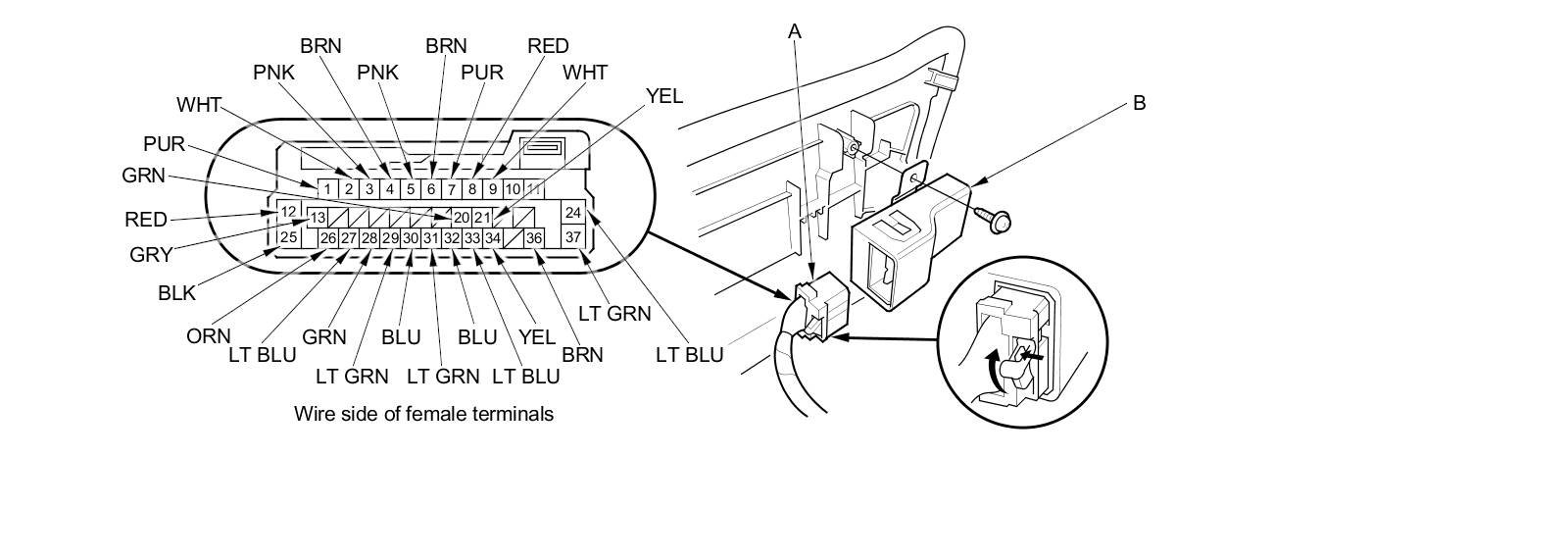
3. Inspect the connector and socket terminals to be sure they are all making good contact.
- If the terminals are bent, loose or corroded, repair them as necessary, and recheck the system.
- If the terminals look OK, go to step 4.
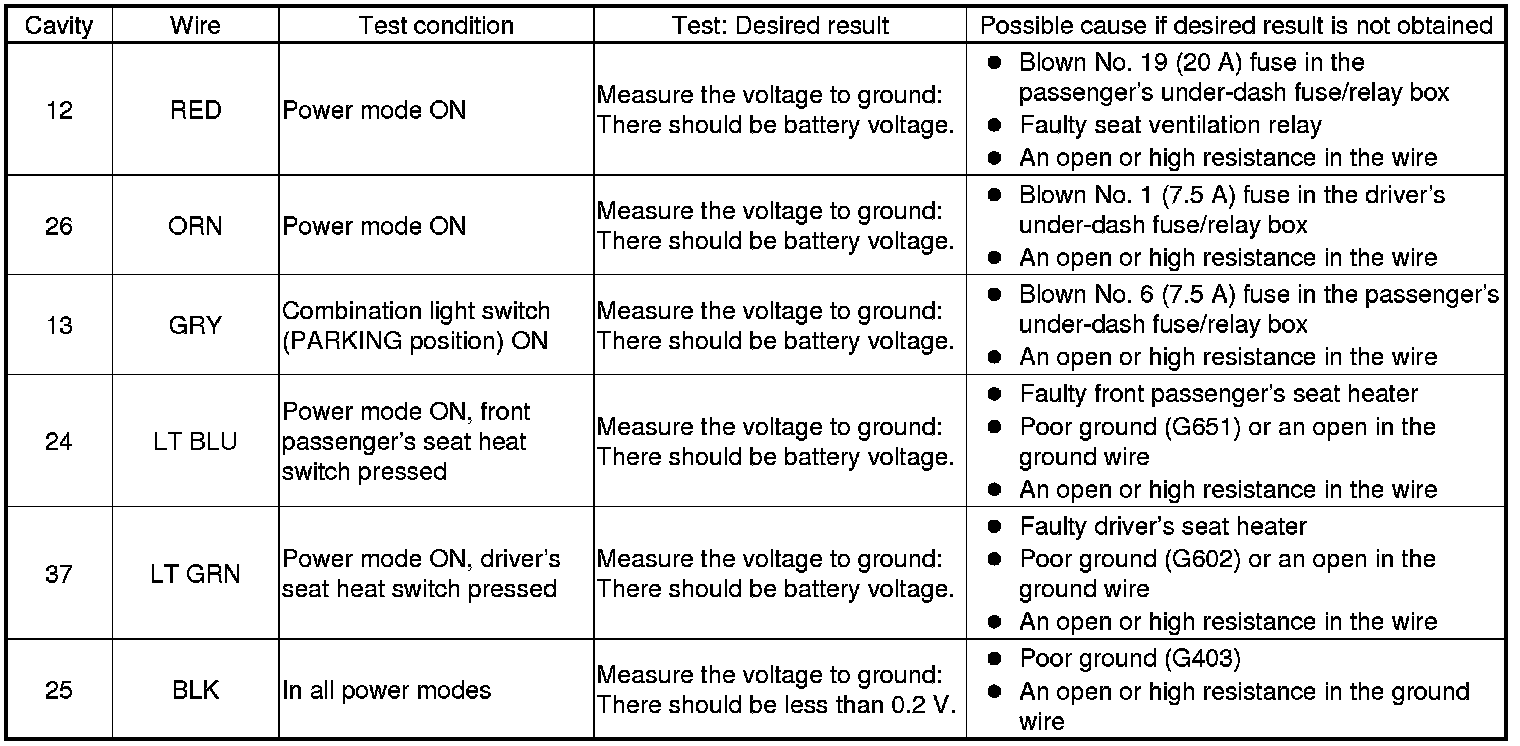
4. Reconnect the 37P connector to the control unit, and do the following input tests.
- If any test indicates a problem, find and correct the cause, then recheck the system.
- If all the input tests prove OK, go to step 5.
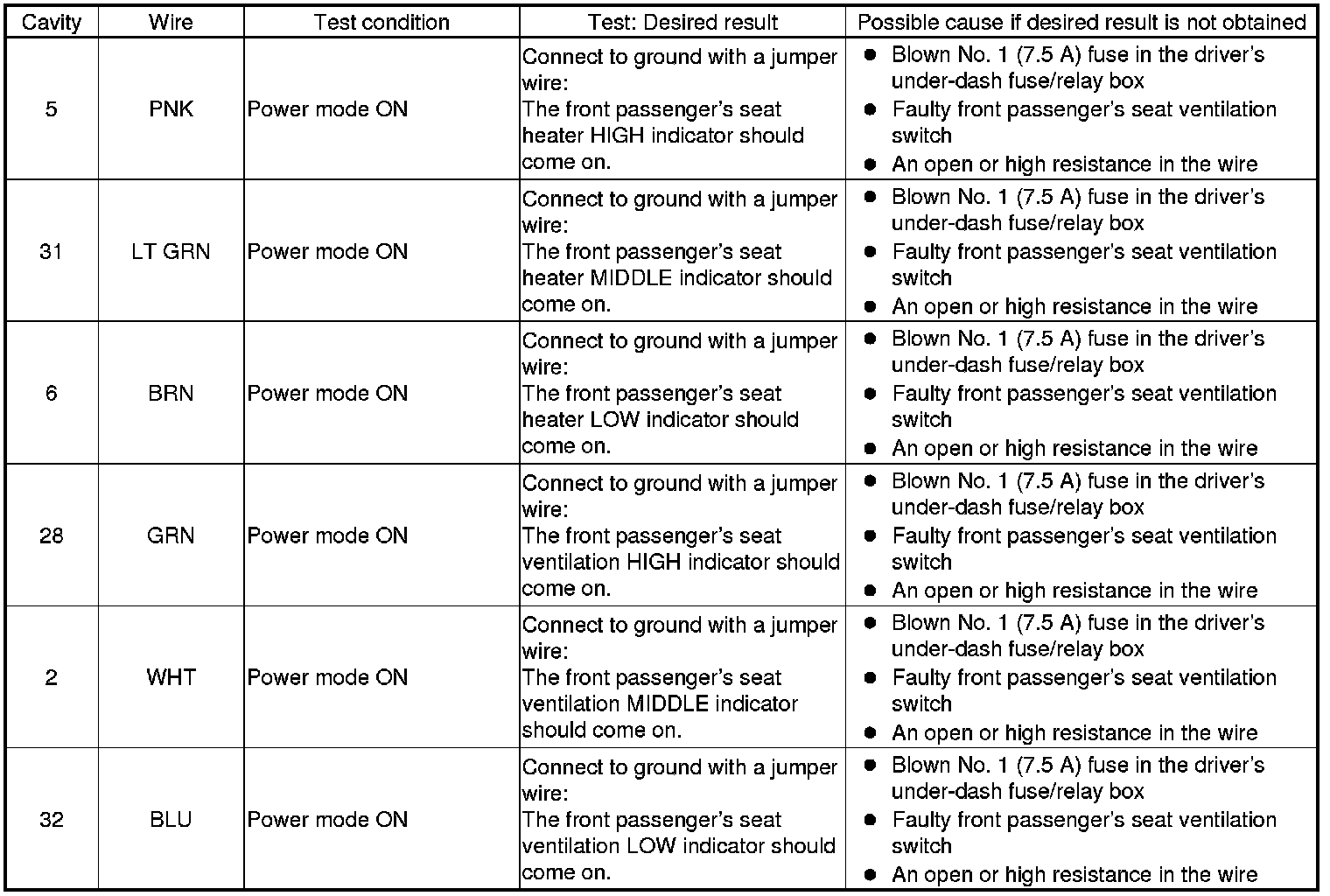
5. Disconnect the 37P connector from the control unit, and do the following input tests.
- If any test indicates a problem, find and correct the cause, then recheck the system.
- If all the input tests prove OK, the control unit must be faulty; replace it.


Factory Service Tools
Use the Manual With the Right Hardware
Pair factory procedures with proven DIY tools so the instructions are easier to execute.
Disclosure: Verified tool recommendations may earn an affiliate commission at no cost to you.
When to See a Mechanic
Stop DIY work and contact a certified mechanic immediately if any of the following apply:
- • You smell fuel, burning insulation, or see smoke.
- • Brakes feel soft, pull hard to one side, or make grinding noises.
- • The engine overheats, stalls repeatedly, or misfires under load.
- • You are missing required tools, torque specs, or safe lifting equipment.
- • You are not confident in the next step or safety outcome.